Yesterday, I shared what appeared to be a significant development for election integrity.
During a Senate hearing, the new Postmaster General confirmed that the United States Postal Service intended to reject mail-in ballots from states that failed to comply with new federal ballot tracking requirements established under President Trump’s Executive Order 14399.
For many Americans, that immediately raised questions.
Would USPS actually reject ballots?
What were these new requirements?
And what problem were they trying to solve?
Then today, everything changed.
A federal judge in Massachusetts blocked key portions of the Executive Order, ruling that the President does not have the constitutional authority to impose certain nationwide election administration requirements through executive action alone.
Before we talk about today’s ruling, it’s important to understand what the Executive Order was actually trying to accomplish.
What Was the USPS Rule Trying to Do?
Much of the discussion surrounding this Executive Order has centered on the phrase “rejecting mail-in ballots.” While technically accurate in describing one potential consequence for non-compliant states, that phrase doesn’t fully explain what the proposed USPS rule was designed to accomplish.
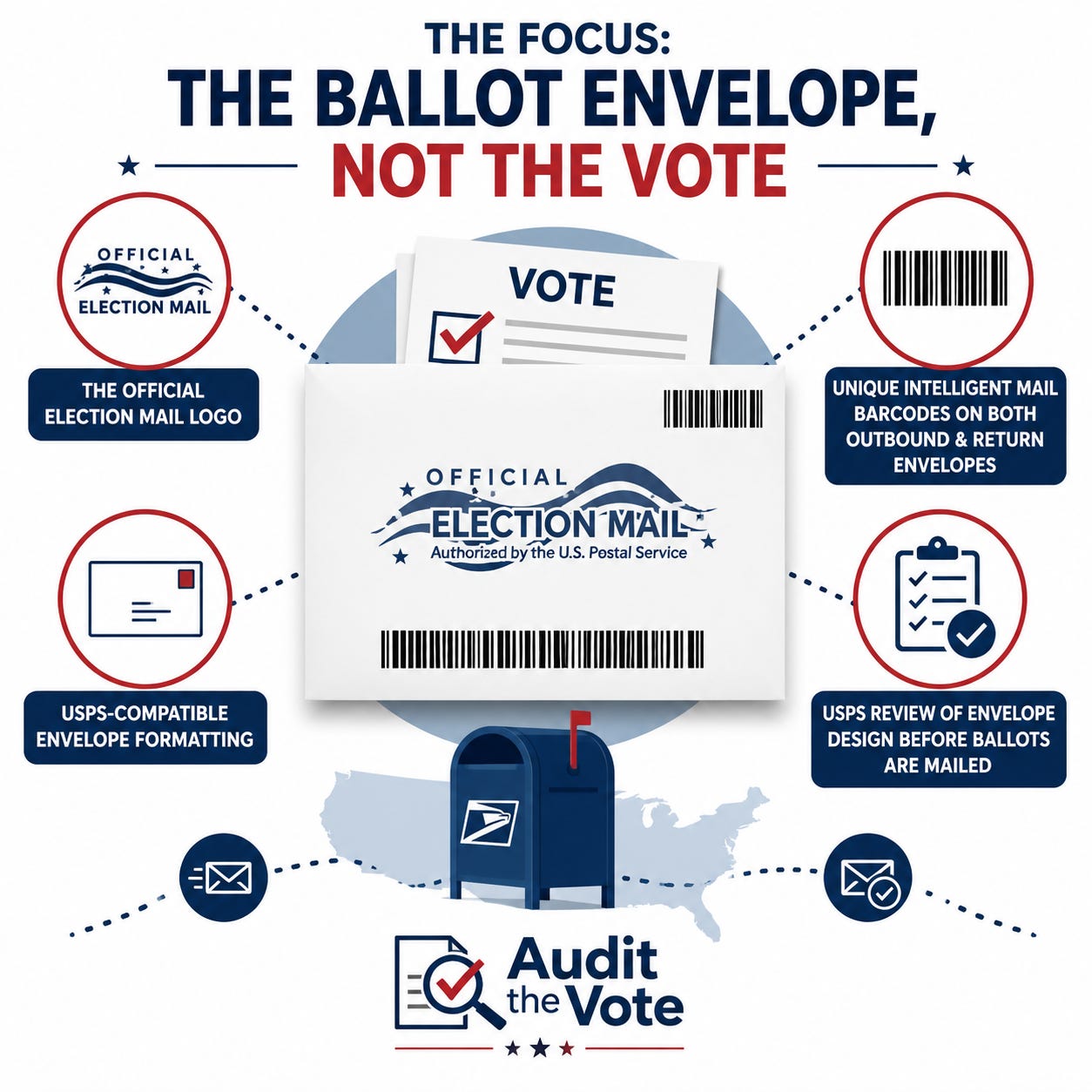
The proposal focused on the ballot envelope, not the vote itself.
Under the proposed rule, states conducting federal elections by mail would have been required to use standardized ballot envelopes that included:
The Official Election Mail logo
USPS-compatible envelope formatting
Unique Intelligent Mail barcodes on both outbound and return envelopes
USPS review of the envelope design before ballots were mailed
Election officials also would have been required to submit certain information to a USPS portal before ballots were mailed, including:
The voter’s name and mailing address
The barcode assigned to the outgoing ballot envelope
The barcode assigned to the return envelope
The originating election office
The purpose was to create a documented chain of custody for ballot envelopes moving through the postal system.
In practical terms, USPS and election officials could verify that a ballot envelope was mailed, track its movement through the mail stream, and confirm whether the corresponding return envelope was received.
The proposal also stated that USPS would not determine voter eligibility or maintain state voter rolls. Those responsibilities would remain with the states.
Separately, the Executive Order directed federal agencies—including the Department of Homeland Security and the Social Security Administration—to provide states with citizenship-related information that states could use while continuing to administer their own voter registration systems.
Supporters viewed these measures as a way to strengthen transparency, accountability, and chain of custody for mailed ballots.
Critics argued that, regardless of the proposal’s merits, the President lacked the constitutional authority to impose these requirements without authorization from Congress.
That constitutional question—not necessarily the mechanics of ballot tracking—is what the federal court addressed.
So What Happened?
Yesterday’s headline wasn’t wrong.
The USPS really did indicate that it intended to implement these requirements if the Executive Order remained in effect.
That “if” turned out to be critical.
Judge Indira Talwani issued an injunction blocking key portions of the Executive Order, concluding that the President had exceeded the authority granted to the executive branch in this area.
In other words, the court did not rule that ballot tracking is unconstitutional.
It did not rule that chain-of-custody procedures are improper.
Nor did it decide whether the proposal would have been good or bad public policy.
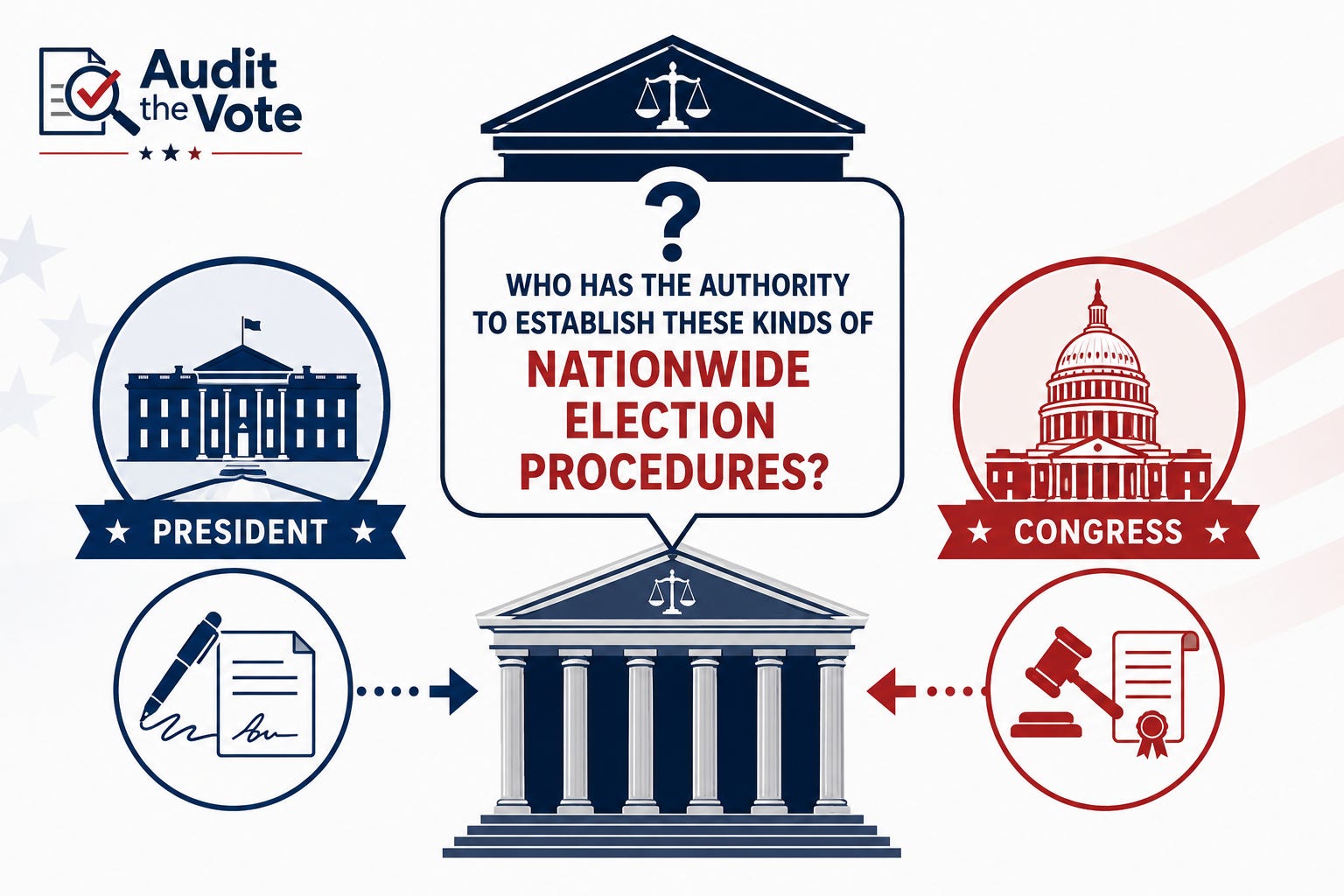
Instead, the court addressed a narrower constitutional question:
Who has the authority to establish these kinds of nationwide election procedures?
According to the ruling, that authority belongs to Congress—not the President acting alone through an executive order.
Is This the End of the Executive Order?
No.
A federal district court has blocked key portions of the Executive Order, but that does not end the legal dispute.
The Trump administration is expected to appeal through the federal appellate courts. If necessary, it can also ask the U.S. Supreme Court to review the case.
One common misconception is that because the Supreme Court is in its summer recess, nothing can happen until the justices return for their next regular term.
That’s not how the process works.
The Supreme Court maintains an emergency docket throughout the year. In urgent cases—including election-related disputes—the Court can consider emergency applications even while it is in recess.
Whether the Court chooses to intervene is impossible to predict, but the legal process is far from over.
For now, the Executive Order’s election-related provisions remain on hold while that process unfolds.
Where Do We Go From Here?
It’s easy to see today’s headline and conclude that the issue is settled.
It isn’t.
What we’re watching unfold is a constitutional debate over who has the authority to establish nationwide election procedures.
The courts will ultimately decide whether these provisions can move forward under existing law, whether Congress must act first, or whether some combination of both is required.
One of the biggest challenges in today’s media environment is that headlines often capture a single moment in a much longer process.
Yesterday’s headline suggested a major policy change.
Today’s headline explains why that policy has been paused.
Tomorrow’s headline may involve an appeal.
Whether you support or oppose the Executive Order, understanding how election law is made is just as important as understanding what changes are being proposed.
As always, my goal is to help you separate the headlines from the underlying legal issues and understand what these developments actually mean.
Stay curious.
Ask questions.
Follow the facts.
Because protecting election integrity starts with understanding the process.
True The Vote NOW Community:
Want to get more involved in election integrity? Join me in the True The Vote NOW Community and connect with citizens working to make our elections more transparent.
Patriot Academy Community Night:
Join me Monday nights as we continue learning together through history, the Constitution, faith, current events, and conversations with special guests.