


One thing I’ve wondered about for years is how the men who founded this nation managed to defeat the most powerful military force on earth only to end up fighting with each other afterward.
Think about it.
These men risked everything together.
They signed the Declaration of Independence knowing it could cost them their lives.
They endured war, political pressure, personal sacrifice, and uncertainty.
Yet somehow, after helping secure American independence, many of them became bitter rivals.
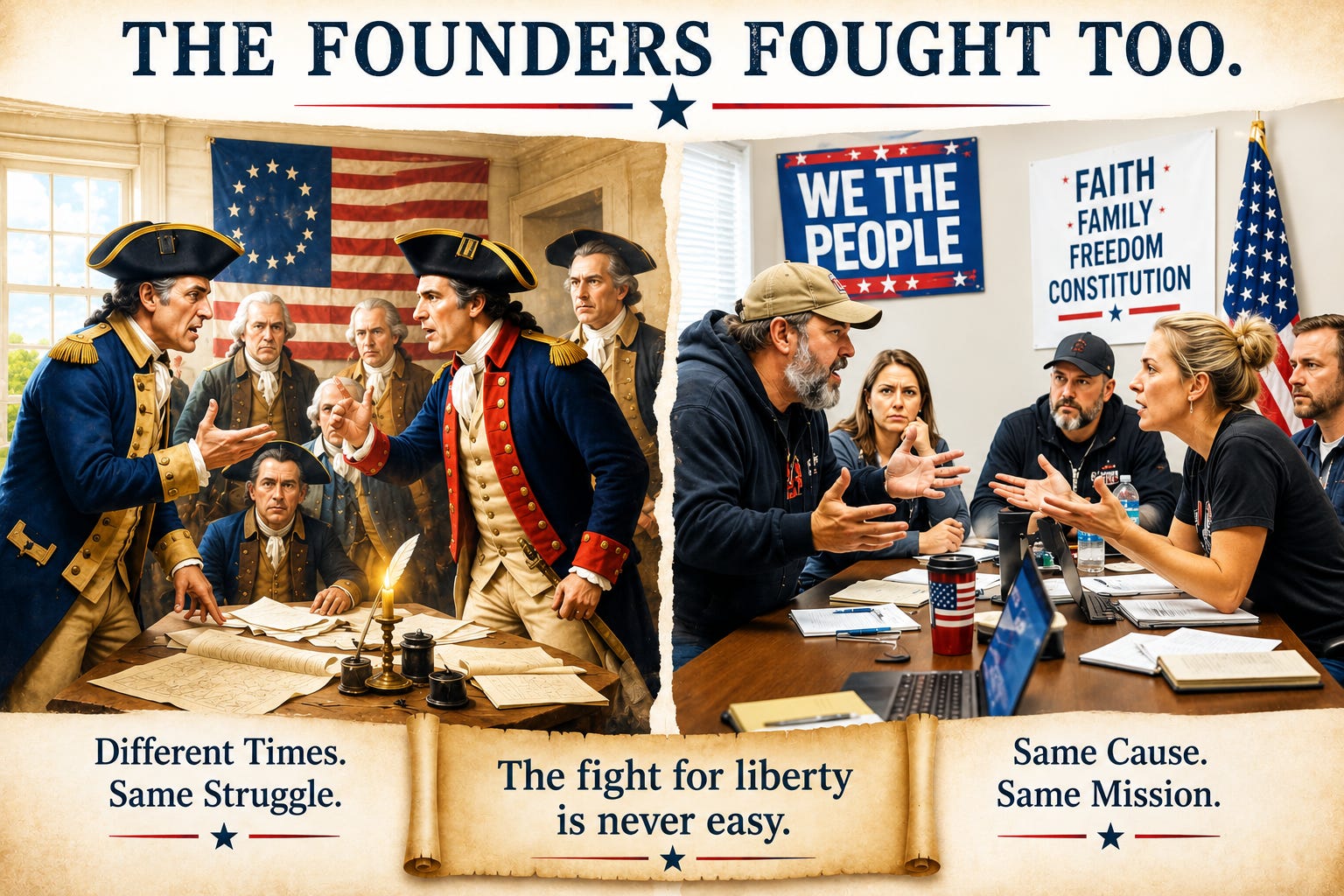
Alexander Hamilton and Aaron Burr ended up in a duel.
John Adams and Thomas Jefferson spent years estranged from one another.
The delegates who gathered to write the Constitution argued constantly.
How could people who accomplished something so extraordinary together struggle so much to get along?
Six years ago, I didn’t understand it.
Today, I think I do.
The Grassroots Reality Nobody Talks About
When I first got involved in politics in early 2021, I thought the biggest obstacles would be election officials, politicians, bureaucrats, courts, and the media.
I assumed the difficult part would be fighting the opposition.
What I didn’t expect was how difficult it would sometimes be to work alongside people who wanted many of the same things I wanted.
Over the past six years, I’ve watched friendships form and fall apart.
I’ve seen volunteers become leaders.
I’ve seen leaders burn out.
I’ve seen people leave organizations they helped build.
I’ve seen misunderstandings turn into conflicts that lasted far longer than the original issue ever warranted.
And if I’m being honest, I’ve been part of some of those conflicts myself.
Not because anyone was evil.
Not because anyone was trying to destroy the movement.
Because people are complicated.
Strong Missions Attract Strong Personalities
The truth is that most people who step into grassroots leadership are not passive individuals.
They are driven.
Opinionated.
Independent.
Passionate.
The very qualities that make someone willing to spend their evenings attending meetings, knocking doors, studying election law, teaching Constitution classes, or organizing events are often the same qualities that create friction.
People who care deeply tend to have strong convictions.
Strong convictions can produce great accomplishments.
They can also produce conflict.
The Founders understood this firsthand.
George Washington spent much of his leadership navigating disagreements among people who were supposedly on the same side.
The American Revolution was not led by a group of people who agreed on everything.
It was led by a group of people who agreed on enough.
There is a difference.
Not Every Disagreement Needs a Winner
One of the hardest lessons I’ve learned is that not every disagreement needs to be won.
Sometimes the goal isn’t proving that you’re right.
Sometimes the goal is preserving a relationship.
Sometimes the goal is protecting the mission.
Sometimes the goal is simply avoiding unnecessary division.
That doesn’t mean abandoning principles.
It means recognizing that every conflict comes with a cost.
The older I get, the more I realize that being right and being effective are not always the same thing.
Some Relationships Can Be Healed. Some Cannot.
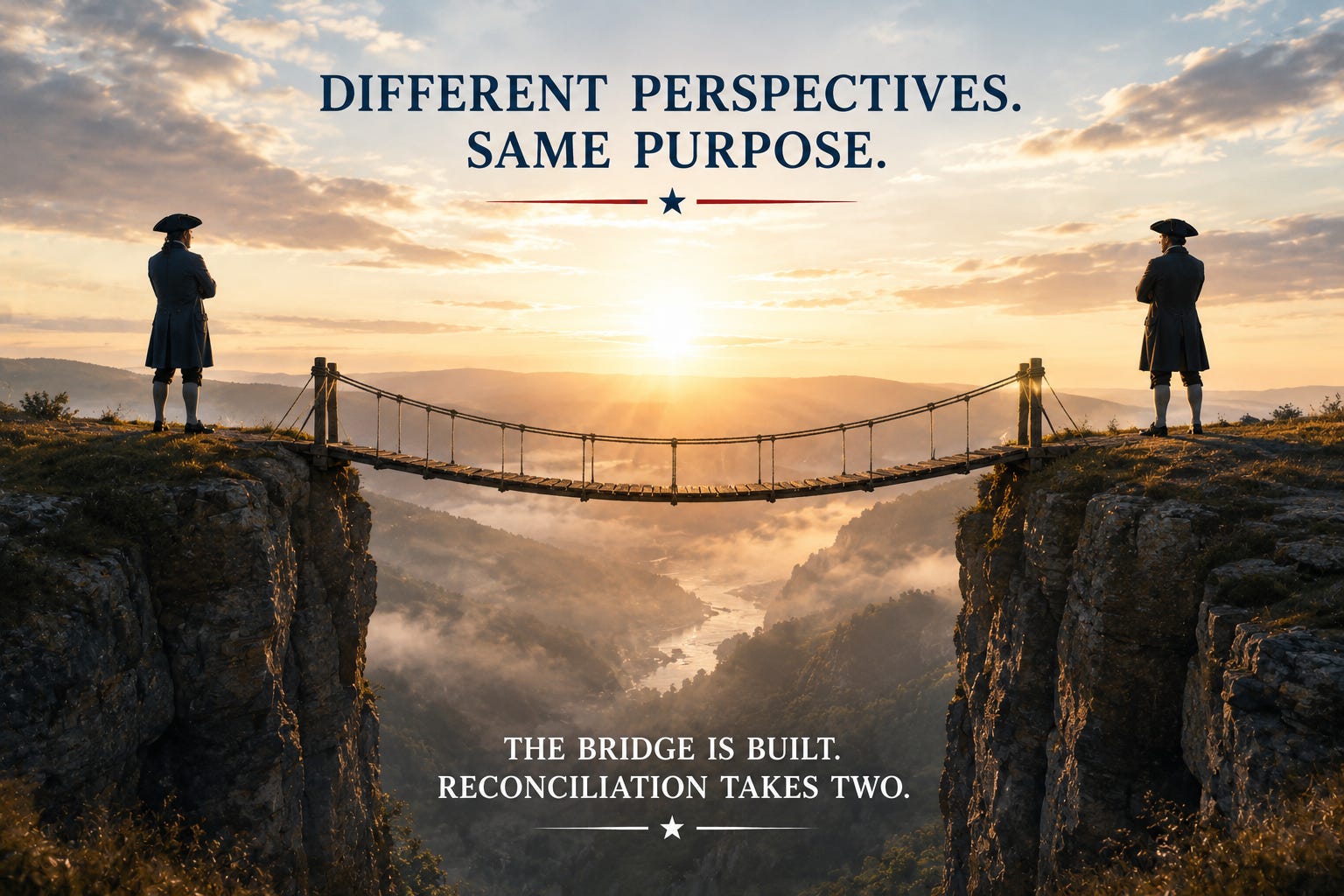
Another lesson I’ve learned is that reconciliation requires two willing participants.
You can apologize.
You can clarify misunderstandings.
You can extend grace.
You can leave the door open.
But you cannot force someone else to walk through it.
There are relationships in life that can be restored.
There are others that may never fully recover.
That reality used to bother me.
Now I see it differently.
My responsibility is to keep my side of the street clean.
I can choose kindness.
I can choose professionalism.
I can choose forgiveness.
What other people choose is ultimately beyond my control.
Don’t Make Someone Your Enemy Just Because They Aren’t Your Friend
This may be the most important lesson of all.
Not everyone who disagrees with you is your enemy.
Not everyone who keeps their distance is working against you.
Not every strained relationship requires a public battle.
In grassroots activism, there are often people who won’t attend the same meetings, won’t serve on the same committees, and won’t work on the same projects.
Yet they still care about many of the same principles.
They still want stronger communities.
They still want constitutional government.
They still want liberty.
They are simply taking a different path.
We’ve become too quick as a culture to categorize people as allies or enemies.
Real life is usually more complicated than that.
Focus on the Mission
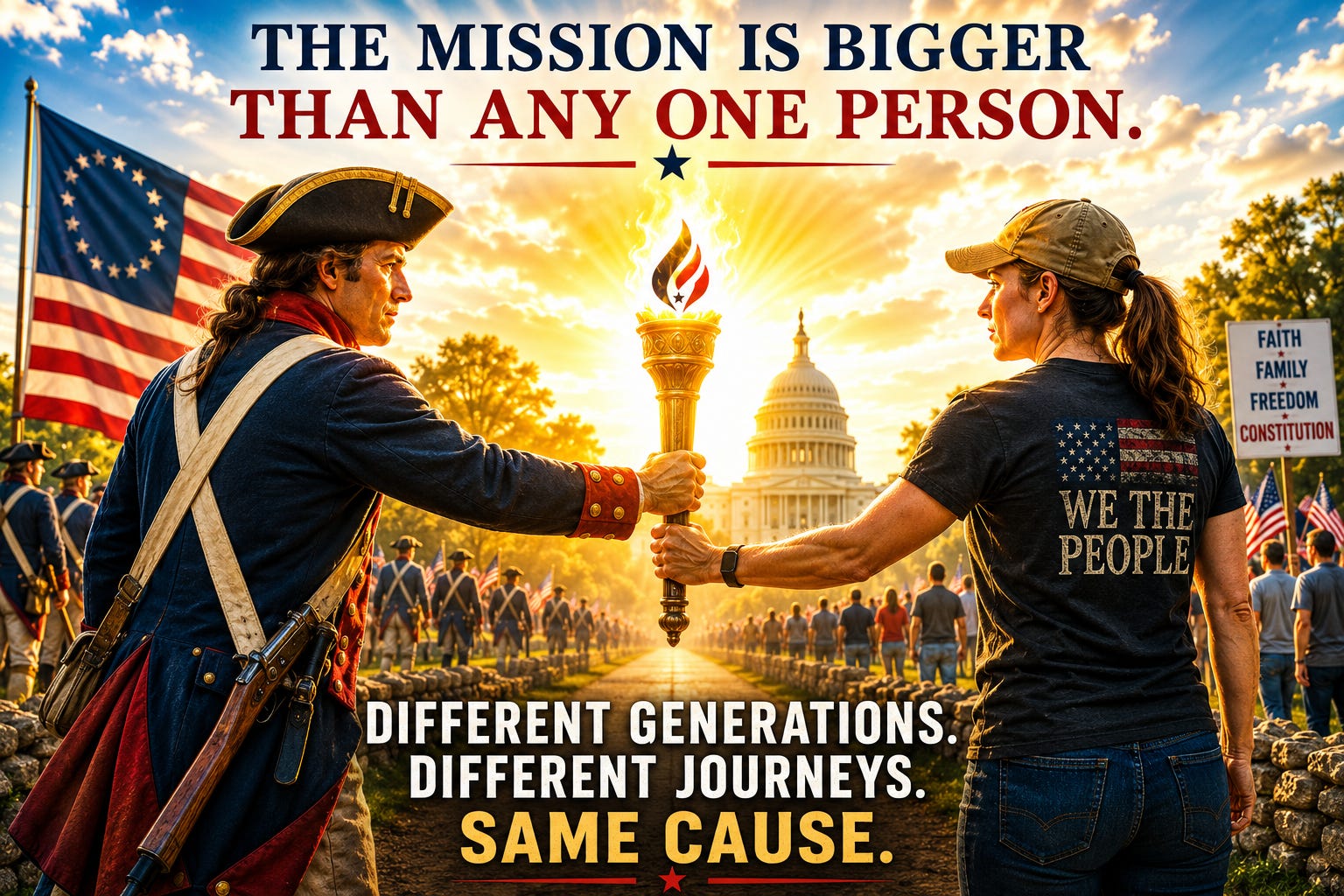
Perhaps that is the lesson the Founders understood better than we do today.
John Adams and Thomas Jefferson eventually reconciled after years of silence.
Alexander Hamilton and Aaron Burr never did.
Some relationships were restored.
Others were not.
But the work of building a nation continued.
The cause was always bigger than the personalities involved.
That doesn’t make relationships unimportant.
It simply puts them in perspective.
The mission matters.
The principles matter.
The future matters.
And sometimes that means learning to continue the work even when relationships don’t unfold the way we hoped they would.
Final Thoughts
Six years ago, I wondered how the men who founded this nation could become bitter rivals after accomplishing something so extraordinary together.
Today, I wonder how they managed not to have more conflicts than they did.
Because movements are messy.
People are imperfect.
Relationships are complicated.
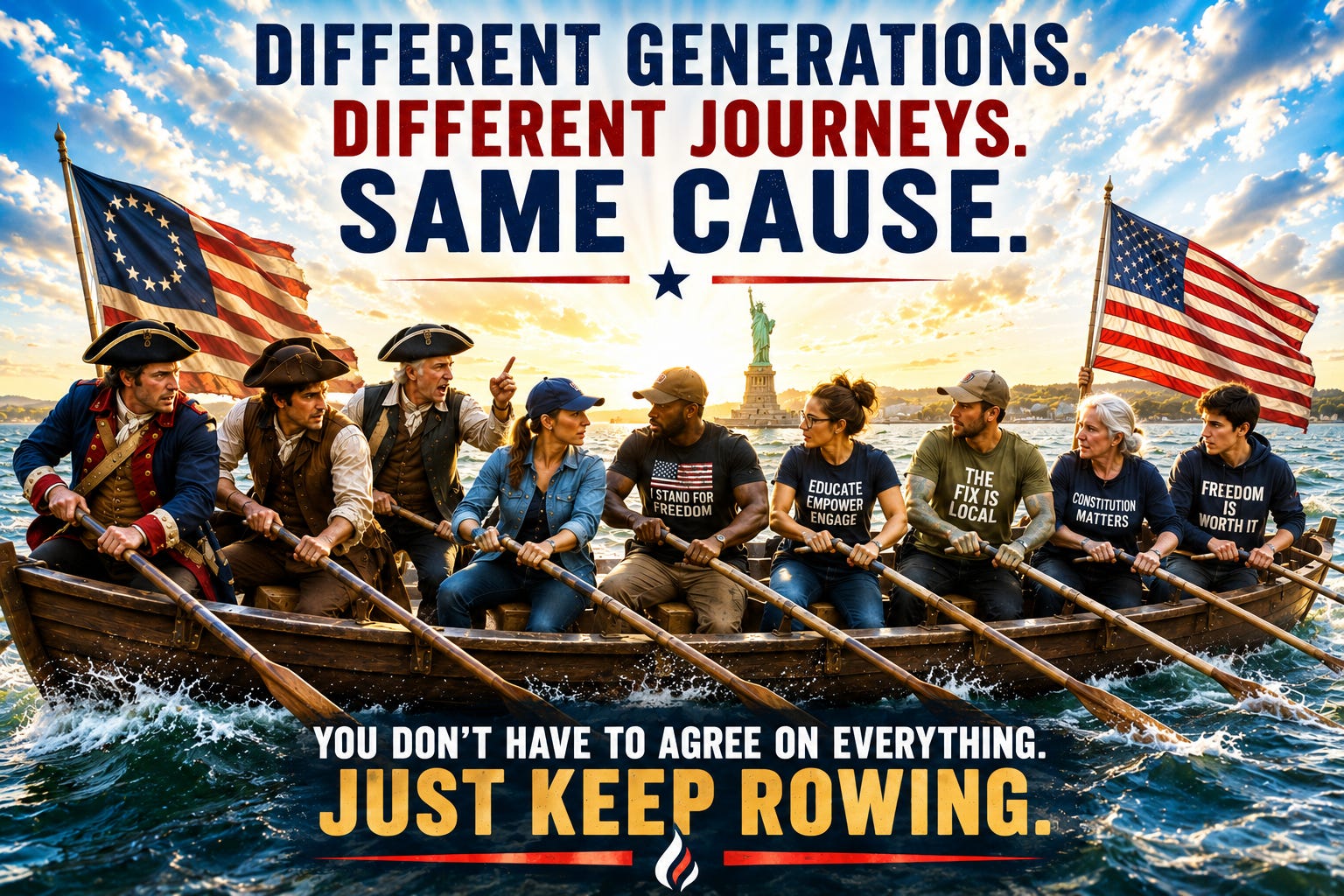
And yet the work must continue.
Maybe maturity isn’t learning how to avoid conflict.
Maybe it’s learning how to pursue a worthy cause without allowing every disagreement to become a permanent division.
The Founders weren’t successful because they eliminated conflict.
They were successful because they learned how to keep moving forward despite it.
That’s a lesson I’m still learning.
And perhaps it’s one that all of us in the grassroots movement need to remember.

As usual, a well thought out and very well presented, mature description of what it is we are all trying to accomplish.
You go, girl! 👍🚂🇺🇸