


Ever notice how two people can watch the exact same clip…
and walk away with completely different conclusions?
I don’t think that’s an accident.
I think that’s what happens when context is missing.
And right now, we are swimming in content that is designed to give us just enough information to react, but not enough to understand.
🪄The Illusion of Being Informed
We live in a world where information is constant.
Scroll. Refresh. Watch. React. Repeat.
And because we’re consuming so much, we feel informed.
But here’s the truth:
👉 You’re not seeing “what’s happening.”
👉 You’re seeing what the algorithm thinks will keep you watching.
Let’s break that down.
Platforms like Facebook and Instagram prioritize content based on:
Engagement (likes, comments, shares)
Watch time (how long you stay on a post)
Emotional reaction (especially outrage or surprise)
Meanwhile, TikTok takes it even further.
Its algorithm is heavily driven by:
Completion rate (did you watch the whole video?)
Rewatches (did it make you watch again?)
Immediate engagement in the first few seconds
👉 Translation:
Content that makes you feel something fast gets pushed.
Not content that gives you full context.
Not content that requires thinking.
Not content that slows you down.
The faster the content… the thinner the context.
And here’s where it gets even more important:
These platforms learn you.
They track:
What you pause on
What you like
What you argue with
What you share
And then they feed you more of the same.
👉 Not necessarily what’s true…
👉 But what you’re most likely to engage with.
Which means over time, you’re not just consuming information…
You’re being trained to react to a specific version of reality.
🟰 How Context Gets Stripped Away
Most people assume misinformation looks like a flat-out lie.
But that’s not usually how it works.
It’s much more subtle than that.
👉 It’s not about inventing something false.
👉 It’s about removing just enough context to change the meaning.
A perfect example of this is what happened during the 2016 campaign involving Donald Trump and a reporter.
You’ve probably heard the claim:
“Trump mocked a disabled reporter.”
And if all you saw was the viral clip, it certainly looked that way.
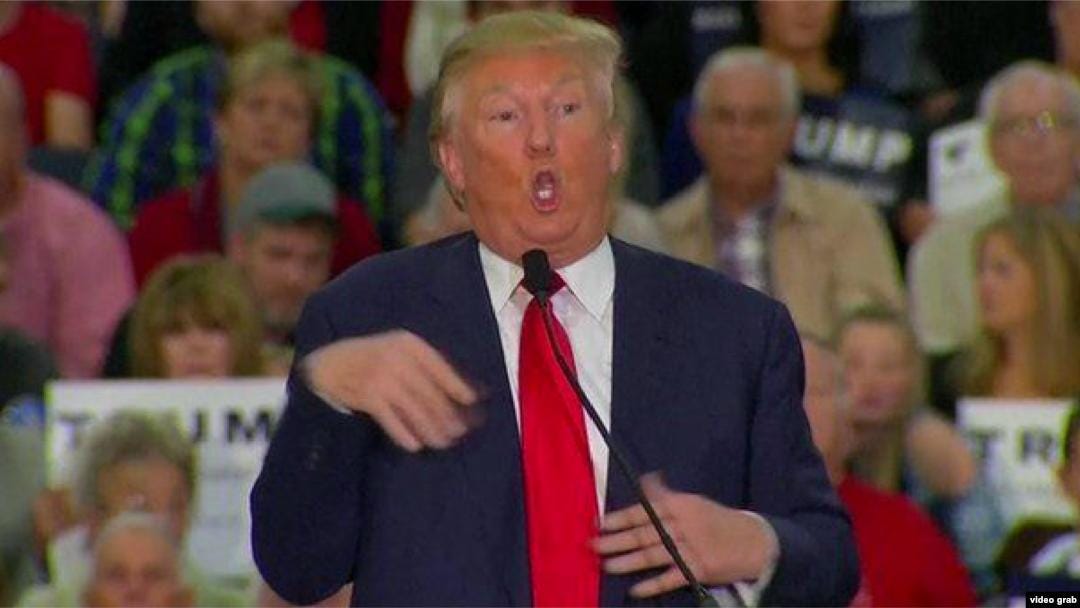
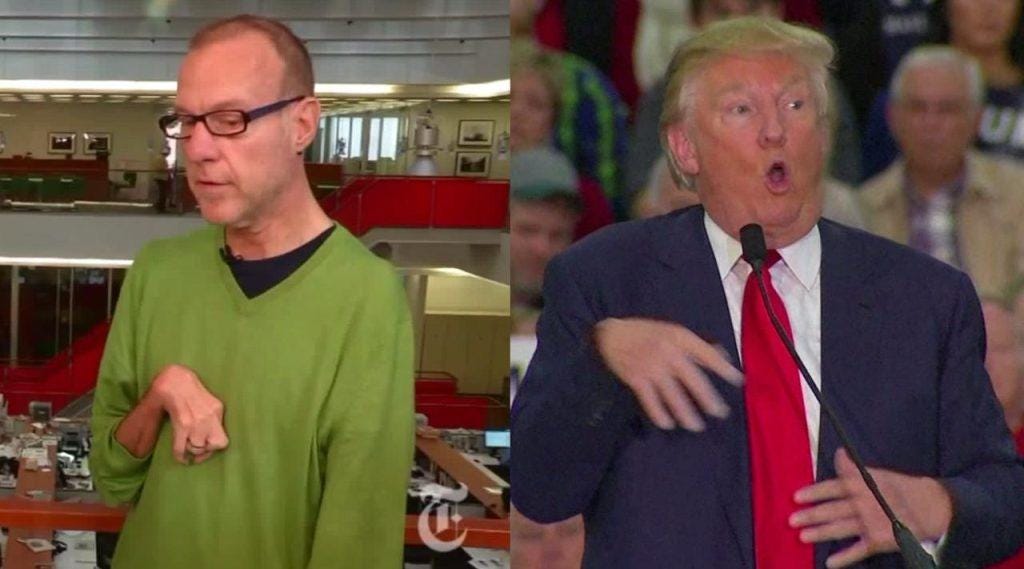
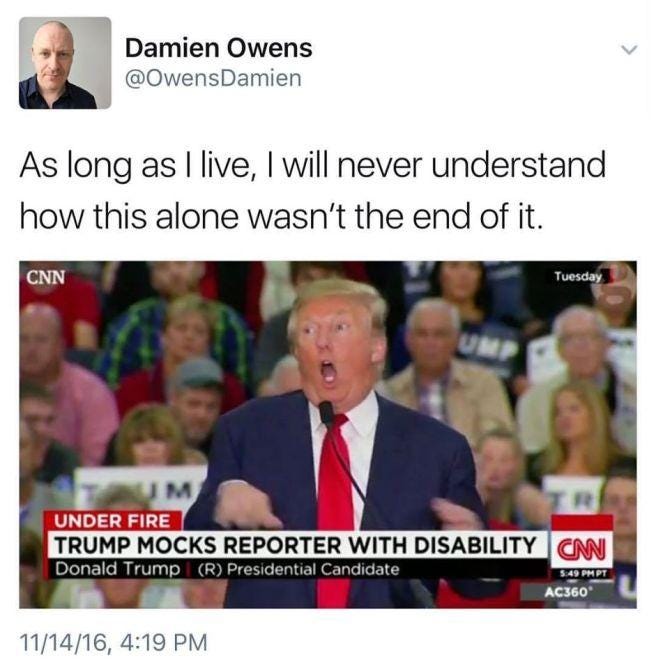
But here’s where context matters.
The reporter in question, Serge F. Kovaleski, has a physical disability affecting his arm.
The clip that spread showed Trump using exaggerated hand movements while referencing the reporter.
Case closed, right?
Not quite.
When you look at a broader set of Trump’s speeches—before and after that moment—you’ll find that he has a long pattern of using similar gestures to mock or imitate many people, not specifically tied to disability.
The viral clip removed that broader context.
And once that context was gone, the interpretation was locked in.
👉 What people saw: a short clip
👉 What people concluded: intentional mockery of disability
👉 What was missing: behavioral pattern across multiple speeches
Now—to be fair—people can still disagree on intent.
But here’s the key point:
Without context, you weren’t given enough information to make an informed judgment in the first place.
You were given just enough to react.
And that’s the pattern we see over and over again:
A clip without the full exchange
A quote without the full conversation
A statistic without a baseline comparison
👉 You’re not being shown the lie.
👉 You’re being shown the most useful fragment.
🔑Why This Works So Well
If you’ve ever wondered…
“Why do people fall for this so easily?”
The answer is:
👉 Because it’s not designed to inform you.
👉 It’s designed to work with your brain, not against it.
There are a few key things happening under the surface:
We’re Wired for Confirmation
We naturally gravitate toward information that confirms what we already believe.
It feels good.
It feels validating.
It feels like truth.
So, when a clip, headline, or reel reinforces our existing view?
We don’t question it.
We accept it.
2. Emotion Overrides Analysis
Content that triggers:
Anger
Shock
Fear
Vindication
…gets processed faster than content that requires reasoning.
👉 Your brain says: “React now. Analyze later.”
And most people never circle back to analyze.
3. Tribal Thinking Kicks In
Once something is framed as:
“Our side” vs. “Their side”, it stops being about truth and starts being about loyalty.
So instead of asking:
“Is this accurate?”
We ask:
“Does this support my side?”
That’s a completely different question.
4. Speed Is the Enemy of Discernment
The entire system is built for speed:
Fast clips
Fast reactions
Fast sharing
But discernment?
👉 It’s slow.
Context slows you down.
And slowing down is the enemy of manipulation.
💰The Cost of Missing Context
At first glance, this might not seem like a big deal.
“It’s just a clip.”
“It’s just a headline.”
But the cost adds up quickly.
1. We Start Misjudging People
We form strong opinions about people based on:
10-second clips
Out-of-context quotes
Secondhand interpretations
And once that judgment is formed?
It’s hard to undo.
People aren’t canceling each other over lies…
they’re canceling each other over incomplete truth.
2. We Divide Our Own Teams
Movements don’t just break because of outside pressure.
They break because of:
Misunderstood statements
Misrepresented intentions
Half-seen situations
All fueled by missing context.
3. We Make Bad Decisions
When you act on incomplete information, you:
Support the wrong things
Oppose the wrong things
Lose credibility when the full story comes out
And in a high-stakes environment?
That matters.
4. We Become Easy to Manipulate
This is the real cost.
If someone can predict what will make you react…
They can shape what you believe.
Not by lying to you outright—but by deciding what you don’t see.
A person without context is not informed.
They’re influenceable.
🧰The Discipline of Context (How We Fix This)
Because this is fixable.
But it requires discipline.
👉 Build a “Pause Before You React” Habit
Before you like, share, or comment—pause.
Even 30 seconds makes a difference.
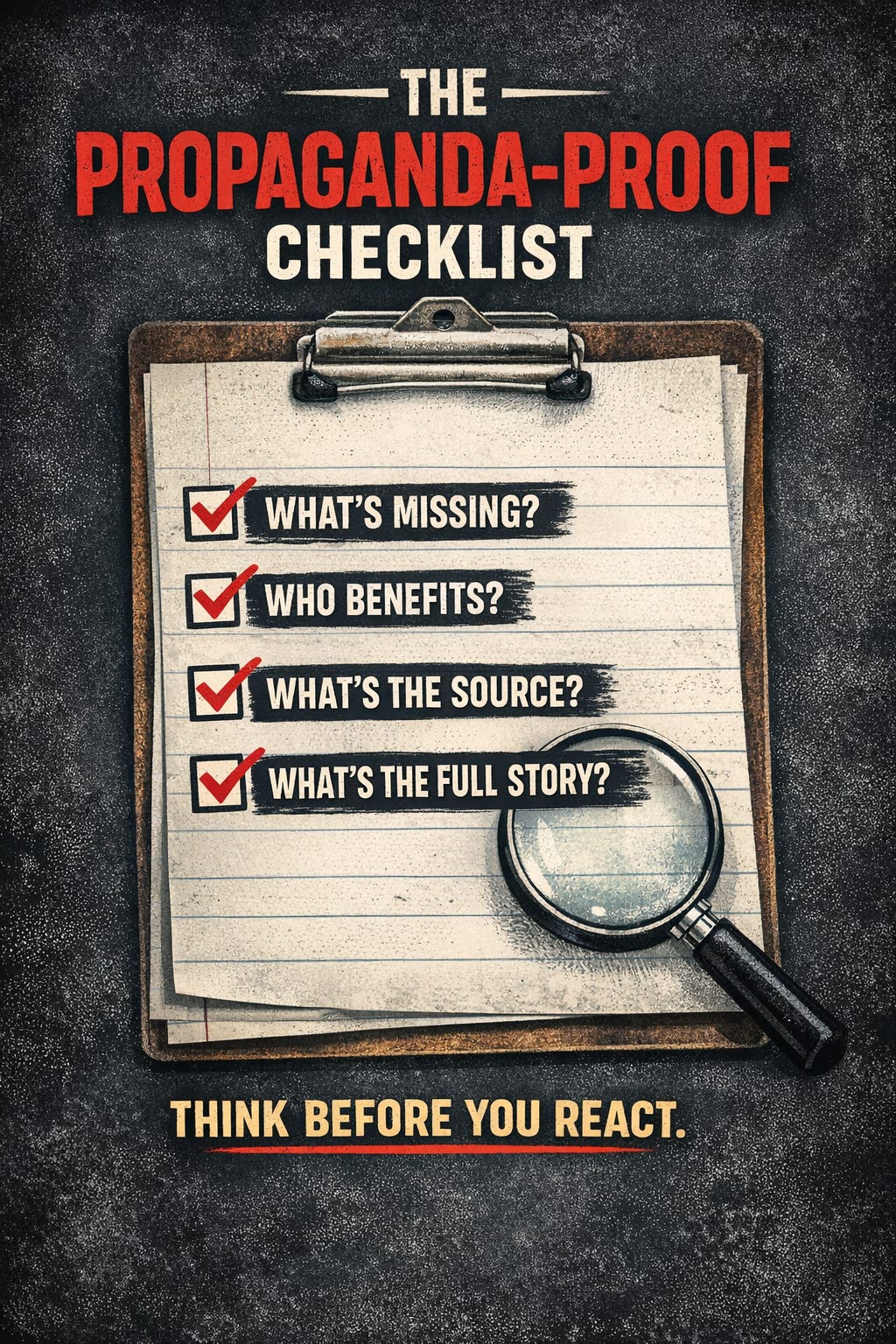
Ask yourself:
What happened before this clip?
What happened after?
Is there a longer version?
Who originally posted this?
What might be missing?
👉 Look for the Full Exchange
If it’s a quote, find the full interview.
If it’s a clip, find the full speech.
If it’s a claim, find the source.
Not the reaction to it.
Not the commentary on it.
The original.
👉 Separate Reaction from Conclusion
It’s okay to have an initial reaction.
That’s human.
But don’t let your reaction become your conclusion.
Give yourself space to ask:
“Do I have enough information to actually form an opinion yet?”
👉 Train Yourself to Value Accuracy Over Speed
This is a mindset shift.
You don’t have to be the first to comment.
You don’t have to be the first to share.
It’s better to be right than to be fast.
👉 Become Harder to Manipulate
This is the goal.
Not perfection.
Not skepticism of everything.
But awareness.
When you start asking better questions, you stop being an easy target.
🔁The Reset We Need
If we’re serious about navigating this moment well…
We have to change how we consume information.
Because right now?
Too many people are reacting to fragments and calling it truth.
This doesn’t mean you trust everything.
And it doesn’t mean you distrust everything.
It means you become more disciplined in how you process what you see.
It means:
You take sides on issues… not personalities
You seek understanding before reaction
You refuse to outsource your thinking to a headline
And maybe most importantly…
You give people a little more room and grace.
Because when context is missing, even good people can look wrong.
In a world flooded with information, clarity becomes a skill.
And the people who develop that skill?
They won’t just be better informed.
They’ll be harder to manipulate.
Harder to divide.
And far more effective in everything they do.
Because at the end of the day:
👉 Context isn’t optional.
It’s the difference between being informed and being used.
Completely on point. Discernment. Well written piece that reflects both current environment and important actions to address