


This week we’re seeing a little bit of good news — and a lot of confusion — about the SAVE AMERICA Act… (a special nod to my audience who reached out and asked why I wasn’t using the full name of the bill… you’re welcome).
Senate Majority Leader John Thune said publicly that he is willing to take up the legislation.
That’s a real step forward. In the Senate, nothing happens unless leadership is at least open to putting something on the floor.
But then Thune said something that set off alarms among supporters:
“The votes aren’t there.”
Immediately activists started saying that can’t possibly be true.
So which is it?
Do the votes exist, or don’t they?
The answer — as usual with the Senate — is:
It depends which rule you’re talking about.
And the rule everyone is arguing about right now is the filibuster.
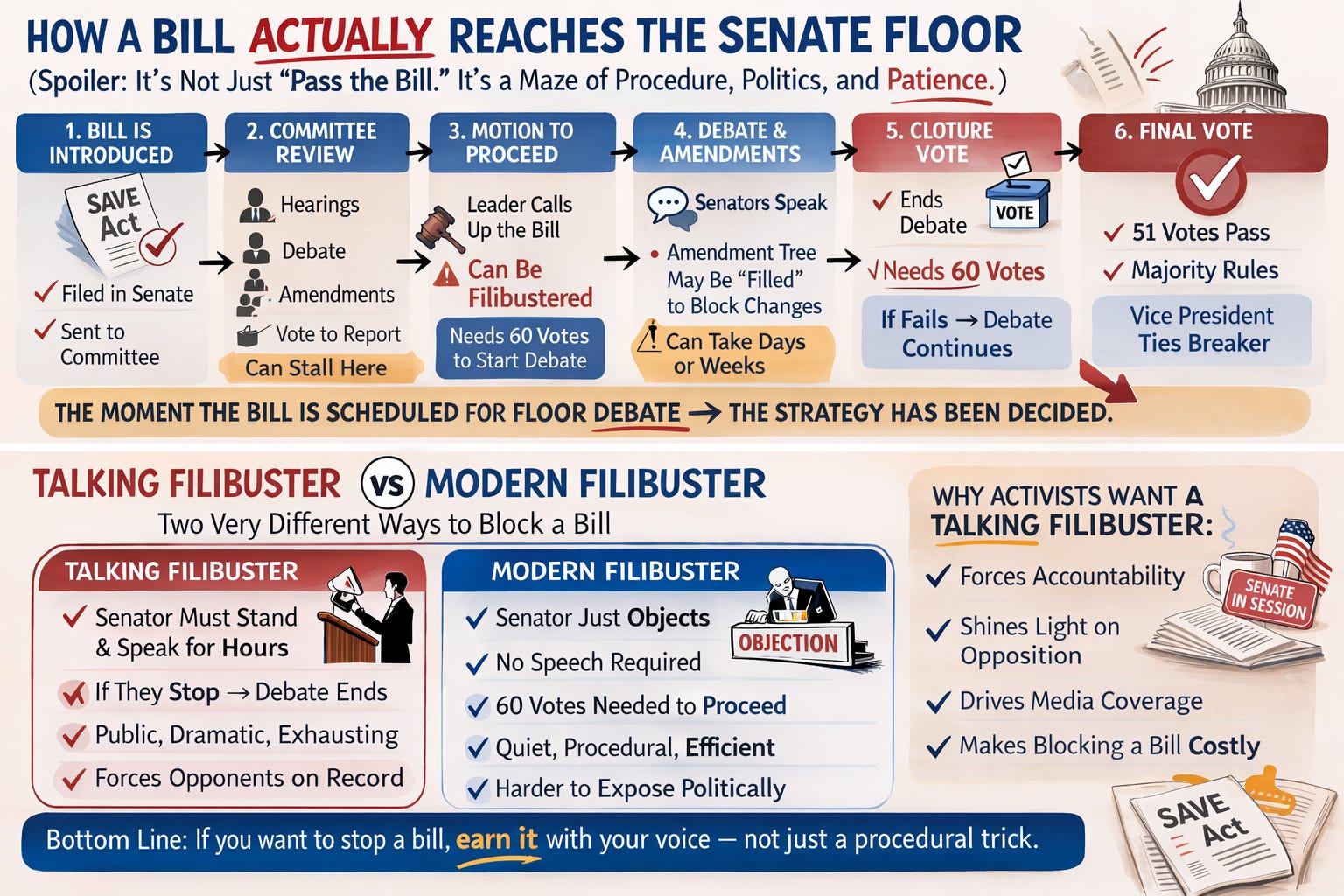
The Filibuster Everyone Thinks They Understand (But Usually Doesn’t)
When most Americans hear the word filibuster, they imagine something like this:
A senator dramatically standing on the Senate floor, reading from a cookbook or the phone book while everyone else slowly loses the will to live.
That is what’s called a talking filibuster.
But here’s the catch:
That’s not how the Senate usually works anymore.
Today’s Senate typically uses what’s called a procedural filibuster.
Which means a senator doesn’t actually have to talk.
They just signal they will object.
And suddenly the Senate needs 60 votes to move forward.
No marathon speeches required.
No collapsing senators.
Just a procedural roadblock.
The Difference Between a Talking Filibuster and Today’s Filibuster
Modern Filibuster (what usually happens)
A senator says they will object.
That triggers the cloture rule.
Now the Senate needs 60 votes to proceed.
No speech required.
No drama required.
Just math.
Talking Filibuster (what activists want)
The Senate brings the bill to the floor.
Opponents must physically hold the floor speaking to block the vote.
If they stop talking, the Senate can move forward.
In other words:
If you want to stop a bill, you have to earn it with sore feet and a dry throat.
Some reformers love this idea because it forces obstruction to be public and exhausting instead of quiet and procedural.
So Why Did Thune Say the Votes Aren’t There?
Here’s where the disagreement actually lives.
Supporters of the SAVE Act are looking at one vote count.
Senate leadership is looking at a different one.
Vote Count #1: Simple Majority
SAVE Act advocates believe the bill would likely pass if it received a straight up-or-down vote.
The math could look something like:
50 Republicans
49 Democrats
Vice President breaks tie if needed
Under that scenario, the bill passes.
So activists say:
“The votes absolutely exist.”
Vote Count #2: Cloture
But under normal Senate rules, the bill must first overcome a filibuster.
That requires 60 votes.
Right now there is no clear evidence that seven Democrats are ready to cross over.
So when Thune says the votes aren’t there, he is almost certainly referring to the 60-vote threshold.
Both sides are describing real things.
They’re just describing different rules.
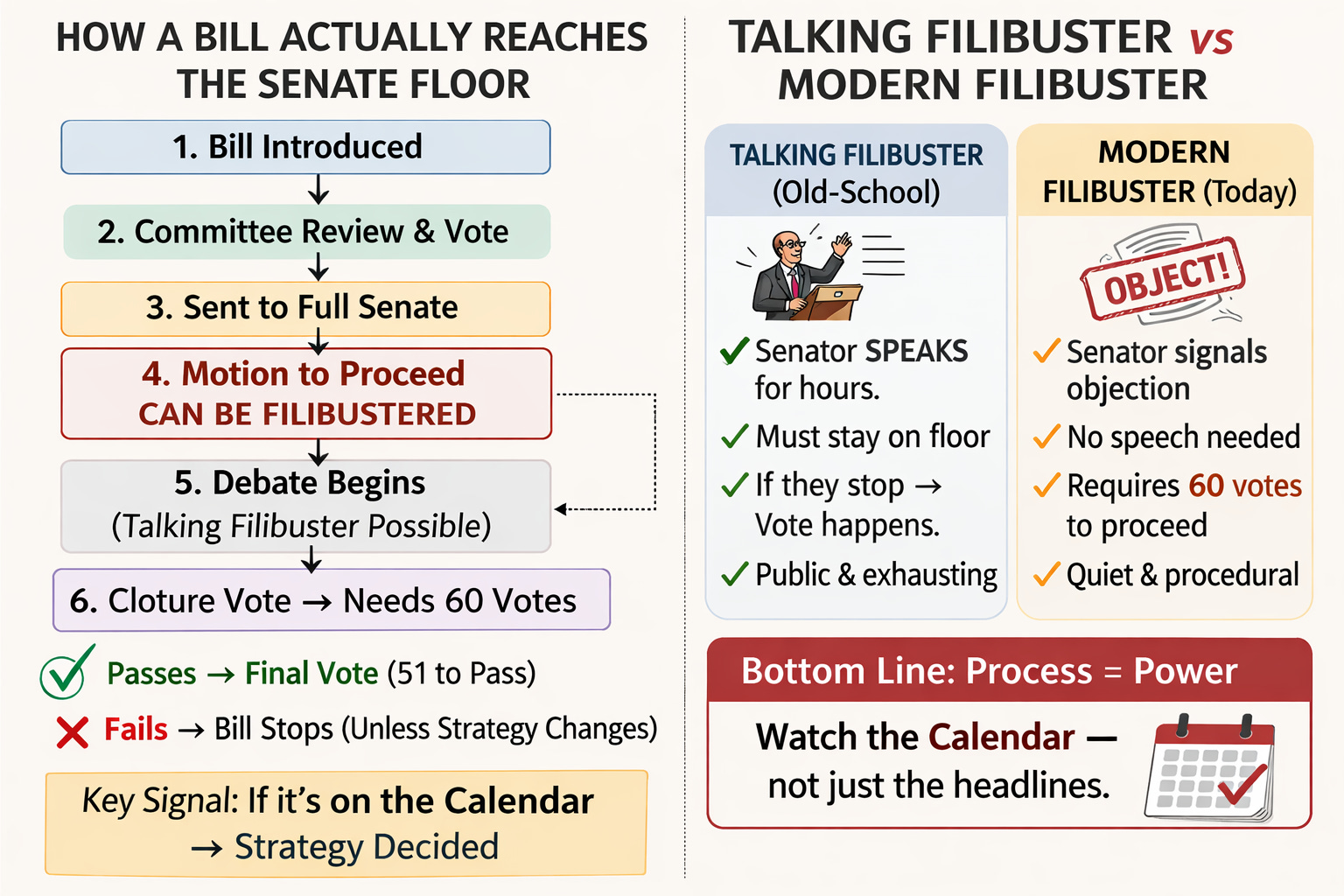
Why the Talking Filibuster Is Suddenly a Hot Topic
Many activists are now pushing for the Senate to force a talking filibuster showdown.
The logic is simple:
If opponents want to block the SAVE Act, make them do it in public.
Stand on the floor.
Talk for hours.
Explain to the country why they are blocking election integrity legislation.
Politically, that’s a very different situation than quietly requiring 60 votes.
But Senate leaders worry about something else.
Talking filibusters can paralyze the Senate for days or weeks.
And Senate leadership hates losing control of the floor schedule.
Which is why Thune signaled that the votes may not exist inside the Republican conference to pursue that strategy.
Three Ways the Senate Could Still Force a Vote
Even if there are not 60 votes today, the Senate still has several procedural options.
1️⃣ Traditional Cloture Vote
The Senate could simply try the normal process.
Bring the bill to the floor.
File cloture.
See if Democrats break.
Sometimes public pressure changes votes.
Sometimes it doesn’t.
But at least everyone goes on record.
2️⃣ Talking Filibuster Showdown
Leadership could force debate and require opponents to physically hold the floor to block the bill.
This would turn the SAVE Act into a major national debate.
But it would also consume massive amounts of Senate floor time.
3️⃣ Rule Change (The Nuclear Option)
The Senate could change its rules and allow this type of legislation to pass with a simple majority.
Both parties have used versions of this tactic before for judicial nominations.
But many senators hesitate to change Senate rules because once the precedent is set, it applies to future Congresses too.
The One Signal That Actually Matters
All of this debate is interesting.
But the real signal to watch is much simpler.
The Senate calendar.
If leadership schedules the SAVE Act for floor consideration, it means the internal procedural strategy has likely been decided.
Until then, everything else is speculation.
Or as the Senate might call it:
“robust procedural discussion.”
How Citizens Can Help Without Losing Their Minds
Anger is easy.
Strategy is harder.
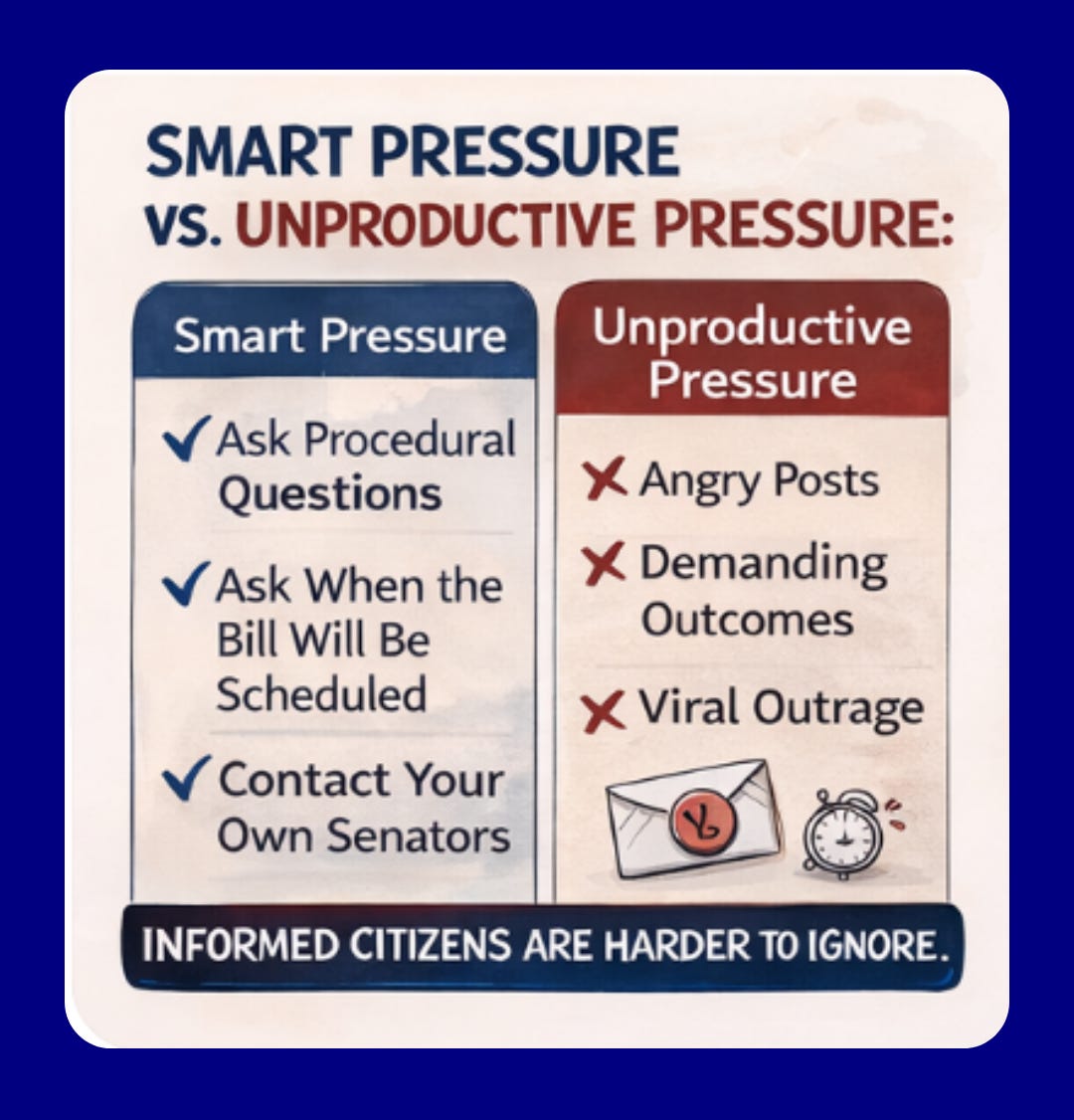
If citizens actually want to move the SAVE Act forward, there are smarter ways to apply pressure.
1️⃣ Ask procedural questions
Instead of posting angry comments, ask simple questions like:
“When will the SAVE Act be placed on the Senate Calendar?”
This shows leadership that the public understands the process.
And that matters.
2️⃣ Focus pressure on scheduling
Leadership controls the calendar.
Which means pressure should focus on bringing the bill to the floor.
3️⃣ Stay grounded in process
The easiest way to avoid propaganda — from either side — is to watch what the Senate actually does.
Not what people say about it.
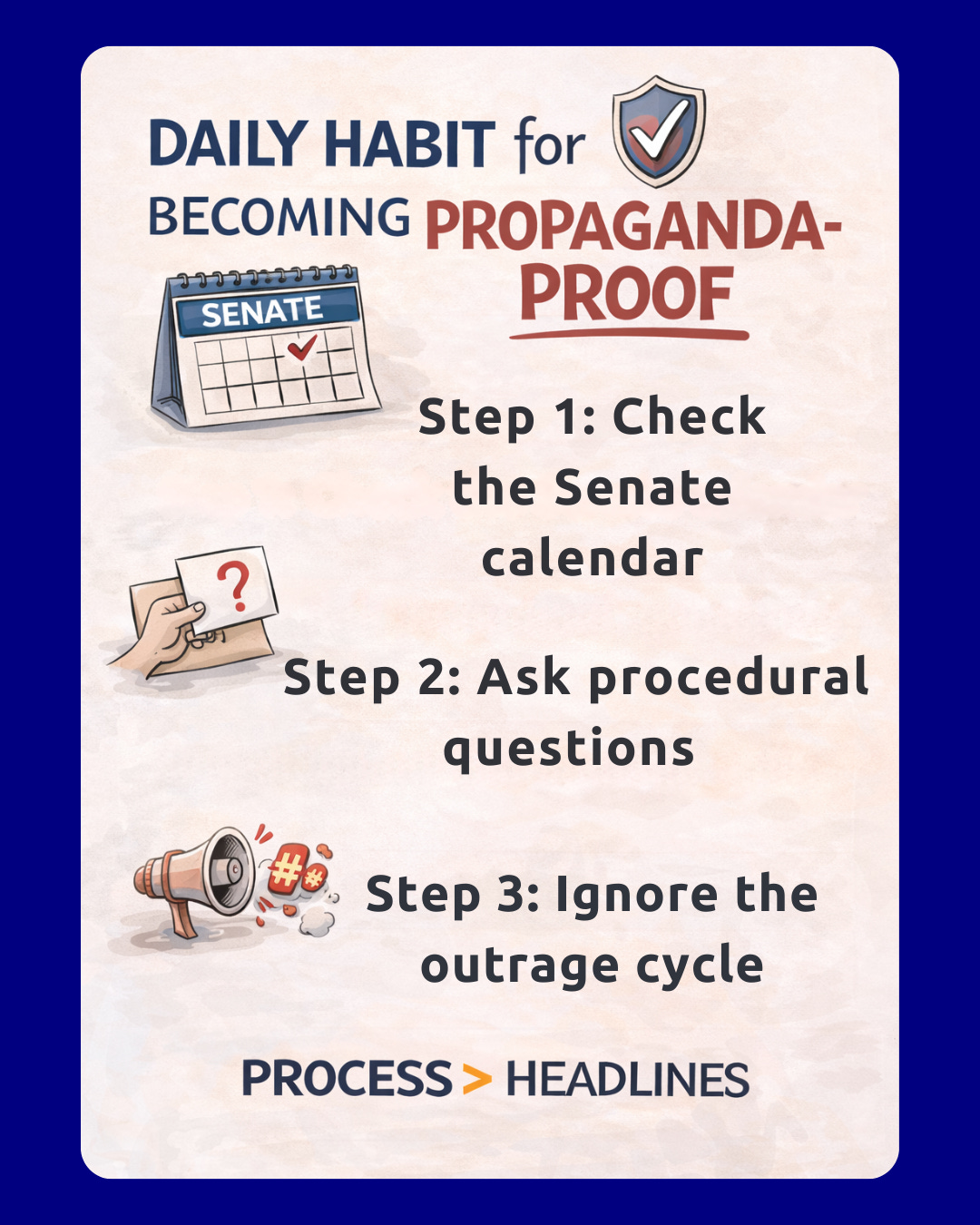
One easy habit:
Each morning type this into AI or search:
“Is the SAVE Act on the Senate Calendar for today?”
Then check the Senate’s Calendar of Business.
Because calendars don’t spin.
The Bottom Line
The SAVE Act debate isn’t just about votes.
It’s about which rules the Senate is willing to use.
Under one rule, the votes probably exist.
Under another rule, they probably don’t.
That’s why Senator Thune and the bill’s advocates sound like they are contradicting each other — when in reality they’re talking about different parts of the same procedural maze.
And if you’ve learned anything about the United States Senate, it’s this:
The Senate rarely does anything the easy way.
But it does eventually respond to pressure.
Especially when citizens understand the process well enough to ask the right questions
.
Excellent commentary, Toni.
Look how far you have come since 2020 👍🚂🇺🇸