


Over the past couple weeks, I’ve been encouraging everyone to develop a simple habit: watch the Senate calendar.
Not the headlines.
Not the viral tweets.
The calendar.
So, when I started seeing people on X celebrating because they heard the SAVE America Act might finally be coming to the Senate floor, I thought this would be a good moment to pause and walk through what’s actually happening.
Because when it comes to Congress, what politicians say they’re going to do and what actually appears on the Senate calendar are two very different things.
And if you really want to understand what’s going on in Washington, you have to learn to watch the process, not the press releases.
There’s another reason I keep emphasizing this.
If we’re going to build a movement that lasts, we have to build leaders, not just moments of outrage.
Part of building leaders is building emotional stability in activists. When people don’t understand the process, they ride a roller coaster of rumors, headlines, and social media drama. That’s one of the fastest ways to burn people out.
But when you understand how the system actually works, you can stay steady. You know what matters, what doesn’t, and when something is actually moving.
And that kind of steady, process-focused mindset is exactly what produces long-term success instead of activist burnout.
First: What the SAVE America Act Actually Does
The SAVE America Act is basically an expanded version of the earlier SAVE Act.
The goal is straightforward: tighten up federal election rules.
Among other things, the bill would:
• require proof of U.S. citizenship (like a passport or birth certificate) to register to vote in federal elections
• require photo ID in most voting situations
• allow voter rolls to be compared with Department of Homeland Security databases to verify citizenship
Supporters argue this is basic election integrity.
Critics argue it could create barriers for some voters who don’t have easy access to documents.
Regardless of where you fall on that debate, the key point right now is this:
The bill already passed the House earlier this year.
Now it’s sitting in the Senate.
And that’s where things get complicated.
Why the Senate is a Completely Different Animal
Most Americans assume Congress works like this:
A bill comes up.
People debate it.
Then they vote.
That’s basically how the House operates.
The Senate… does not.
The Senate is built around minority rights and unlimited debate, which means there are a lot of procedural tools that can slow down—or quietly kill—legislation.
That’s what this whole fight is about.
The Trap Everyone Was Worried About
Last week it looked like Senate leadership might bring up the bill and immediately try something called cloture.
If you’ve been following politics for a while, you’ve probably heard that word thrown around.
Here’s the plain-English explanation.
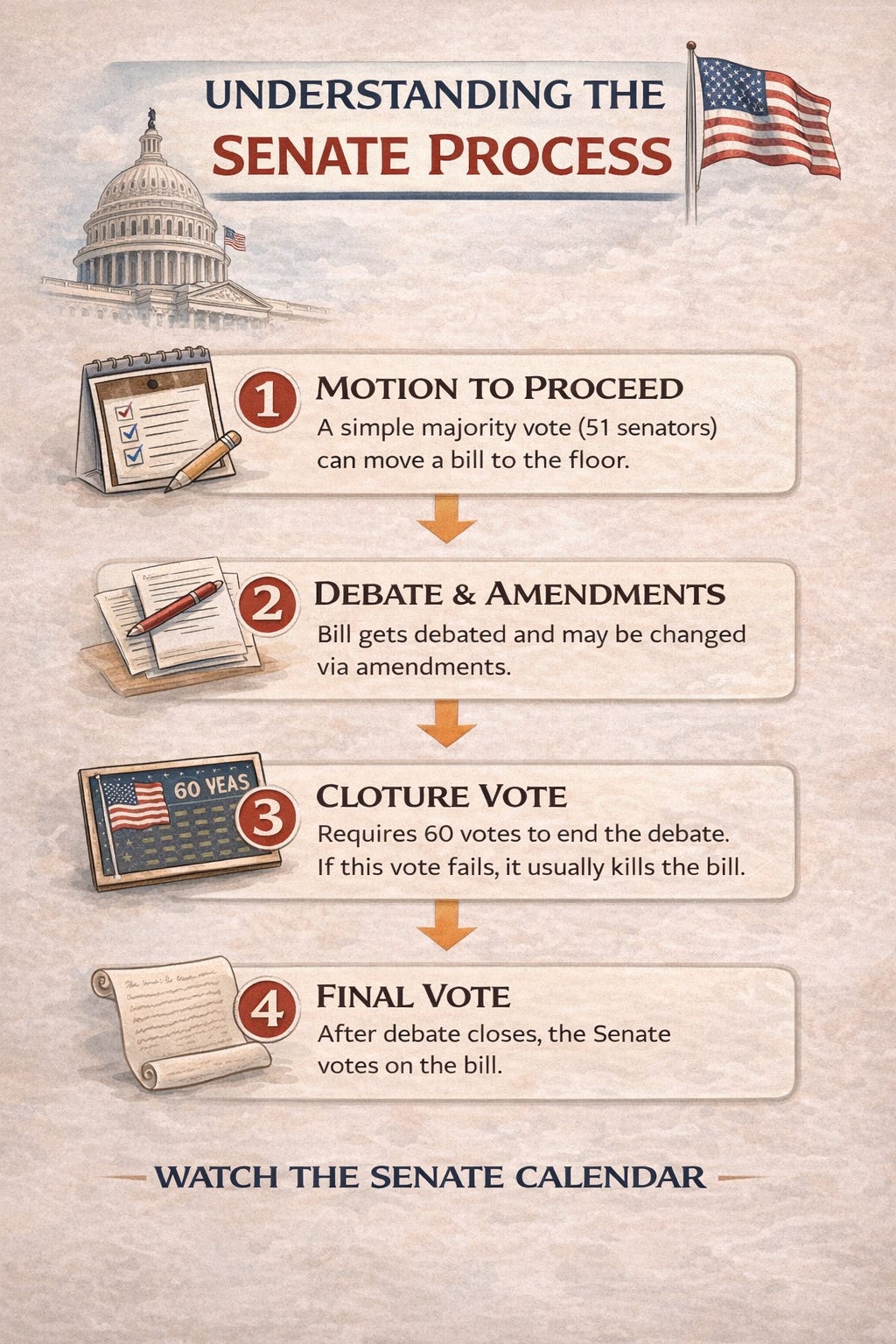
Cloture is the vote used to end debate in the Senate.
And it requires 60 votes.
Right now, there aren’t 60 votes in the Senate for this bill.
So, if leadership had called a cloture vote right away, it likely would have failed.
And when cloture fails, the bill usually just dies quietly.
That’s why a lot of activists were frustrated. It looked like the bill was going to get a procedural burial.
The Strategy Shift
Now we’re hearing that instead of a quick procedural vote, the Senate may actually allow the bill to be debated.
That means several things could happen.
First, the Senate would vote on motions to proceed, which are procedural steps to officially bring the bill to the floor.
Those sometimes only require 51 votes instead of 60.
If that happens, the Senate can begin debating the bill.
Which leads to another phrase you may have heard:
“Filling the Amendment Tree”
This sounds complicated but the concept is pretty simple.
When a bill comes to the floor, senators can offer amendments—basically proposed changes.
The majority leader has the power to fill the amendment tree, meaning they offer placeholder amendments that take up all the available slots.
Why would they do that?
Because it allows leadership to control what amendments get debated and prevents the process from spiraling into chaos.
In other words:
It keeps the debate organized.
The Possibility of a “Vote-a-Rama”
If the bill stays on the floor long enough, we could also see something called a vote-a-rama.
This is when the Senate votes rapidly on a long list of amendments.
Sometimes there are dozens.
Sometimes hundreds.
It’s exhausting, messy, and very political.
But it forces senators to go on the record about where they stand.
Why Activists Are Calling This a Win
What changed here appears to be public pressure.
A lot of people flooded Senate offices with calls, emails, and social media posts demanding that the bill at least get a real debate instead of a quick procedural death.
The result—at least according to what leadership is now saying—is that the Senate may actually legislate on the bill instead of burying it.
And believe it or not, that alone is a pretty big shift.
But Here’s the Important Part
Just because a senator says they plan to bring something to the floor… does not mean it’s happening.
In Washington, talk is cheap.
The only thing that really matters is what shows up on the Senate calendar.
If the bill isn’t listed there, then it hasn’t truly entered the process yet.
So, if you want to follow this fight intelligently, make it a habit to check the Senate calendar regularly.
That simple habit will make you far more informed than 90% of political commentary online.
What This Whole Fight Is Actually Teaching Us
Watching the SAVE Act debate unfold highlights something that doesn’t get talked about nearly enough.
Most citizens don’t understand the legislative process.
But here’s the uncomfortable truth:
Many elected officials don’t understand it either.
They spend months campaigning.
...and then show up in office with no clue how the system works.
Meanwhile the people who already understand the process—lobbyists, consultants, party insiders—step in and start guiding them.
That’s one of the ways the swamp quietly reproduces itself.
Not always through corruption.
Often through inexperience and ignorance.
If You’re Backing a Candidate, Insist They Get Trained
Grassroots activists spend enormous amounts of time recruiting candidates.
But very few people ask the most important question:
Do they actually know how to do the job?
Writing legislation.
Working through committees.
Navigating parliamentary procedure.
Building coalitions.
Understanding how leadership controls the floor.
These things matter.
And they are skills that can be learned.
The Excuse You’ll Hear from Candidates
If you suggest legislative training to a candidate, you’ll probably hear something like this:
“I’d love to, but I don’t have time. I’m busy campaigning.”
Let’s call that what it is.
Hogwash.
Think about the logic of that statement. They want citizens to hire them for a job, but they don’t have time to learn how to do it?
That’s a contradiction.
A perfectly reasonable response would be:
“So, you want us to hire you for a position you haven’t learned how to do yet? Doesn’t that sound backwards?”
Where Future Legislators Should Be Training
One of the best legislative training programs available today is run by Patriot Academy.
It’s called Leadership Congress, and it’s designed to teach exactly how the legislative process works.
Participants experience a simulated legislature where they learn to:
Draft legislation
Navigate committees
Debate policy
Build coalitions
Operate under parliamentary procedure
In other words…
the real work of governing.
Leadership Congress for Young Leaders
The primary program is Leadership Congress for ages 16–25.
Young people from across the country come together to learn the mechanics of lawmaking.
By the end of the program, many participants understand legislative procedure better than some elected officials.
And This Isn’t Just for Young People
There are three different tracks:
Leadership Congress — for ages 16–25
Coach Congress — adults who want the same legislative training and who want to mentor future leaders
MilVet Congress — specifically designed for military veterans who want to move into civic leadership
In other words, adults can get the same legislative training as the young people.
Send Your Candidate
If you are supporting someone running for ANYTHING, you should strongly encourage them to attend one of these programs this summer.
A candidate who walks into office already understanding legislative procedure will be head and shoulders above their colleagues.
They’ll know:
How bills move
How committees control legislation
How leadership shapes outcomes
How to avoid being manipulated by insiders
That knowledge alone can change the trajectory of a political career.
Help Sponsor the Next Generation of Leaders
Many of the people who attend Leadership Congress events rely on citizen sponsorships to participate.
Your sponsorship can help send a young leader, a candidate for office, or a military veteran to receive hands-on training in the legislative process.

If you want to help develop leaders who actually understand how government works, you can contribute here:
👉 Sponsor a Leadership Congress attendee
Patriot Academy Leadership Congress
Final Thought
The fight over the SAVE Act is teaching Americans an important lesson.
Self-government requires more than voting.
It requires understanding how the system actually works.
So, keep watching the Senate calendar.
Keep asking questions.
And start demanding something new from the candidates asking for your vote.
If they want the job, they should be willing to learn how to do it first.