


Every October, Christians seem to find themselves having the same conversation.
Should we celebrate Halloween?
Is it a harmless evening of costumes and candy? Is it a pagan holiday that Christians should avoid entirely? Or is there something more complicated going on beneath the surface?
Depending on whom you ask, you might hear that Halloween is Satan’s holiday, that Christians invented it, or that it’s nothing more than an excuse for children to collect an unreasonable amount of sugar.
And as I’ve discovered with so many things over the last several years, the truth is usually more interesting than the version we’ve been handed.
Our family doesn’t traditionally celebrate Halloween. But I also don’t believe that automatically means every Christian family who takes their children trick-or-treating is doing something wrong.
I’ve been listening to Pastor Josh Howerton discuss this subject, and I really appreciate his approach. Rather than handing Christians another list of rules, he challenges us to think biblically about how we engage with the culture around us.
That got me curious.
Where did Halloween actually come from? How did it become the holiday we recognize today? And perhaps most importantly, how should Christians approach it?
Let’s dig into a little history.
Before Halloween, There Was Samhain
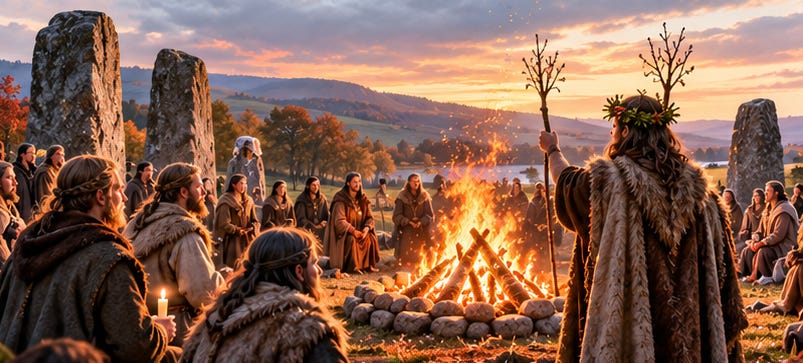
To understand Halloween, we have to travel back long before plastic pumpkins, inflatable skeletons, and fun-sized Snickers bars.
We have to go back to the ancient Celtic peoples of Ireland, Britain, and parts of Europe.
One of their important seasonal festivals was called Samhain (often pronounced “SOW-in”), which marked the transition from the harvest season into winter.
For agricultural communities, this was a significant turning point. The days were growing shorter, the weather was becoming colder, and families were preparing for the difficult months ahead.
But Samhain wasn’t simply an agricultural festival.
It also carried spiritual significance.
In Celtic tradition, this was a time when the boundary between the living and the supernatural world was believed to become especially thin.
Some traditions involved bonfires, offerings, disguises, and attempts to protect communities from harmful supernatural beings.
And yes, some of those beliefs and practices were distinctly pagan.
But here’s an important historical distinction.
We don’t have a complete record of exactly how ancient Celtic communities celebrated Samhain.
Much of what we know comes from sources written centuries later, often after Christianity had already spread throughout those regions.
That means we should be cautious when someone confidently tells us that every modern Halloween tradition can be traced directly to an ancient pagan ritual.
History is rarely that tidy.
What we can say is that the seasonal festival of Samhain contributed to the cultural environment from which Halloween eventually developed.
But it isn’t the entire story.
Wait. Halloween Has Christian History, Too?
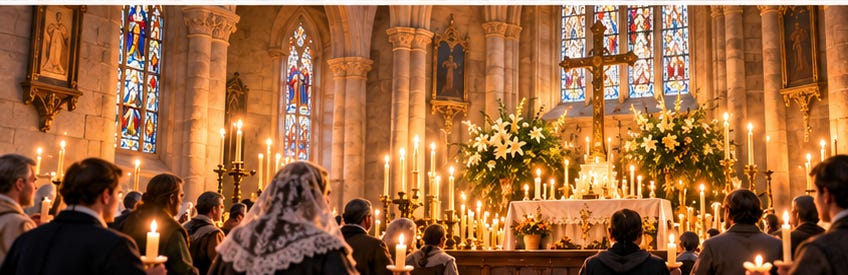
This is where things get interesting.
The word Halloween actually comes from All Hallows’ Eve.
The word hallow means holy or saintly. It’s the same word we encounter in the Lord’s Prayer when we say, “Hallowed be Thy name.”
All Hallows’ Eve was the evening before All Saints’ Day, a Christian observance honoring faithful believers who had gone before us.
In the early centuries of Christianity, believers began setting aside days to remember martyrs who had died for their faith.
By the eighth and ninth centuries, November 1 became established as the observance of All Saints’ Day in the Western Church.
November 2 eventually became associated with All Souls’ Day, a day of remembrance and prayer for the departed.
And the evening before All Saints’ Day?
All Hallows’ Eve.
Halloween.
Now, there’s an important historical debate here.
Some historians emphasize that Christian leaders intentionally adapted existing seasonal customs as Christianity spread into Celtic regions.
Others point out that the Christian observance of the saints developed through its own history and wasn’t simply invented to replace Samhain.
The evidence supports a more complicated picture than either extreme.
Christian traditions, older European folk customs, and regional practices gradually influenced one another over many centuries.
So when someone tells you that Halloween is exclusively pagan, they’re leaving out part of the story.
And when someone tells you Halloween has always been entirely Christian, they’re leaving out part of the story, too.
Interesting how often that happens when we start studying history, isn’t it?
How Did We Get From Remembering the Saints to Trick-or-Treating?
The Halloween that most Americans recognize today would probably look pretty strange to someone living in medieval Europe.
Over time, several traditions developed throughout Ireland, Scotland, England, and other regions.
One was souling, a custom in which people went from house to house requesting food, sometimes offering prayers for the deceased in return.
Another was guising, which involved dressing in disguises and visiting neighbors, sometimes performing songs, jokes, or other entertainment in exchange for treats.
There were also traditions involving carved lanterns, seasonal games, and supernatural folklore.
When Irish and Scottish immigrants brought their customs to America, those traditions began evolving again.
By the late nineteenth and early twentieth centuries, Halloween was increasingly becoming a community celebration.
Neighborhood parties, costumes, games, and eventually organized trick-or-treating became popular.
In fact, communities deliberately encouraged family-friendly activities as a way to discourage vandalism and destructive pranks.
By the middle of the twentieth century, the American version of Halloween had become largely centered around children, neighborhoods, costumes, and candy.
And somewhere along the way, we apparently decided that pumpkins needed faces and that adults should spend hundreds of dollars decorating their front yards with twelve-foot skeletons.
We’ve come a long way from ancient Celtic harvest festivals.
But here’s the question that matters.
Does the historical origin of a tradition automatically determine what participating in it means today?
That’s where the conversation becomes less about history and more about theology.
Three Words That Changed How I Think About This
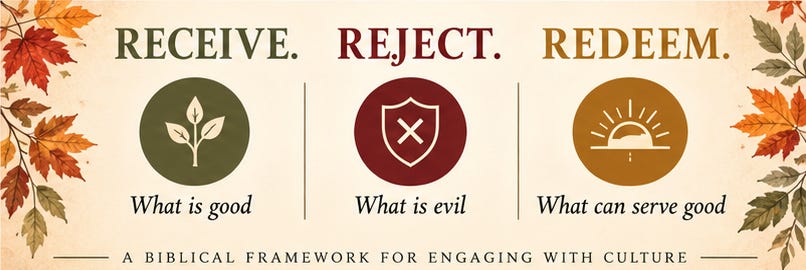
Pastor Josh Howerton offers a framework that I think is incredibly helpful for Christians navigating cultural questions.
Three words:
Receive. Reject. Redeem.
The idea is that Christians don’t have to approach every cultural practice with only two options: participate completely or avoid it entirely.
Instead, we can ask what is good, what is evil, and what might be used for a different purpose.
Receive.
Some things in our culture are simply good gifts that we can enjoy with gratitude.
Friendship. Hospitality. Creativity. Community. Family traditions.
There’s nothing inherently sinful about children dressing up as firefighters or princesses, visiting neighbors, or enjoying candy.
Reject.
Other things are clearly incompatible with biblical teaching.
The worship of false gods. Occult practices. Divination. Glorifying evil. Deliberately celebrating darkness.
Scripture doesn’t leave us guessing about those things.
Deuteronomy 18 warns God’s people against occult practices and attempts to communicate with the dead.
Ephesians 5:11 instructs believers not to participate in the unfruitful works of darkness.
Christians shouldn’t need Halloween as an excuse to reject those practices. We should reject them every day of the year.
Redeem.
And then there are cultural practices that may contain elements Christians can redirect toward something good.
Perhaps October 31 becomes an opportunity to welcome neighbors into your home.
Perhaps it’s a chance to teach your children about the history of the Christian faith.
Perhaps your family chooses to host a gathering focused on fellowship, generosity, and fun rather than fear and darkness.
That’s not necessarily compromising with the culture.
It may be choosing to engage with the culture differently.
But I also think it’s important to recognize that not every tradition needs to be redeemed by every Christian family.
Sometimes the wisest choice is simply not to participate.
And that’s where another biblical principle becomes especially important.
What Does the Bible Actually Say?
Obviously, the Bible doesn’t mention Halloween.
But it does address something remarkably relevant: how Christians should respond when cultural practices have associations with pagan worship.
In 1 Corinthians 8, the Apostle Paul addresses the question of eating food that had been offered to idols.
For early Christians, this wasn’t a hypothetical theological exercise.
It was a real issue in their communities.
Some believers understood that an idol had no actual divine authority and that food itself wasn’t spiritually contaminated simply because someone had offered it to a false god.
Other believers, particularly those who had previously participated in idol worship, struggled with that association.
Paul didn’t simply dismiss their concerns.
He acknowledged that believers needed to consider both their understanding of truth and the effect their actions might have on someone else’s conscience.
And elsewhere, in 1 Corinthians 10, he makes another important distinction: Christians must not participate in actual idolatrous worship.
In other words, Paul distinguished between ordinary activities that might have pagan associations and genuine participation in pagan religious practices.
That distinction matters.
Romans 14 provides another helpful principle.
Paul addresses disagreements among believers about certain foods and the observance of particular days.
His instruction is that each believer should be convinced in his or her own mind, while refusing to condemn fellow Christians over matters where Scripture allows freedom.
Now, that doesn’t mean everything is permissible simply because we feel comfortable doing it.
Our consciences need to be shaped by Scripture, not merely personal preference.
But it does mean that we should be very careful about turning our family’s personal convictions into universal commands that Scripture itself doesn’t make.
And I think that’s where Christians sometimes get into trouble with Halloween.
Two Christian Families. Two Different Decisions.

Imagine two families who love Jesus, take Scripture seriously, and genuinely want to raise their children to honor God.
The first family decides not to participate in Halloween.
They don’t want to expose their children to frightening or occult imagery. They believe the holiday’s cultural associations make it something their family should avoid.
Instead, they spend the evening together, perhaps hosting friends, playing games, or enjoying an autumn gathering.
The second family allows their children to dress up in wholesome costumes and walk through the neighborhood collecting candy.
They avoid occult-themed activities, use the evening to connect with neighbors, and view it as an opportunity for hospitality and community.
Are we really prepared to say that one of those families must be dishonoring God?
I don’t think Scripture gives us enough grounds to make that sweeping judgment.
Now, if either family were actively participating in occult practices or celebrating evil, that would be a different conversation.
But a little girl dressed as a butterfly isn’t practicing witchcraft simply because the calendar says October 31.
And a family choosing to stay home isn’t necessarily being legalistic or fearful.
Both families may be acting faithfully according to their understanding of Scripture and their conscience.
That’s a distinction worth remembering.
But Let’s Not Pretend Everything About Halloween Is Harmless
I also don’t want to swing so far in the other direction that we ignore legitimate concerns.
Because there are things about modern Halloween culture that should give Christians pause.
Walk through almost any store in October and you’ll find decorations that glorify violence, death, demonic imagery, and fear.
Entertainment increasingly treats the occult as something amusing, fascinating, or even desirable.
And while I don’t believe every spooky decoration represents an endorsement of evil, I do think Christians should pay attention to what we’re teaching our children to find entertaining.
Philippians 4:8 calls believers to dwell on what is true, honorable, just, pure, lovely, and commendable.
That’s a standard worth applying to more than Halloween.
It’s worth applying to the movies we watch, the music we listen to, the books we read, and the entertainment we allow into our homes.
If something would concern us in April, we probably shouldn’t suddenly become comfortable with it just because it’s October.
At the same time, we need discernment rather than superstition.
There is a difference between portraying something frightening in a fictional story and genuinely participating in occult worship.
There is a difference between acknowledging death and glorifying evil.
And there is a difference between enjoying a neighborhood tradition and embracing every historical belief associated with it.
Christians should be capable of making those distinctions.
So What Should Your Family Do Tomorrow?
I can’t answer that question for you.
And frankly, I don’t think I should.
But I do think there are some worthwhile questions every Christian parent can ask.
First, what exactly are we participating in?
Are we enjoying costumes, candy, and time with neighbors? Or are we participating in activities that celebrate occult practices, cruelty, or evil?
The details matter.
Second, what are we teaching our children?
Are we helping them understand why our family makes certain decisions? Or are we simply giving them rules without explaining the biblical principles behind them?
I want my children to learn how to think through difficult questions using Scripture, not just memorize what Mom and Dad allow.
Third, are we acting from conviction or fear?
There is a difference between thoughtfully avoiding something because of biblical conviction and believing that an ordinary activity automatically gives evil some mysterious power over our family.
Christians don’t need to live in fear of a date on the calendar.
Our confidence belongs in Christ.
Fourth, are we extending grace to other Christian families?
This one might be the most challenging.
It’s entirely possible to make a thoughtful decision for your own household without publicly condemning everyone who reaches a different conclusion.
We should be able to disagree about Halloween without questioning one another’s salvation or commitment to Jesus.
And finally:
Can we honor God in whatever we choose to do?
Whether that means staying home, hosting a gathering, serving neighbors, teaching church history, or allowing your children to collect candy, our motivation should be to honor Him.
Maybe the Bigger Lesson Isn’t About Halloween at All
The older I get, the more I realize that one of the most important things we can teach our children is discernment.
Not fear.
Not blind participation.
Not unquestioning obedience to whatever the culture happens to be doing.
Discernment.
The ability to examine something, understand its history, compare it with Scripture, and make a thoughtful decision.
That’s a skill our children will need long after they’ve outgrown trick-or-treating.
Because Halloween isn’t the only cultural question they’re going to encounter.
They’re going to face questions about entertainment, relationships, technology, politics, education, and countless other subjects where the loudest voices will insist that there’s only one acceptable answer.
And I don’t want my children to simply follow the loudest voice.
I want them to know how to seek truth.
Our family has generally chosen not to celebrate Halloween in the traditional sense. But that doesn’t mean we can’t enjoy fellowship, good food, and a little fun on October 31.
And it certainly doesn’t mean I need to spend the evening judging families whose children are dressed like superheroes and collecting Reese’s Peanut Butter Cups.
In fact, if I’m going to have a strong opinion about anything related to Halloween candy, it’s probably going to involve candy corn.
But that’s an entirely different theological debate.
Here’s where I’ve landed:
Christians should reject what Scripture clearly condemns, receive what is genuinely good, and thoughtfully consider what can be redeemed.
We should know the history.
We should understand the biblical principles.
We should follow our convictions.
And we should extend grace to other believers who are sincerely trying to do the same.
Because ultimately, the question isn’t simply whether Christians should celebrate Halloween.
The more important question is whether we’re teaching our families to honor Christ in the decisions we make every day.
And that’s a conversation worth having on October 31—and the other 364 days of the year.
Duty is ours. Results are God’s.

Thank you, Toni for your research, report and insight. I found it very interesting and thought provoking. God bless you for the time invested in your writings.
Excellent commentary, Toni.
I liked Halloween as a kid, but it was only one day.
Now, it seems to be a season. Way too much emphasis on negative things. Death, and ghouls, and skeletons and blood and guts.
To me, this is negative, not positive.
It is totally secular in nature now. And that is anti family. Anti positive. Anti religious.
Christmas is positive, and non secular.
Halloween is negative, and secular.