


Tomorrow, millions of Americans will celebrate Labor Day.
For most of us, that means one last long weekend before summer officially disappears.
Cookouts.
A trip to the lake or the beach.
Maybe a parade.
Definitely a few “Labor Day Sale!” emails cluttering up your inbox. 😂
But somewhere along the way, I realized something:
I knew almost nothing about why we actually celebrate Labor Day.
I knew it had something to do with workers.
I knew unions were involved.
And... that was about the extent of it.
So, naturally, I went down the rabbit hole.
And it turns out the history of Labor Day is much more interesting—and much more complicated—than the three-day weekend we’ve turned it into.
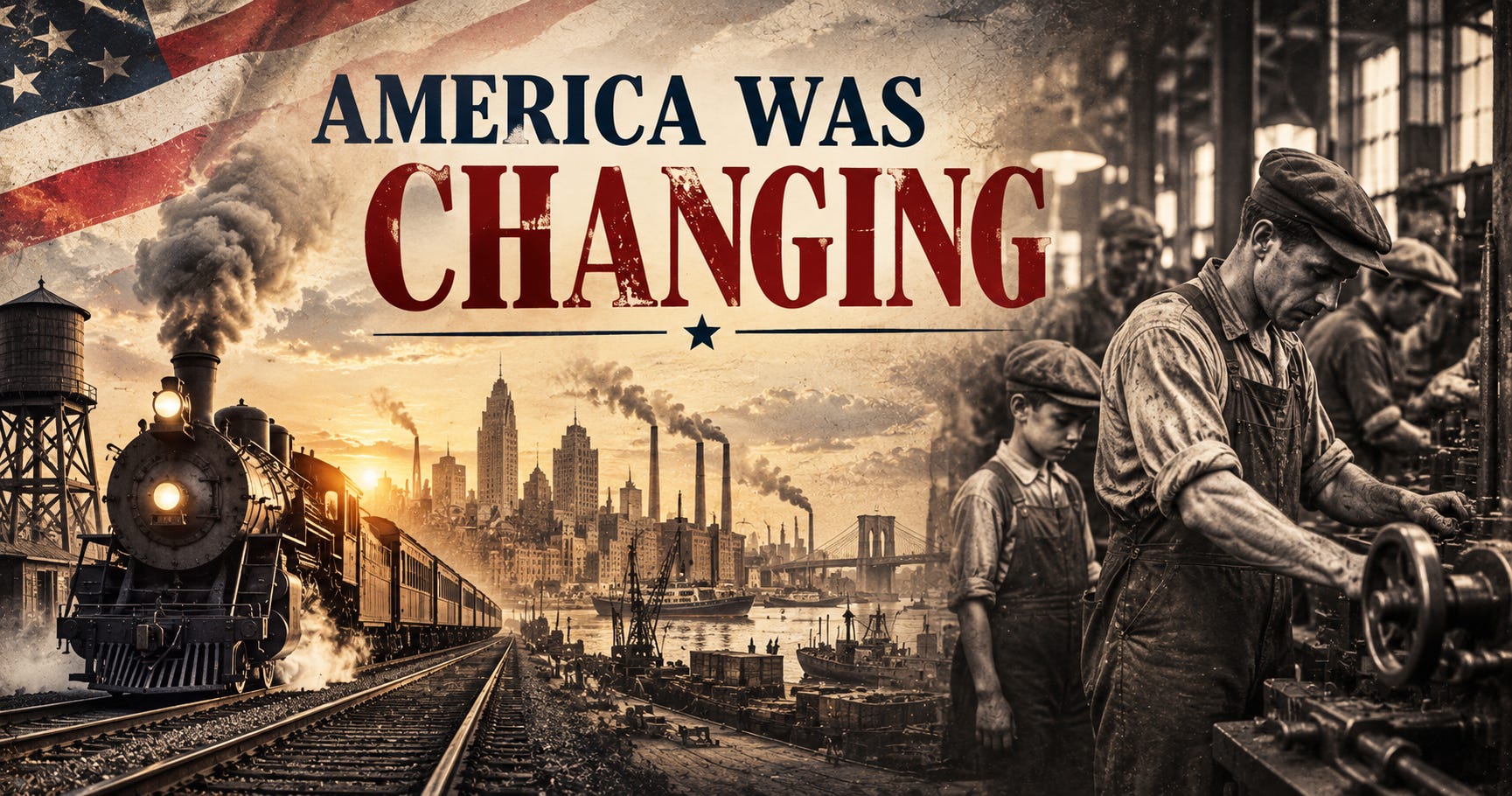
To understand Labor Day, we have to go back to the late 1800s.
America was in the middle of an extraordinary transformation.
Factories were expanding.
Railroads were connecting the country.
Cities were exploding in population.
Immigrants were arriving by the millions.
Industrialists were building companies—and fortunes—on a scale the world had rarely seen.
America was becoming an industrial powerhouse.
But there was another side to that incredible growth.
For many laborers, ten- and twelve-hour days were common. Six-day workweeks were ordinary. Workplace protections were nothing like what we know today. Children worked in factories, mines, mills, and other dangerous environments.
If you were injured on the job, there wasn’t exactly a human resources department waiting to discuss your benefits package.
For millions of Americans, work wasn’t merely difficult.
It could be dangerous.
And workers increasingly began organizing to do something about it.
This might be my favorite little fact from this entire rabbit hole.
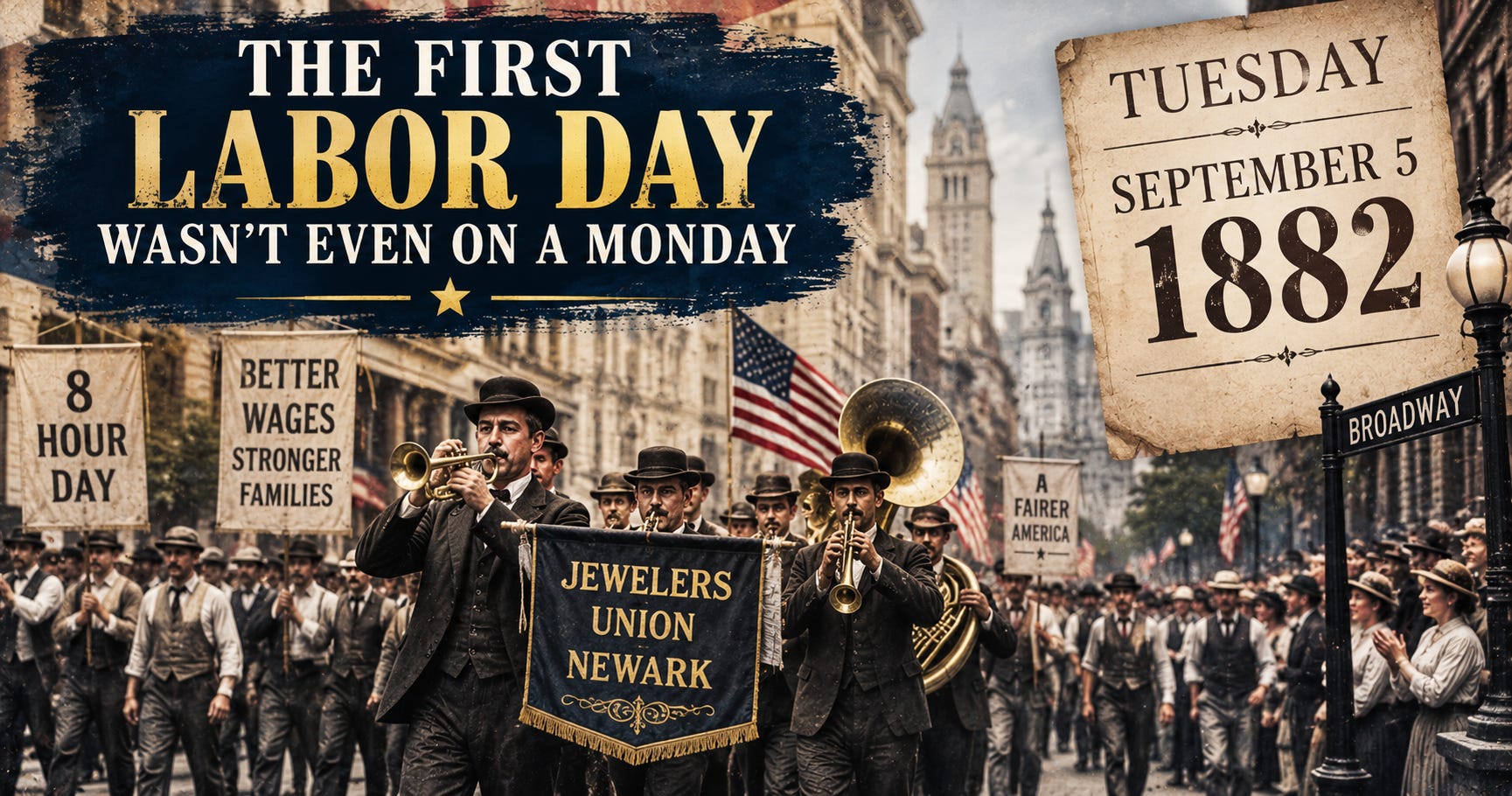
America’s first Labor Day celebration was held on a Tuesday.
On September 5, 1882, workers gathered in New York City for what is generally recognized as America’s first Labor Day parade.
And apparently, it almost flopped.
Spectators had gathered.
Police were ready.
The parade organizers were in position.
There was just one small problem.
Hardly any marchers had shown up.
And they didn’t have a band.
Then approximately 200 members of a jewelers union arrived from Newark—and they brought musicians with them.
The parade was on.
As they moved through Manhattan, more workers joined them. Estimates eventually ranged from 10,000 to 20,000 marchers.
They were machinists, cigar makers, printers, shoemakers, bricklayers, carpenters, and tradesmen of all kinds.
Many had given up a day’s wages to be there.
They marched to demonstrate something we probably take for granted today:
Workers had a voice.
And after demonstrating that voice...
Apparently they had a pretty good party.
Thousands continued to Wendel’s Elm Park for speeches, dancing, cigars, food, and—according to a contemporary account preserved by the Department of Labor—lager beer kegs that were basically everywhere.
Nearly 25,000 workers and family members reportedly attended throughout the afternoon and evening.
So there you have it.
America’s first Labor Day involved labor activism, an almost-disastrous parade, a last-minute band, and a whole lot of beer.
History is so much more interesting when we actually tell the whole story. 😂
There’s another historical mystery buried in the story.
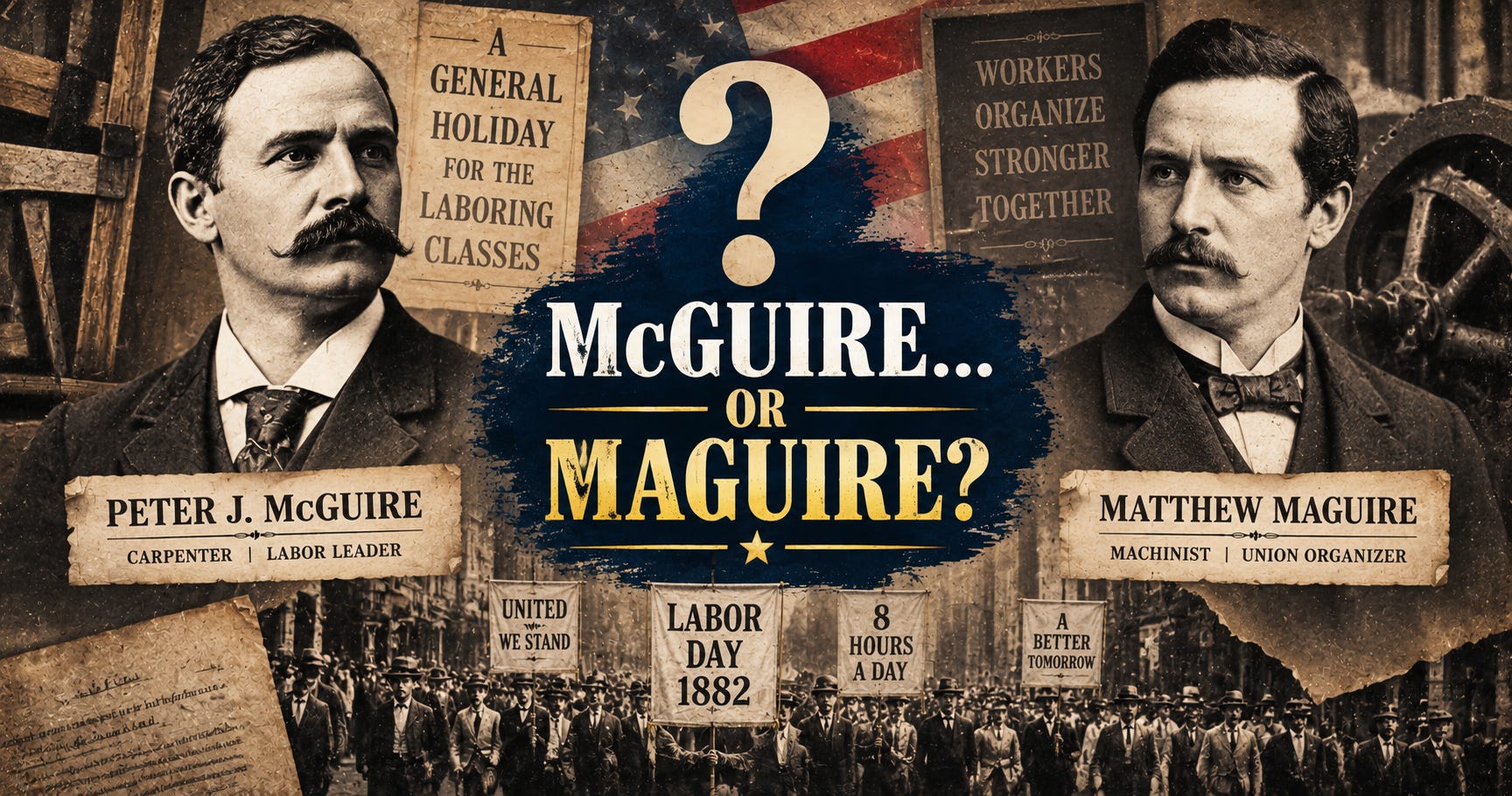
Who actually invented Labor Day?
For years, Peter J. McGuire, a carpenter and prominent labor leader, received much of the credit. He reportedly proposed creating a “general holiday for the laboring classes.”
But another man has an equally compelling—and perhaps stronger—claim.
His name was Matthew Maguire, a machinist who served as secretary of New York’s Central Labor Union, the organization responsible for that first parade.
Yes.
McGuire and Maguire.
Because apparently history decided this story wasn’t confusing enough already. 😂
Even the U.S. Department of Labor acknowledges that the answer isn’t entirely clear.
Maybe that’s fitting.
A holiday intended to recognize millions of ordinary workers doesn’t necessarily need a single famous founder.
The movement was already bigger than either man.
And it spread quickly.
Oregon became the first state to officially recognize Labor Day in 1887. Other states soon followed.
By 1894, the idea was ready to become national.
But the circumstances surrounding that decision weren’t exactly peaceful.
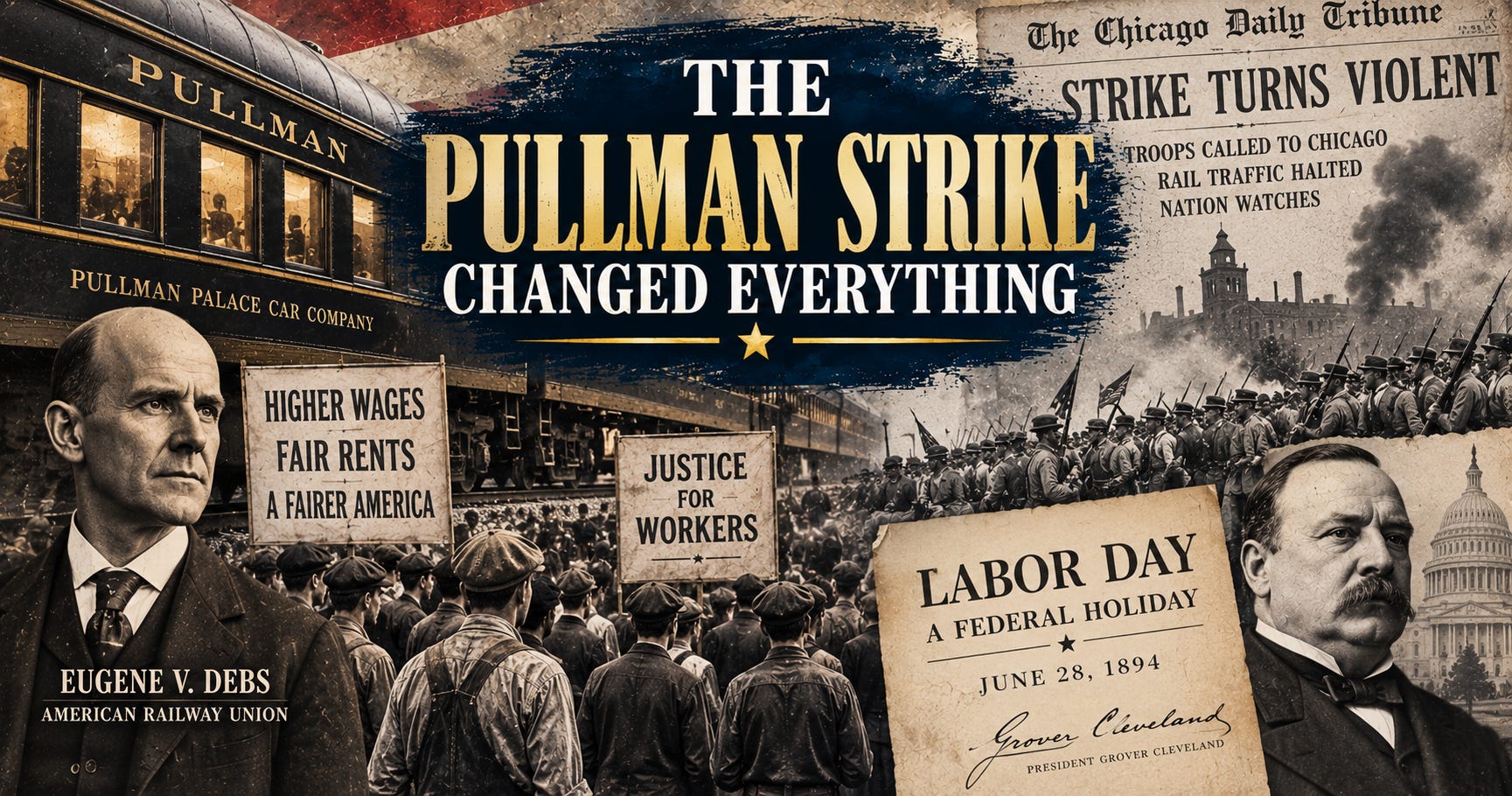
In 1894, workers at the Pullman Palace Car Company outside Chicago went on strike.
America was suffering through a severe economic depression, and Pullman had cut workers’ wages.
But many of those employees also lived in a company-owned town.
The company didn’t just employ them.
It was also their landlord.
Workers complained that their wages had fallen while their rents had not fallen accordingly.
So they walked out.
Then things escalated.
The American Railway Union, led by Eugene V. Debs, supported the Pullman workers by boycotting trains carrying Pullman cars.
Because those cars traveled throughout America’s rail network, the dispute quickly became a national crisis.
Rail traffic was disrupted.
The movement of the mail was affected.
The federal government intervened.
President Grover Cleveland sent federal troops into Chicago.
Violence followed.
People died.
And America found itself staring directly at an increasingly bitter conflict between workers, corporations, unions, and government.
In the middle of that turmoil, Congress passed legislation establishing Labor Day as a federal holiday.
President Cleveland signed it on June 28, 1894.
From then on, the first Monday in September would officially honor American labor.
The timing is hard to ignore.
The legislation had already been moving through Congress, but it became law during the same crisis in which Cleveland’s administration was confronting one of the nation’s most consequential strikes.
Labor Day wasn’t born in a peaceful vacuum.
It came out of a country wrestling with enormous questions about economic freedom, working conditions, corporate power, organized labor, and the proper role of government.
More than 130 years later, we’re still wrestling with some of them.
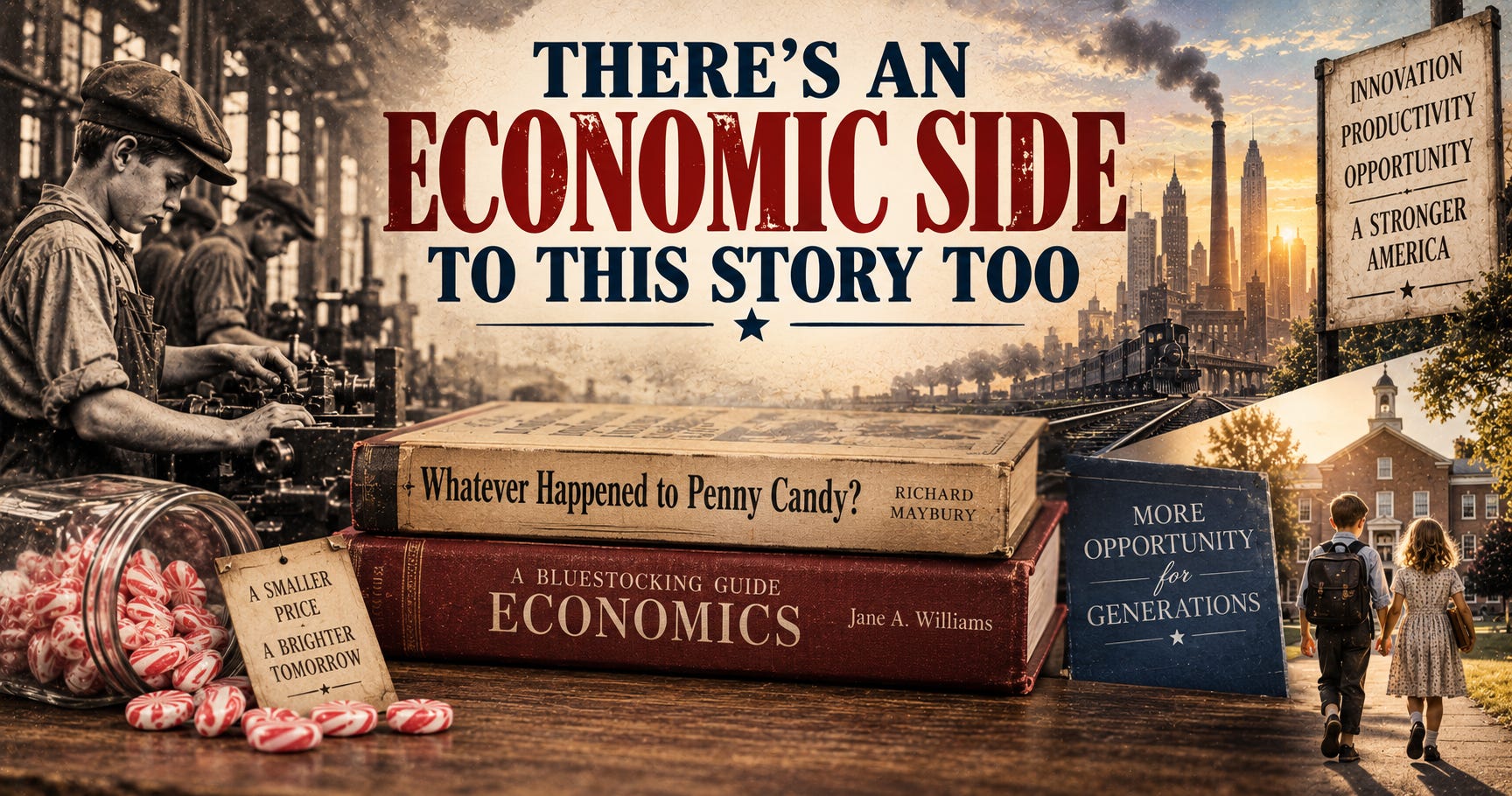
As I’ve been researching Labor Day, I’ve found myself looking at this history a little differently this year.
Probably because I’m also preparing to teach entrepreneurship at Arise Classical Academy this fall.
One of the books we’re using is Richard Maybury’s Whatever Happened to Penny Candy?, along with Jane A. Williams’ A Bluestocking Guide: Economics.

And they raise an important question that often gets lost when we tell this story:
Why did life for the average American worker actually get better?
It’s tempting to tell the history as a simple progression.
Workers were exploited.
Workers organized.
Government passed laws.
Working conditions improved.
And there’s certainly truth in parts of that story.
Labor organizations fought for changes that became important parts of American working life. Government eventually established rules governing child labor, workplace safety, wages, and hours.
But economics adds another piece of the puzzle.
As businesses invested in machinery, technology, transportation, and better methods of production, workers became more productive.
And productivity matters enormously.
If one worker can produce more value in an hour than he could before, there is more wealth available to support higher wages and better living standards.
Competition matters too.
Employers aren’t only competing for customers.
They’re competing for workers.
When workers have choices, businesses have an incentive to offer better wages and working conditions to attract and keep good employees.
And as an economy becomes more productive, things that once seemed like luxuries can gradually become normal.
Shorter workweeks.
Paid time off.
Safer workplaces.
Higher wages.
Better housing.
More affordable goods.
The ability for children to spend their days in school rather than contributing to the family’s income.
None of that means exploitation didn’t happen.
It did.
It doesn’t mean unions played no role.
They did.
And it doesn’t mean every government reform was unnecessary.
But it does mean the remarkable rise in the American worker’s standard of living can’t be explained by legislation alone.
You can’t legislate prosperity into existence.
Ultimately, prosperity has to be created.
Someone has to grow something.
Build something.
Invent something.
Risk something.
Invest something.
Improve something.
Or figure out how to produce something people need more efficiently than we could before.
That’s one of the economic lessons I’m hoping my students understand this year.
Wealth isn’t a fixed pie sitting on a table waiting for workers, businesses, and government to fight over their respective slices.
Human beings can create more of it.
And America’s extraordinary economic story is, in large part, the story of people doing exactly that.
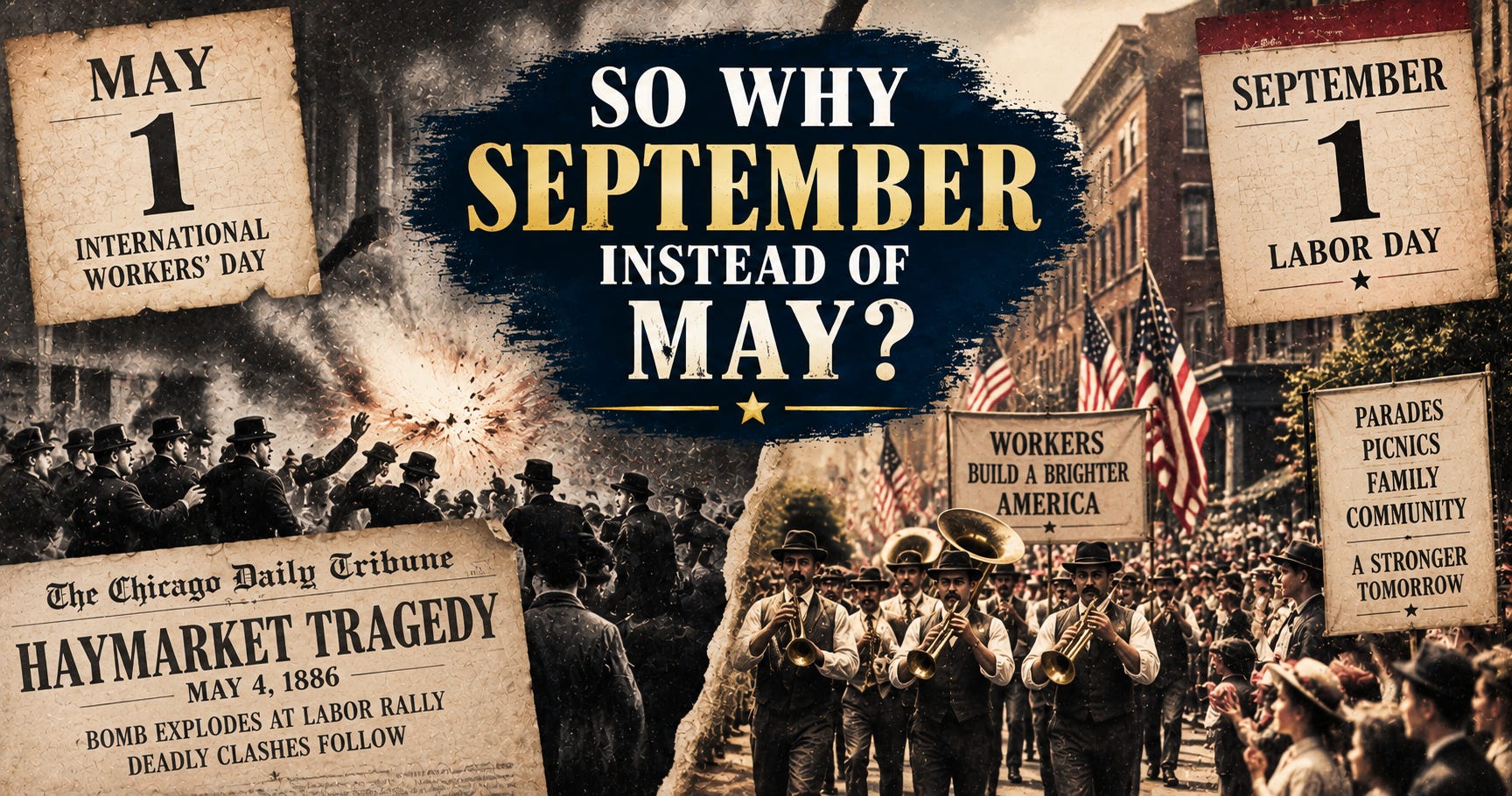
This is another part of the story I didn’t know.
Around the world, May 1 became International Workers’ Day, with roots in the American campaign for the eight-hour workday and the violent Haymarket Affair in Chicago in 1886.
During a labor rally on May 4, someone threw a bomb as police moved to disperse the crowd.
The explosion and gunfire that followed killed police officers and civilians.
Anarchists were subsequently prosecuted, and Haymarket became an international symbol for labor movements.
By 1890, May Day was being observed as an international workers’ holiday.
But America took a different path.
Our official labor holiday developed around the September celebration that had begun in New York several years earlier.
Over time, May Day became especially associated internationally with socialist, communist, anarchist, and other radical political movements, while America’s September Labor Day developed its own character.
Parades.
Picnics.
Speeches.
Family gatherings.
And eventually...
Mattress sales. 😂
The two traditions grew from some of the same nineteenth-century struggles over labor, but they developed very differently.
And I think that distinction is worth understanding.
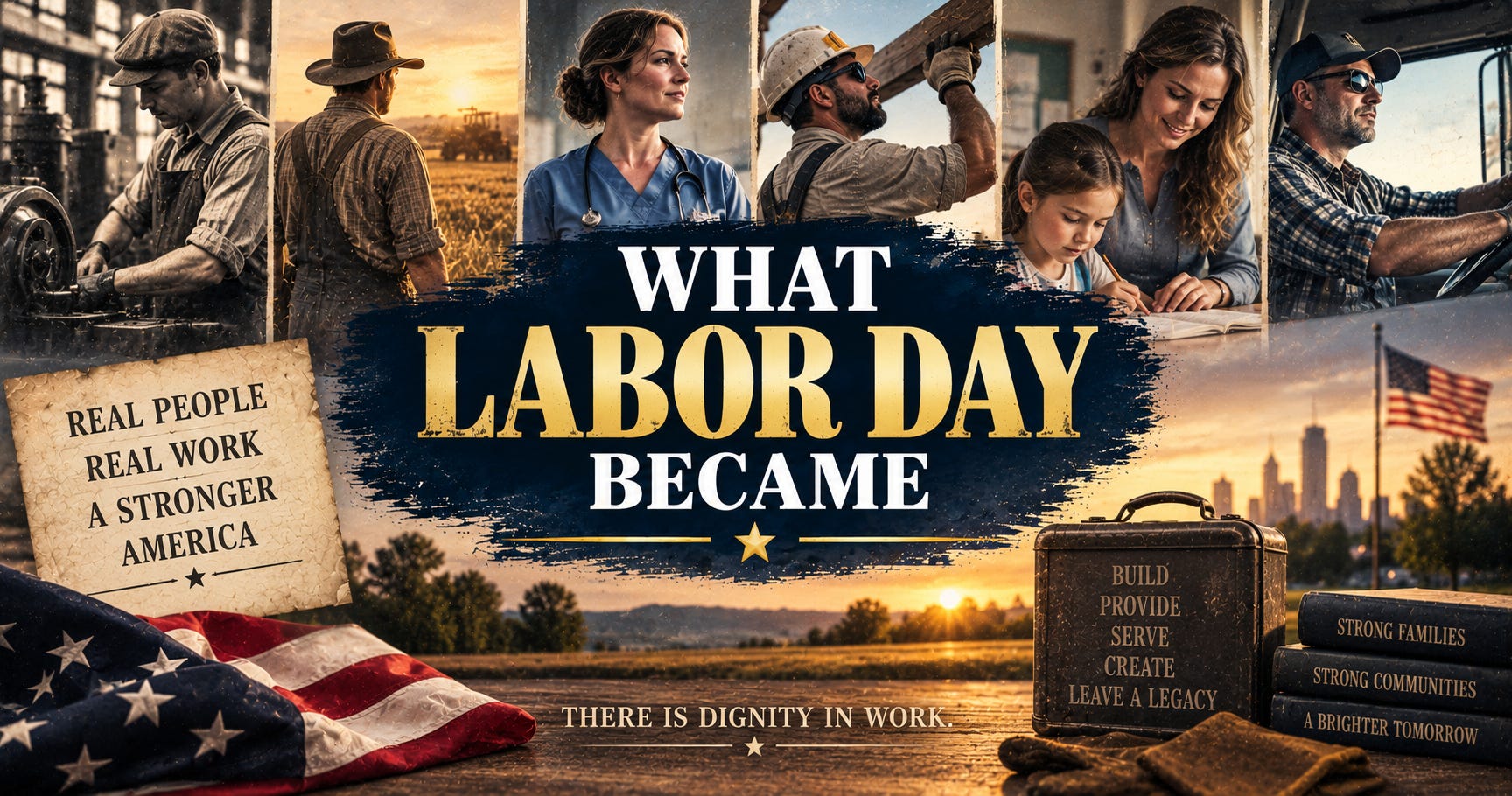
Here’s what I find most interesting about all of this.
Those first workers marched for things that would sound completely ordinary to most Americans today.
Shorter workdays.
Safer workplaces.
Better treatment.
Time away from work.
They lived in an era when many of those things weren’t assumptions.
They were arguments.
And that doesn’t mean we have to romanticize everything that came out of the labor movement.
Corporations have exploited workers.
Unions have abused their power.
Governments have overreached.
Workers have sometimes been caught in the middle of all three.
History is rarely as simple as the heroes-and-villains version we’re tempted to tell.
But underneath all of that is something worth remembering.
There is dignity in work.
Long before there were factories, labor unions, corporations, minimum-wage laws, or federal holidays, Scripture presented work as part of God’s design for humanity.
Before the Fall, Adam was given work to do.
Work itself wasn’t the curse.
There is dignity in creating.
Building.
Teaching.
Growing.
America wasn’t built only by presidents, generals, industrialists, and the people whose portraits hang in museums.
It was also built by millions of people whose names we’ll never know.
The farmer.
The carpenter.
The steelworker.
The nurse.
The machinist.
The truck driver.
The construction worker.
The small-business owner.
The mother and father who got up every morning, did the work in front of them, provided for their families, and tried to leave their children something better than they had.
Maybe that’s enough to remember tomorrow.
Enjoy the cookout.
Enjoy the last unofficial weekend of summer.
And feel free to delete the approximately 347 emails informing you that this is your FINAL CHANCE to save 30 percent on something you didn’t know you needed. 😂
But take a minute to remember the people who built this country without ever having their names written into its history books.
America has always depended on people willing to work.
And that is something worth celebrating.
Happy Labor Day, friends!