


A few articles ago, I mentioned that I was starting something new.
I wasn’t quite ready to tell you what it was because I wanted some time to kick the tires before I started talking about it publicly. If I’m being completely transparent, I’m naturally more of a “fire, ready, aim” person when something new gets me excited.
But I’ve also learned that having a public platform comes with responsibility. When I tell you I believe in something, I want to have done enough homework to actually mean it—not just be caught up in the hype.
So I studied. I asked questions. Then I asked more questions. And probably a few more after everyone involved was ready for me to stop asking. 😂
Well, I’m now six weeks in, so put your seat belt on.
I pulled the trigger and became an “affiliate” with a network marketing company called Vital Health.
Yep. After more than 20 years in an industry I thought I had permanently walked away from, I’m back.
But probably not for the reason you think.
I’m not writing this because I suddenly decided From Mom to Patriot needed more mushroom coffee content.
I’m writing it because over the past six weeks, I’ve started to see a connection between this new venture and the work I’ve spent the last several years doing.
It has to do with something I’ve been talking about a lot lately:
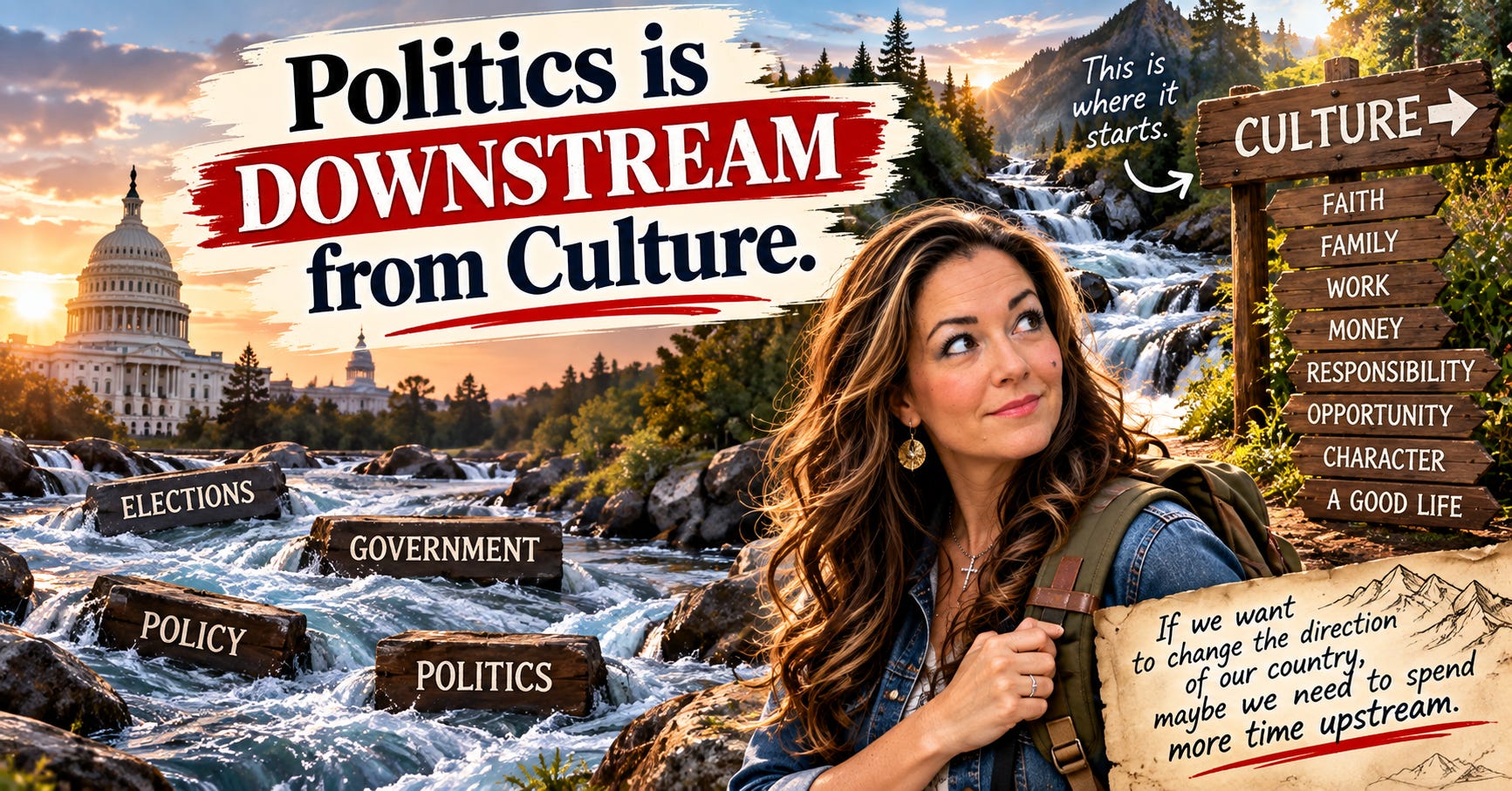
Politics is downstream from culture.
And if we want to change the direction of our country, maybe we need to spend more time upstream.
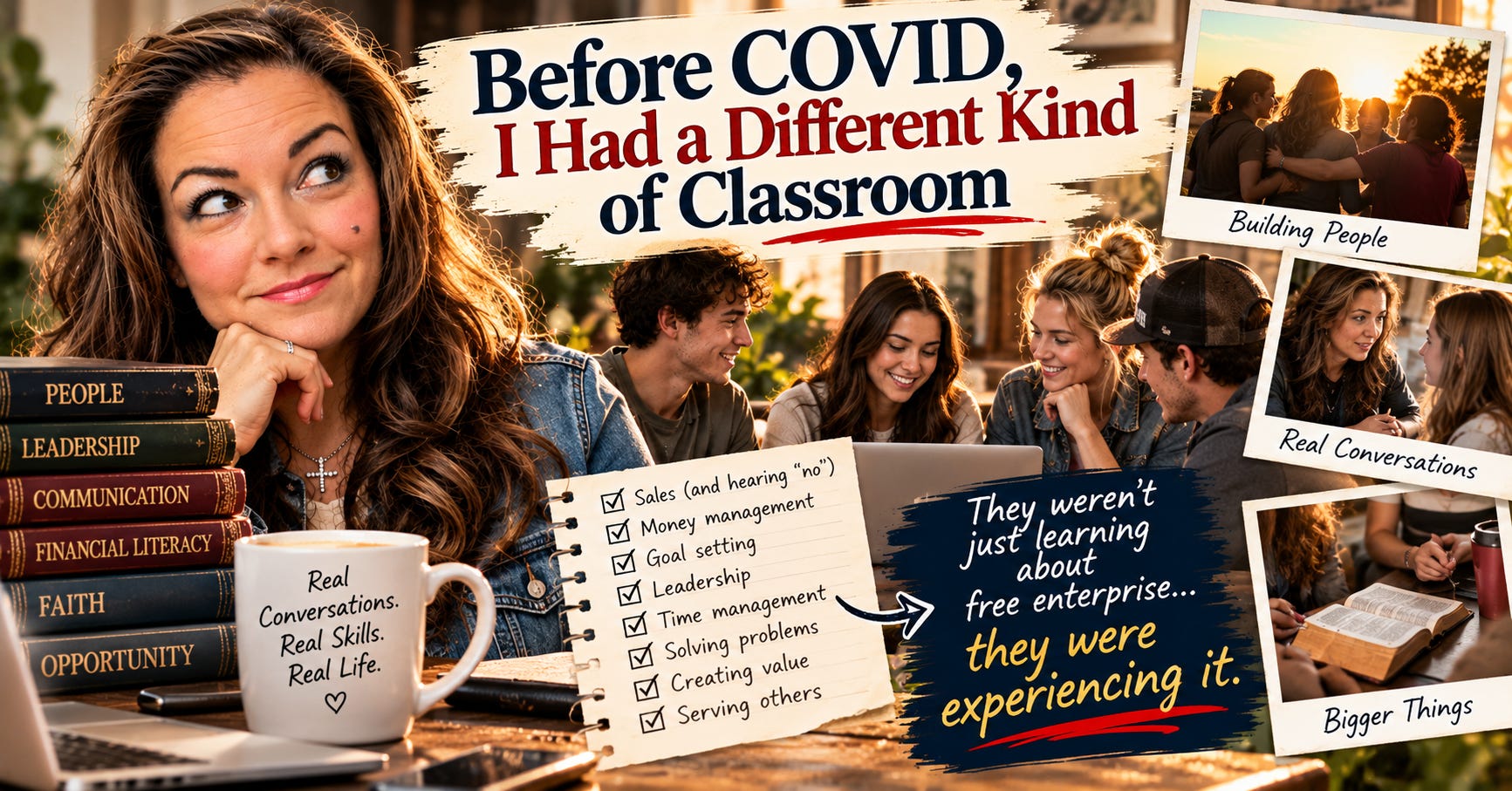
Long before I was teaching students in an actual classroom, I spent more than 20 years working with people through network marketing.
When that chapter ended, it didn’t end easily.
For years, I wondered whether I had wasted all that time. Was walking away quitting? Had I failed?
Lately, I’ve started asking a different question:
What if those years weren’t wasted at all?
Because when I look back now, the thing I miss most isn’t the business.
It’s the people.
Some of my favorite experiences were working with young adults who wanted something more for their lives. We weren’t sitting in a classroom discussing entrepreneurship.
We were actually doing it.
They learned how to talk to people, sell something, hear “no,” manage money, set goals, serve customers, lead others and manage their time.
They learned how to fail at something without deciding they were a failure.
They learned that they could solve a problem, create value for another human being and get paid for it.
In other words, they weren’t just learning about free enterprise.
They were experiencing it.
And because we were working side by side, we built relationships. Those relationships created opportunities for conversations about life, marriage, character, faith and yes, sometimes politics.
Occasionally they created opportunities to talk about Jesus.
That’s especially meaningful to me because someone in that world once cared enough about my husband and me to share the Gospel with us.
When I look back now, I don’t just see a network marketing business.
I see a place where I was able to invest in people.
For the last several years, most of you have known me through a very different world: election integrity, constitutional education, Patriot Academy, civic engagement and politics.
I’m not walking away from any of that.
Apparently, I’ve simply decided sleep is overrated. 😂
But I’ve become increasingly convinced that we can spend all our time working on elections and government and still miss something enormously important.
If politics really is downstream from culture, at some point we have to go upstream—where people are forming their ideas about work, family, money, faith, responsibility, government, opportunity and what a good life even looks like.
And I’m particularly concerned about the next generation.
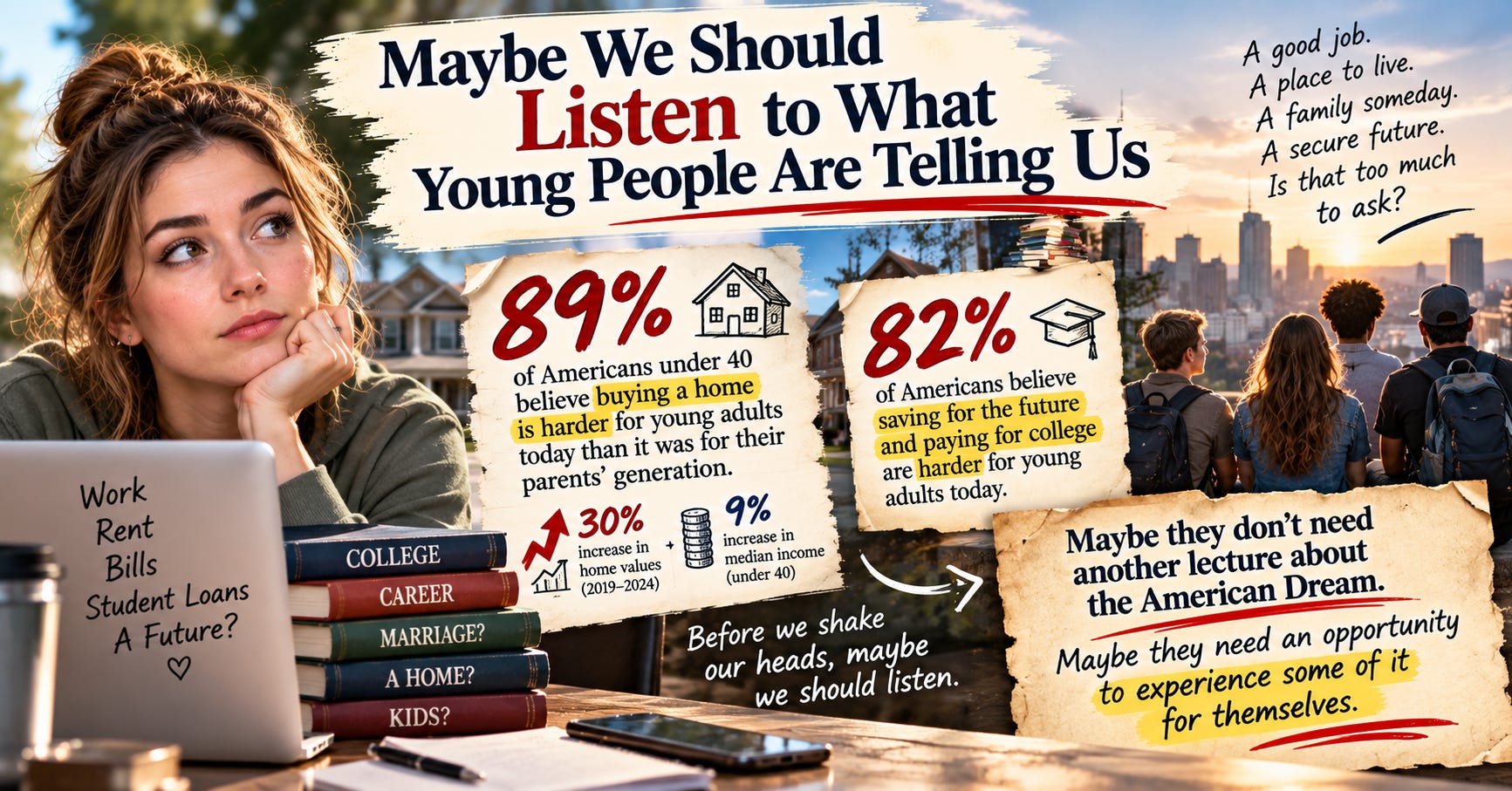
We talk a lot about young Americans being more open to socialism and other economic models than previous generations. But before we shake our heads and wonder what in the world they’re thinking, perhaps we should pay attention to what they’re experiencing.
The economic anxiety is real.
A 2026 Pew Research Center survey found that 89% of Americans under 40 believe buying a home is harder for young adults today than it was for their parents’ generation. Between 2019 and 2024, inflation-adjusted median home values increased 30%, while median household income for households headed by someone under 40 increased only 9%.
The same survey found that 82% of Americans believe saving for the future and paying for college are harder for young adults today.
I’m not suggesting those economic realities automatically determine someone’s political beliefs. They don’t.
But imagine being 24 years old.
You’re working. Rent is eating your paycheck. A starter home doesn’t feel very “starter.” Getting married and starting a family feels financially daunting.
Then someone from my generation comes along and gives you a lecture about how wonderful the American Dream is.
Maybe the lecture isn’t what they need.
Maybe they need an opportunity to experience some of it for themselves.
That’s the connection I didn’t see at first.
I teach entrepreneurship now, and I love it. But there are certain things I simply cannot teach from a textbook.
I can explain sales, but eventually somebody has to actually ask for the sale.
I can explain profit, but there’s nothing quite like earning $300 and discovering that revenue and profit are most definitely NOT the same thing.
Welcome to capitalism, kids. 😂
There is something powerful about discovering for yourself:
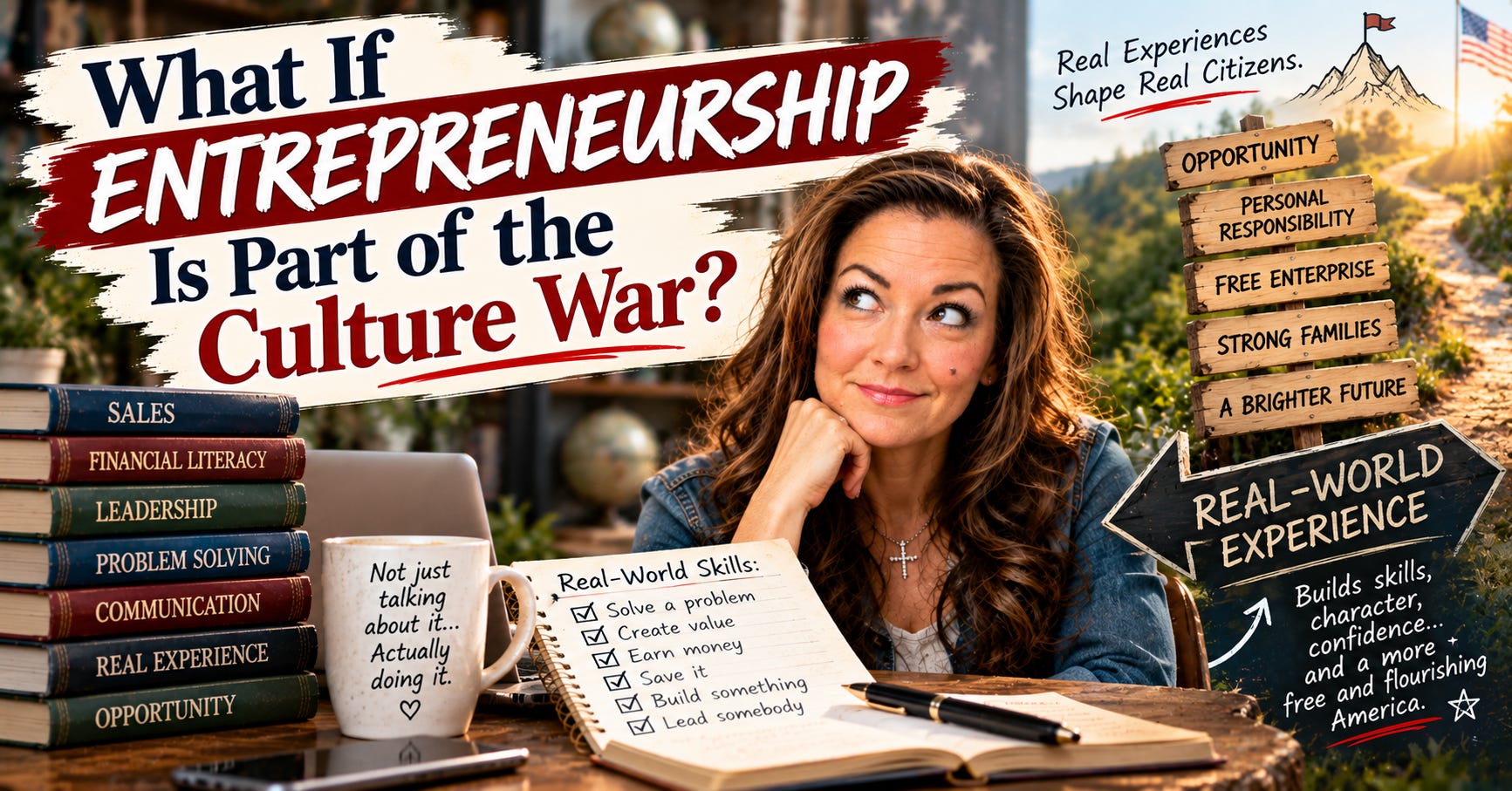
I can solve a problem. I can create value. I can earn money. I can save it. I can build something. I can lead somebody.
Those experiences don’t dictate someone’s politics, nor should they. But they give people real-world experiences from which they can form their own conclusions about entrepreneurship, free enterprise, opportunity and personal responsibility.
And that’s when I started remembering what I had spent more than 20 years doing.
When it’s done responsibly, network marketing can provide a relatively low-barrier laboratory for entrepreneurship. You don’t have to invent a product, hire employees, rent a storefront or borrow $100,000.
Someone can start small. Maybe five or ten hours a week.
And instead of lecturing them about entrepreneurship, I can work beside them and mentor them through it.
That’s what got my attention.
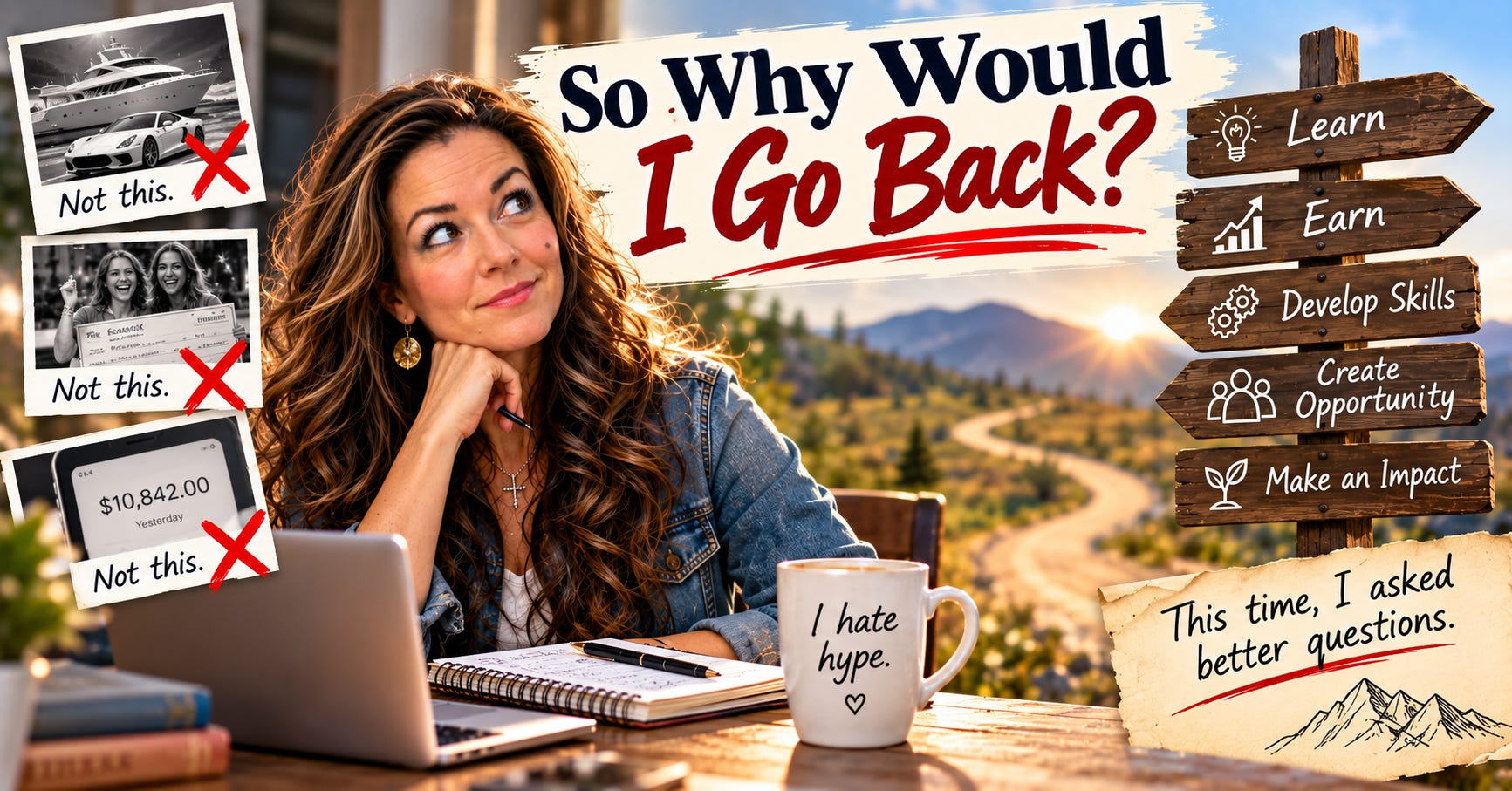
When my previous business changed, one of the hardest things for me was realizing that I no longer believed I could offer young people the same economic opportunity I once could.
If I’m asking a 22-year-old to give me five or ten hours of their week, I want to believe there is a legitimate possibility those hours can improve their life.
Not guaranteed income.
Not “RETIRE YOUR HUSBAND BY THURSDAY!!!” nonsense.
Not rented Lamborghinis or screenshots of checks.
I hate hype.
I mean an opportunity to learn something, earn something, develop skills and potentially create supplemental income.
When I no longer believed I could offer that in good conscience, I left.
Then Vital Health came across my radar.
This time, I approached it very differently.
I wanted to understand the compensation plan. Where does the money come from? What does an ordinary person actually have to do? Could someone realistically do this in five or ten hours a week? What skills would they develop even if they never built a large organization?
Most importantly, I wanted to answer one question:
Could I look a young person in the eye and feel good about inviting them to try?
Six weeks in, my answer is yes.
This is precisely where network marketing articles usually become unbearable, so let me get this out of the way:
My results are my results. They aren’t a promise of anyone else’s results.
But they are relevant to explaining why I’m paying attention.
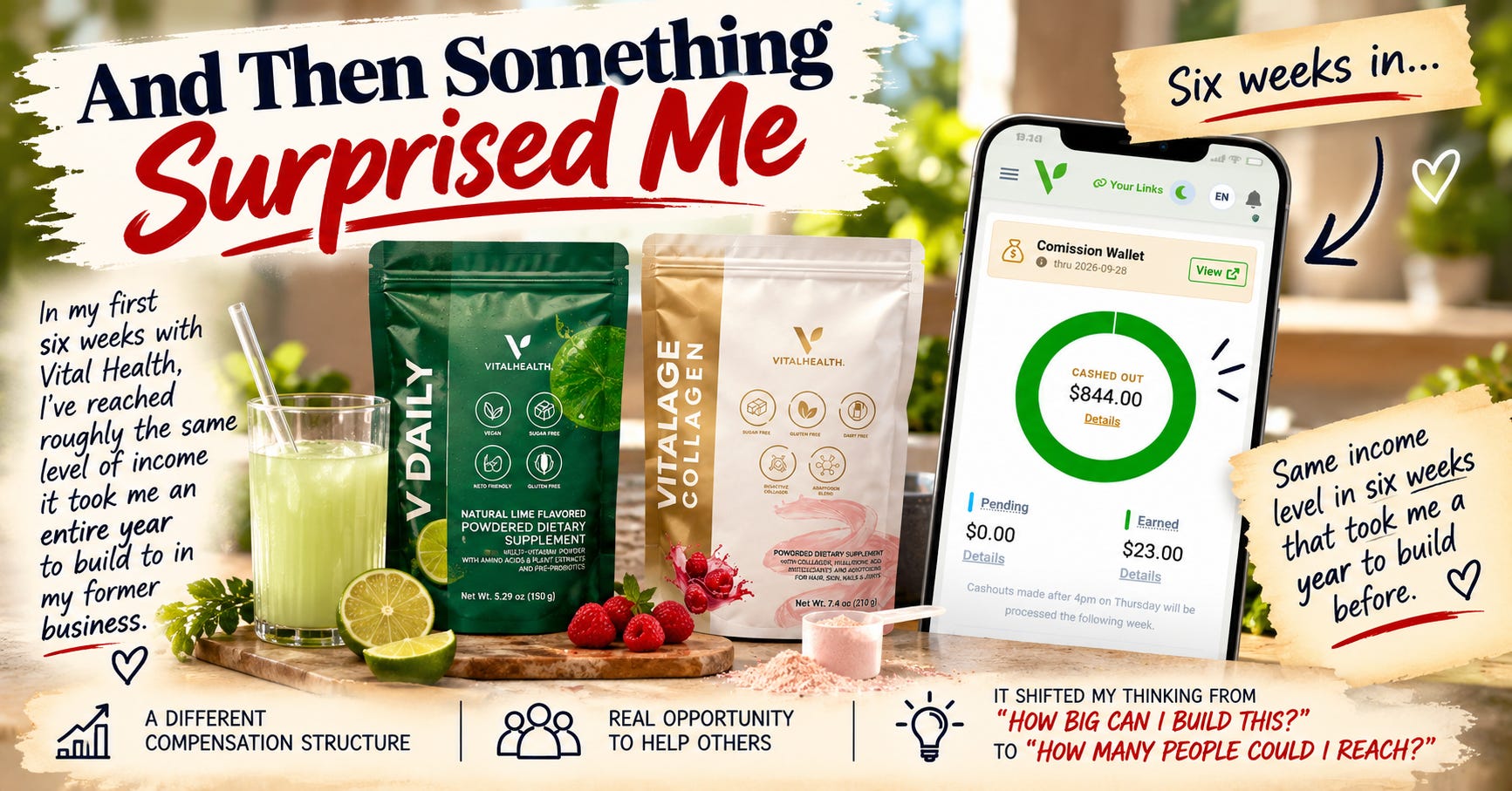
In my first six weeks with Vital Health, I’ve been able to put a business structure in place that has reached roughly the same level of income it took me an entire year to build to in my former business.
That surprised me.
The compensation structure is very different from what I previously worked with, and based on my experience so far, I believe it gives me a better opportunity to help someone begin generating supplemental income without first having to build an enormous organization.
And that’s when my thinking shifted.
Instead of asking:
“How big can I build this?”
I started asking:
“How many people could I reach with this?”
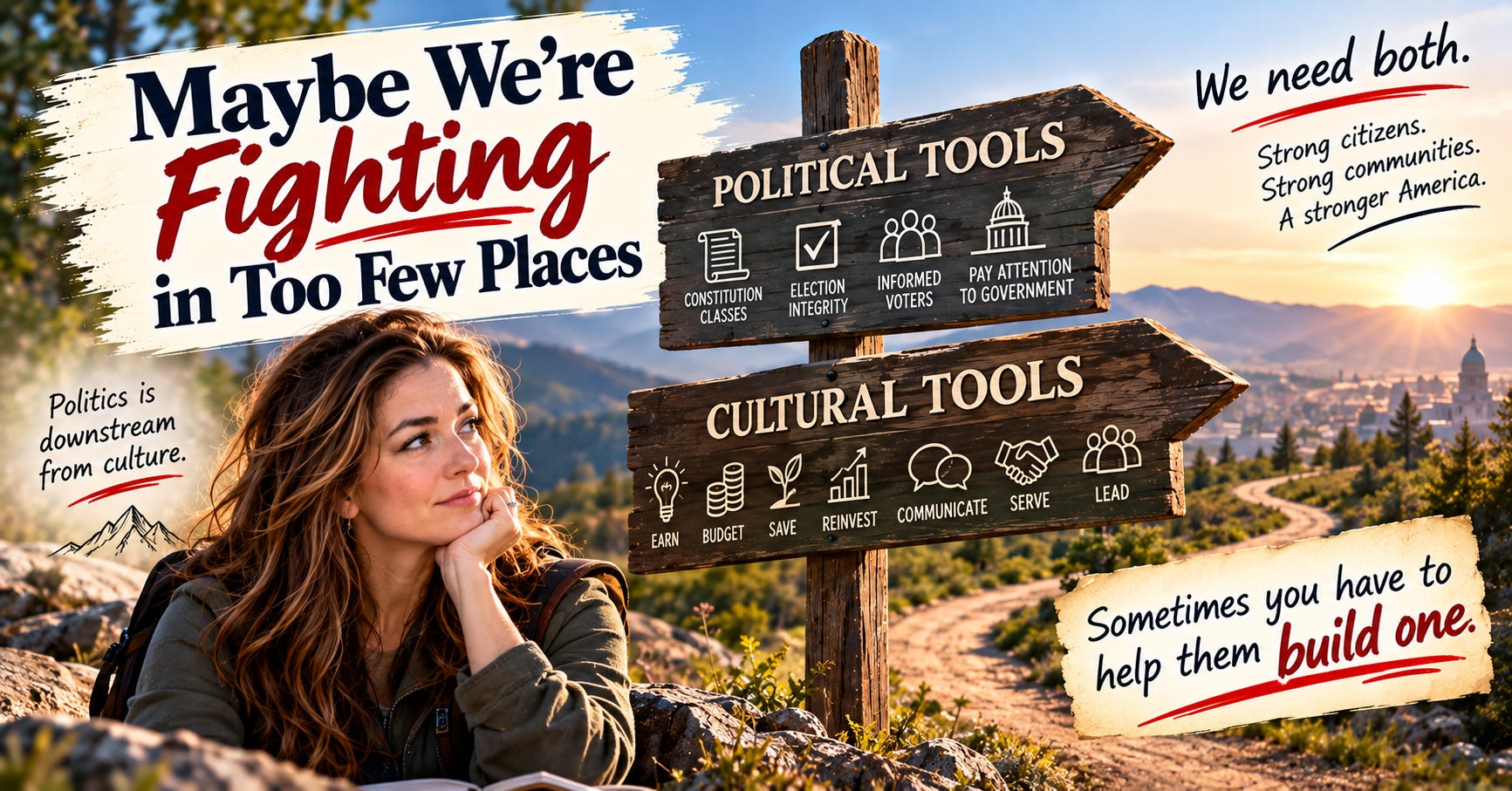
We need Constitution classes. We need election integrity. We need informed voters. We need people paying attention to their government.
I’m going to keep working in those arenas.
I can walk and chew gum at the same time.
Or at least that’s the plan. Check back with me in six months. 😂
But I’m beginning to wonder whether we’ve been trying to solve a cultural problem almost exclusively with political tools.
You can’t legislate someone into becoming an entrepreneur.
You can’t pass a resolution that teaches someone leadership.
And you can’t simply tell a struggling 25-year-old to believe in the American Dream.
Sometimes you have to help them build one.
That’s the piece I’m going back for.
I want to work alongside people and help them learn how to earn, budget, save, reinvest, communicate, sell, serve customers and lead.
And I want to build relationships deep enough that we can have conversations about bigger things—faith, citizenship, our Constitution and the ideas shaping our country.
Not because agreeing with me is the price of admission.
It isn’t.
But because relationships create opportunities for meaningful conversations that Facebook arguments rarely will.
And somewhere along the way, maybe I’ll have the opportunity to share the Gospel with someone the same way someone once shared it with me.
For years, I’ve wondered why God allowed me to spend so much time in an industry I eventually walked away from.
I’m beginning to wonder whether I’ve been asking the wrong question.
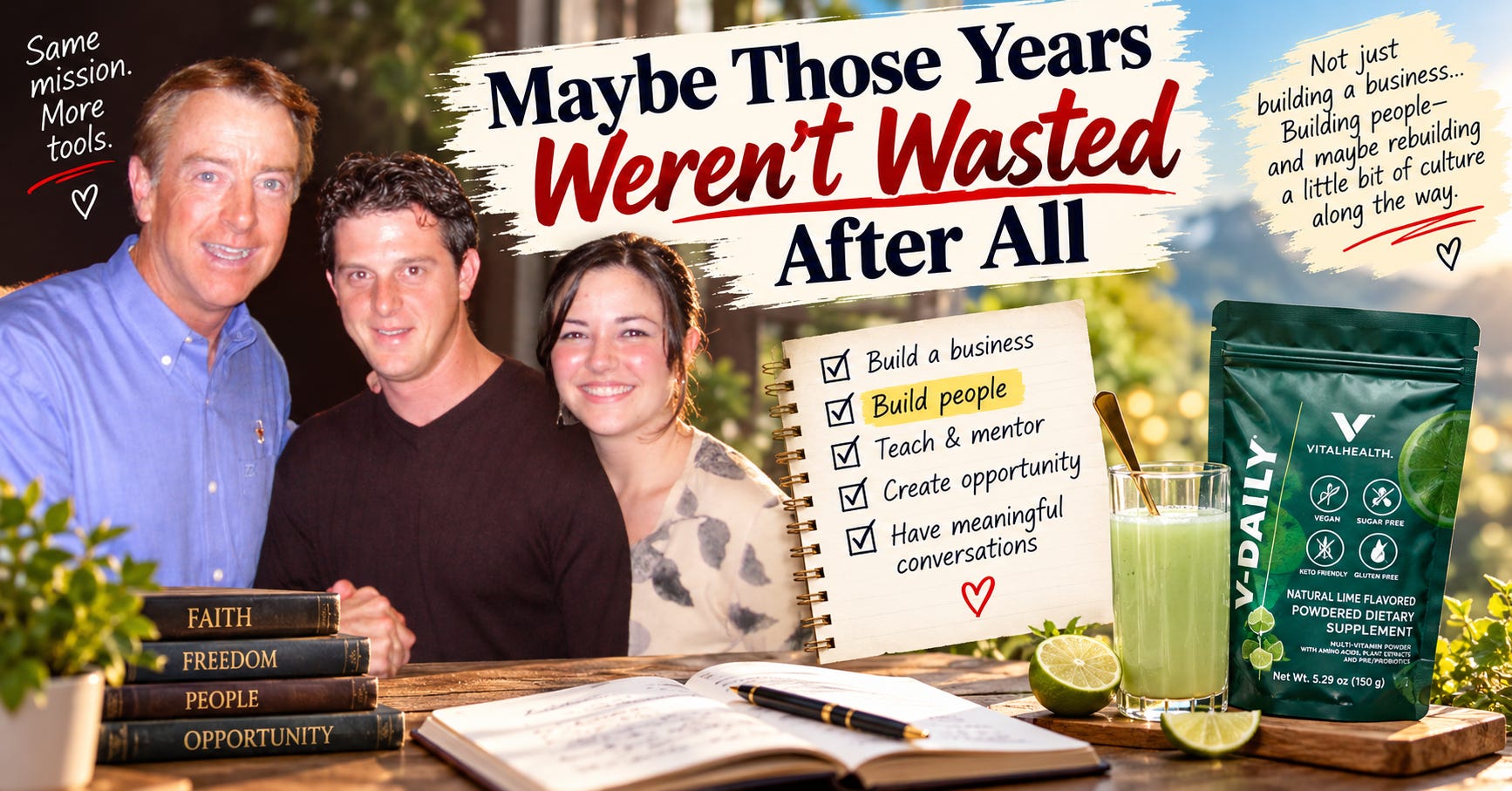
Maybe I wasn’t just learning how to build a business.
Maybe I was learning how to build people.
And maybe that’s why I’m back.
Don’t worry. I’m not turning From Mom to Patriot into From Mom to Mushroom Coffee Saleswoman. 😂
This Substack will still be about faith, freedom, culture, citizenship and the future of this country.
I’m simply beginning to understand that this new endeavor fits into that mission more than I initially realized.
If politics is downstream from culture, I don’t want to spend the rest of my life standing downstream complaining about the water.
I want to go upstream too.
I want to teach and mentor. I want to help people experience entrepreneurship. I want to bring people into Constitution classes. I want to keep working on election integrity. I want to have conversations about faith when those doors open.
And I want to build relationships with people who may never click on one of my political posts.
Maybe that’s the lesson hiding inside my own necessary ending.
The business I thought I had walked away from forever may simply be another tool for the work I believe I’m supposed to be doing now.
Not just building a business.
Building people—and maybe rebuilding a little bit of culture along the way.
P.S. Want the more personal story?
There’s another part of this journey I couldn’t really fit into one article.
Recently, I sat down with some of the people I’m now working alongside and had a very candid conversation about my previous business, why I walked away, why that decision was so difficult for me, and why I’m willing to start over.
We talked about Necessary Endings, failure, quitting, starting again, and what happens when the future you thought you were building doesn’t turn out the way you expected.
It’s not a Vital Health sales pitch. It’s the story behind this story.
If you’ve ever spent years pursuing something only to wonder whether God might be asking you to let it go, I think you’ll understand a lot of what we talked about.
🎙️ Listen to the podcast episode here: