Over the past few years, I’ve had more conversations than I can count with people who are frustrated with the current state of affairs, both at the state level and at the national level.
They feel disconnected.
They feel unheard.
They feel like decisions are being made somewhere far away… by people they’ve never met.
And then I ask a simple question:
“Do you know how your local party is actually structured?”
Most people don’t.
And that’s not a criticism—it’s a reality.
Because somewhere along the way, we stopped teaching people how the system actually works.
So, before I tell you what I’m doing…
Let me show you something that will change how you see all of it.
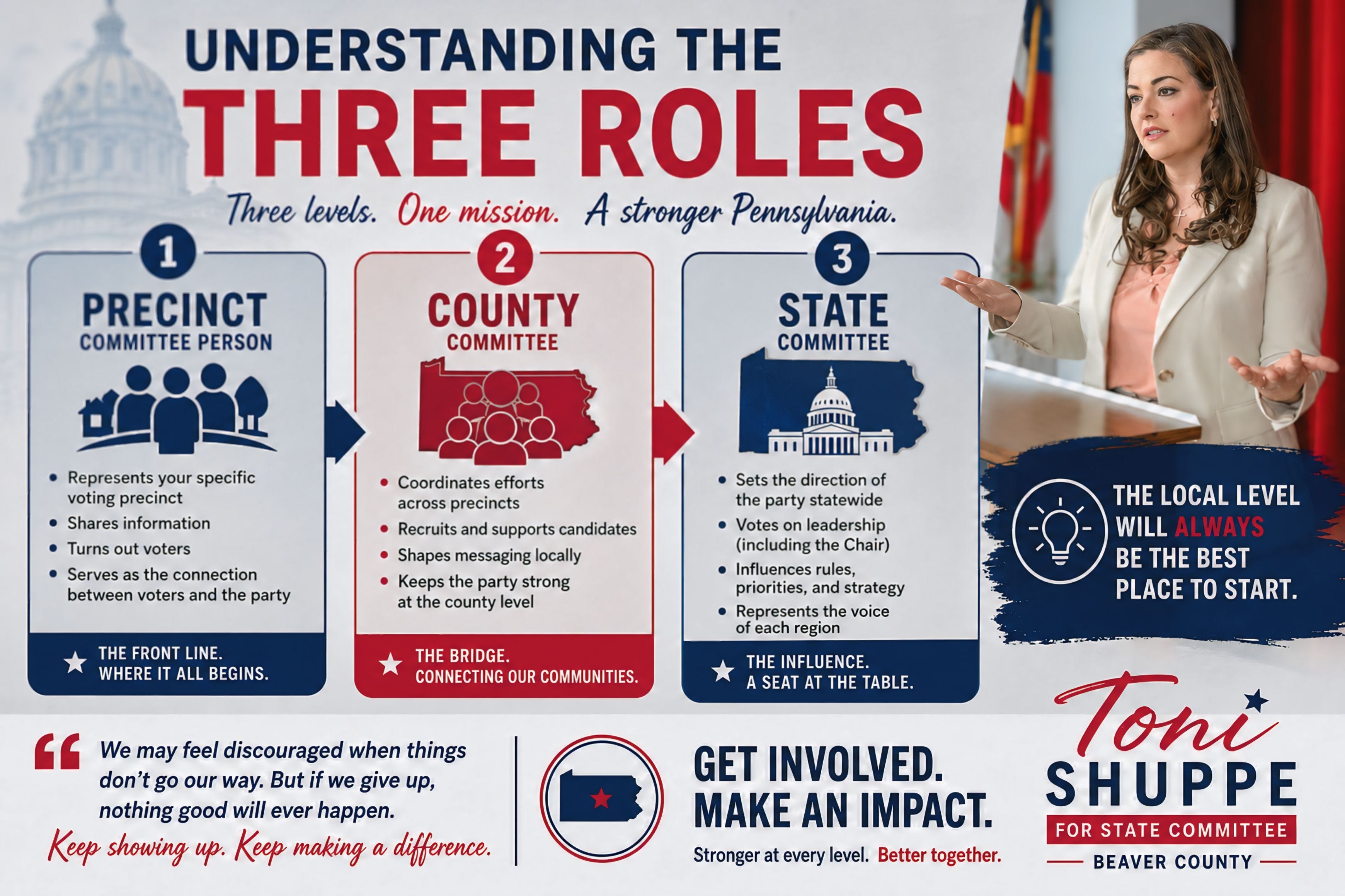
The Three Roles Everyone Confuses
When people hear terms like committee person or state committee, they tend to lump everything together.
But these are very different roles, and understanding the difference matters more than you might think.
First—What Is a Committee Person (and Why It Matters)
When I first started paying closer attention in early 2021, this was one of the biggest lightbulb moments for me.
I remember realizing that there were already established groups—right at the local level—where ordinary people could actually show up, get involved, and make a difference.
That changed everything.
Because for the first time, it didn’t feel like politics was something happening “out there.”
It felt like something we could step into.
That’s what a committee person is.
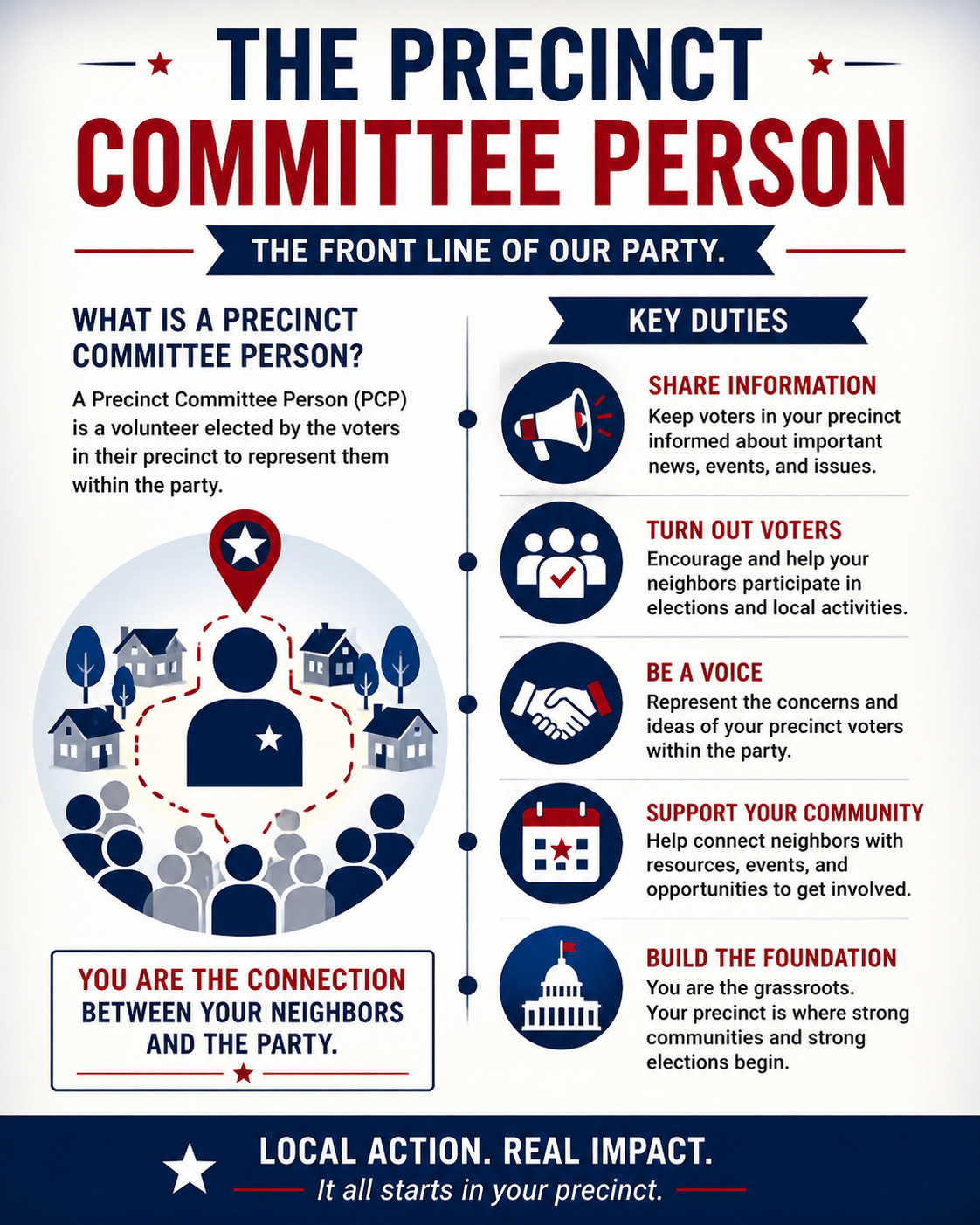
A committee person is someone who represents their local voting precinct within the party structure. They are the most direct connection between everyday voters and the party itself.
They help:
Share information
Turn out voters
Stay connected to what’s happening locally
Be a voice for their community
👉 It’s one of the most accessible—and most overlooked—ways to get involved.
Now I’ll be honest…
As I got more involved, I also started to see the other side of it.
The roadblocks.
The pushback.
The moments where it felt like nothing was moving the way it should.
And that can be discouraging.
But over time, I found a balance.
Because the reality is this:
👉 We will always feel discouraged when things don’t go our way.
But if we give up…
That’s the fastest way to guarantee that nothing good happens at all.
And that’s why I still believe this with everything I’ve seen:
👉 The local level will ALWAYS be the best place to start.
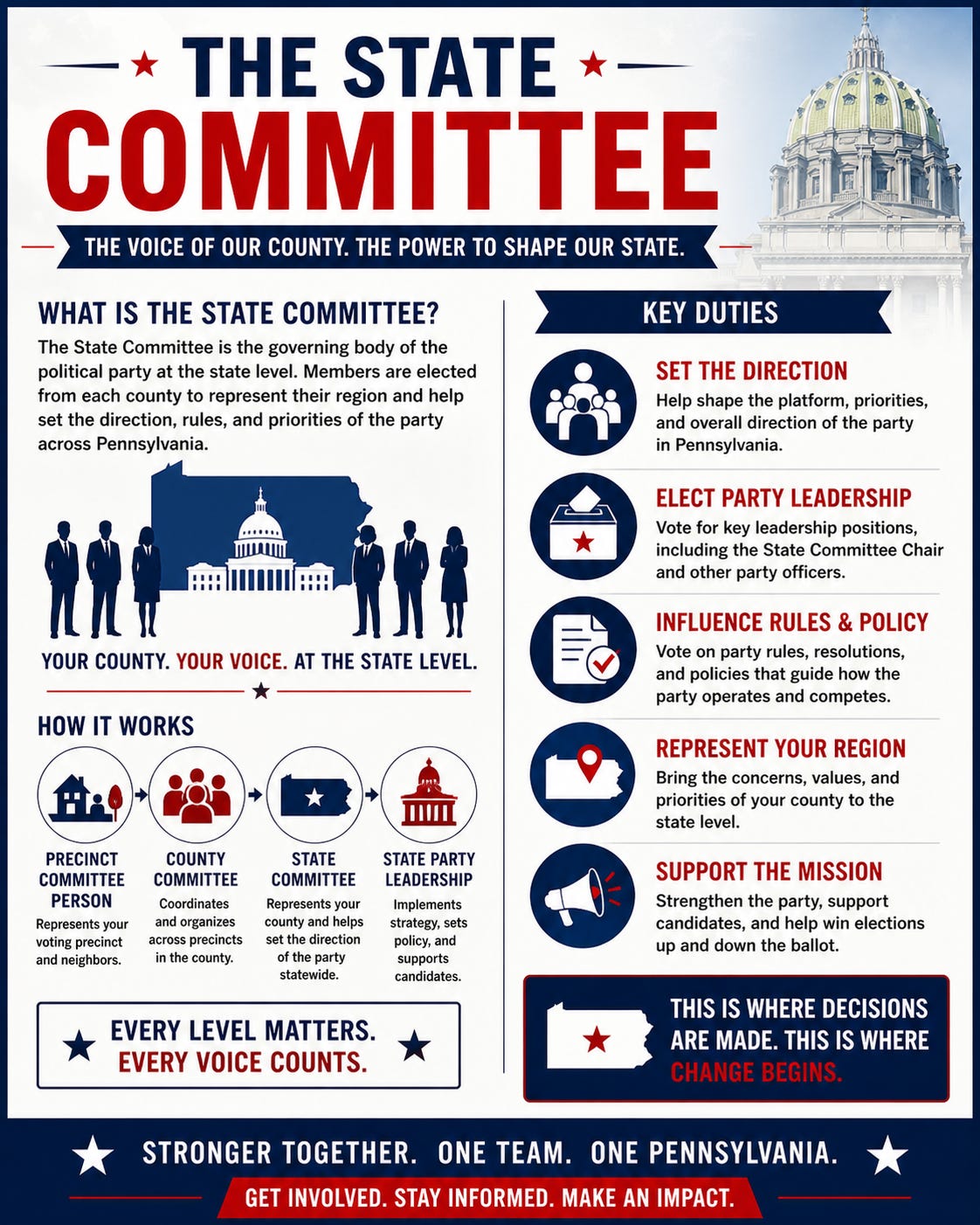
1. Precinct (or District) Committee Person
This is the most local level—the grassroots.
These are the people who:
Represent a specific voting precinct
Help turn out voters
Share information within their community
Serve as the connection between voters and the party
This is the front line.
2. County Committee
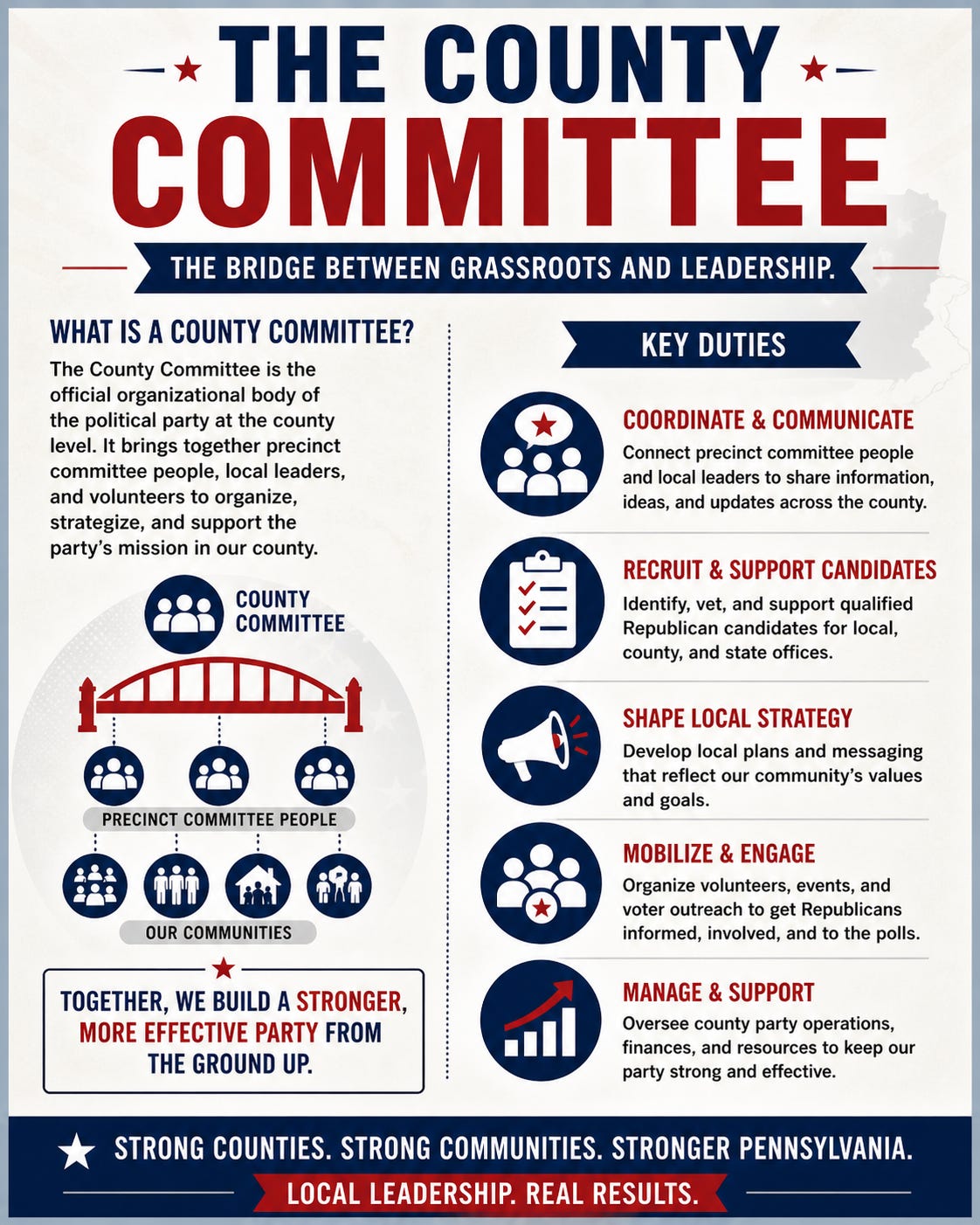
This is the organizational level.
County committees:
Coordinate efforts across precincts
Recruit and support candidates
Help shape messaging locally
Keep the party functioning at the county level
They are the bridge between grassroots volunteers and broader leadership.
3. State Committee
This is where things shift from activity… to influence.
The State Committee:
Helps set the direction of the party statewide
Votes on party leadership (including the Chair)
Influences rules, priorities, and strategy
Represents the voice of each region
👉 This is about who has a seat at the table when decisions are made.
Why This Matters More Than You Think
If we don’t understand the structure…
We don’t understand where decisions are being made.
And if we don’t know where decisions are being made…
We don’t know where to show up, ask questions, or hold people accountable.
A Real Example: The 2025 Chair Election
Many of you remember the controversy in 2025 when a new state party chair was selected.
That decision didn’t come from voters in a primary.
It came from the State Committee.
And that moment clarified something important for me.
The individual chosen is a State Senator…
But back in 2021—when we launched the Audit The Vote petition and thousands of Pennsylvanians were asking for transparency—
He was serving in the House.
And despite the momentum…
Despite the grassroots effort…
👉 He never surfaced as a supporter.
👉 He never signed the petition.
Now, that alone doesn’t define a person.
But it does raise a very real question:
Who is representing the grassroots voice when these decisions are being made?
Why I’m Stepping Into This Role
Over the last several years, I’ve worked alongside many of you:
Training and equipping citizens through Patriot Academy
Organizing locally through Audit The Vote PA
Showing up to meetings, events, and conversations that aren’t always easy
And I’ve seen something clearly:
There are good people throughout the system.
But there is often a gap between:
What the grassroots is asking for
And what is actually being acted on
That gap doesn’t fix itself.
It gets smaller when people who understand both sides step in.
What Happens on May 19th
Pennsylvania’s primary election is on May 19th.
And in Beaver County, there are five State Committee seats and five candidates running.
👉 That means I will be stepping into this role following the primary.
But I don’t take that lightly.
Because this isn’t about holding a title.
It’s about stepping into a position that has real influence—and using it to represent the people who have been doing the work on the ground.

What I Bring to the Table
A direct connection to grassroots activists across Pennsylvania
Experience training and equipping leaders through Patriot Academy
A track record of showing up—even when it’s uncomfortable
A commitment to transparency, accountability, and education
I’m not interested in sitting on the sidelines.
And I’m not interested in complaining without stepping into responsibility.
A Simple Challenge for You
Before May 19th, take 10 minutes and find out:
Who your precinct committee person is
Who serves on your county committee
Who represents you on the state committee
Because once you know that…
👉 You’re no longer on the outside looking in.
Final Thought
We talk a lot about “taking our country back.”
But that doesn’t happen all at once.
It happens step by step.
Seat by seat.
Decision by decision.
And sometimes…
It starts with simply understanding a system most people were never taught.
Speaking of things we were never taught…
80% of Americans can’t name the five freedoms in the First Amendment.
That’s not just a trivia problem—it’s a civic one.
Let’s fix it.
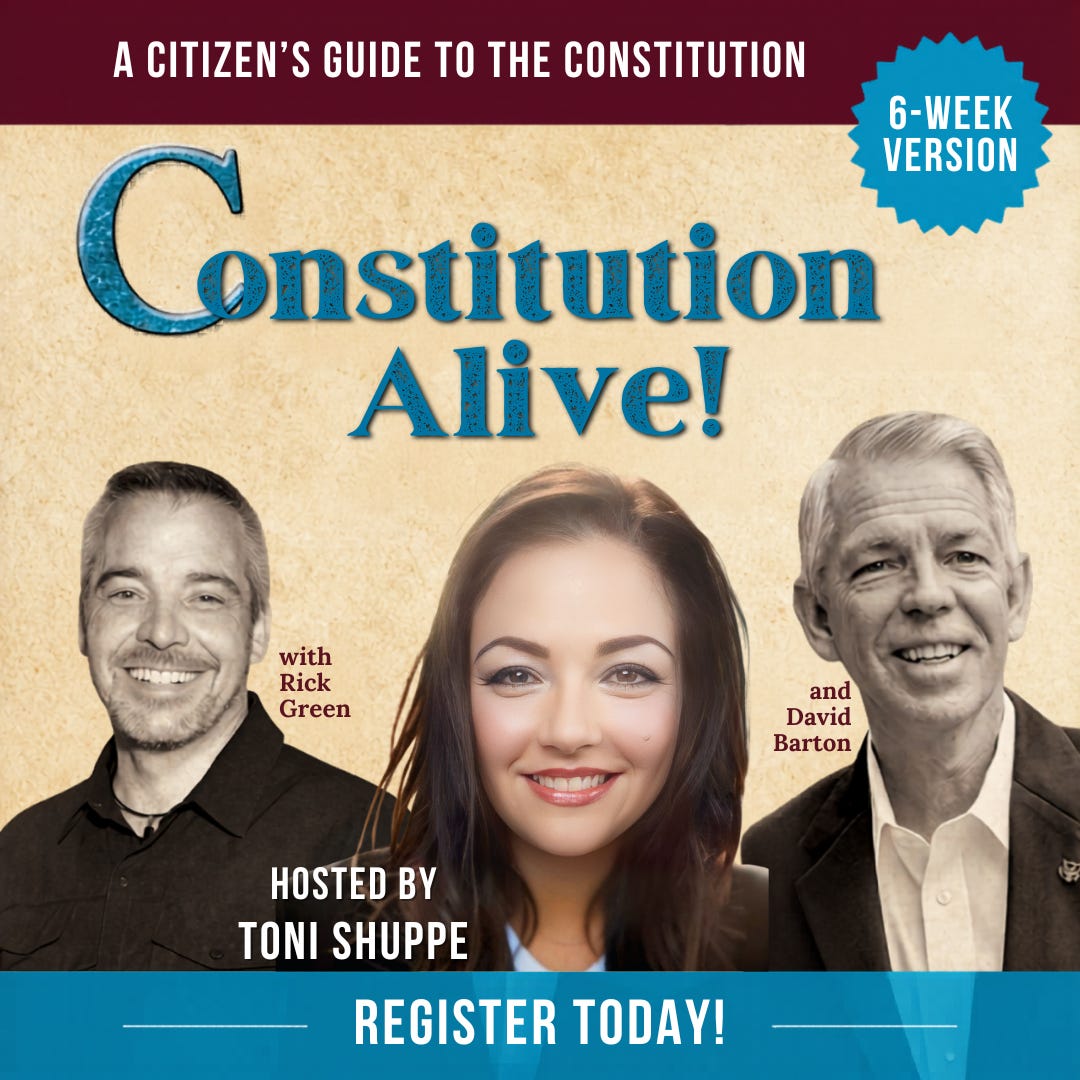
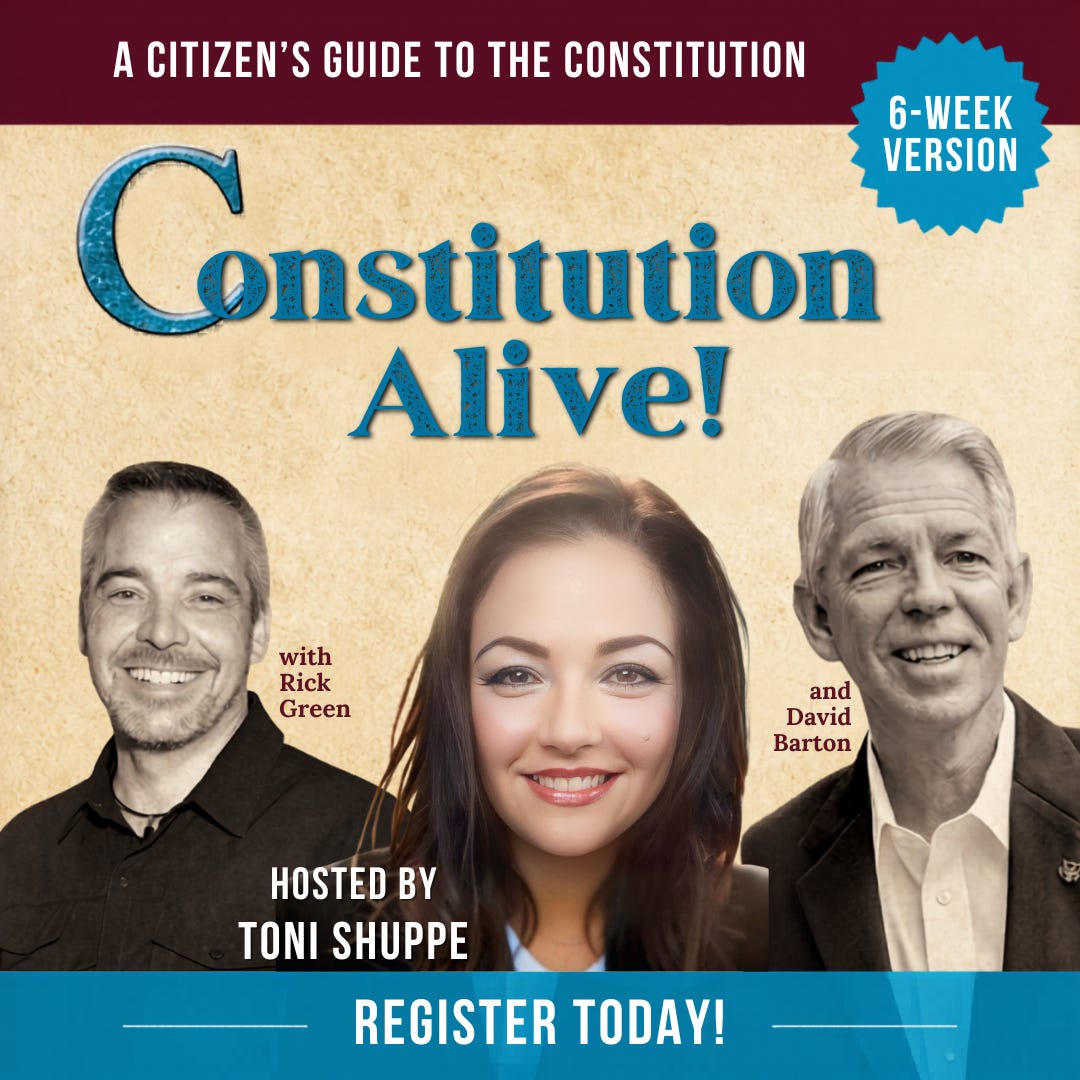
Join me for my 6-week Constitution Alive class starting May 11th at 8pm ET (via Zoom) and learn what we should have been taught all along.