


At the beginning of the summer, I told you that I had started down what was becoming one of the most fascinating studies I’ve ever done: trying to understand Islam for myself.
Not what someone on social media says Muslims believe or what political commentators tell me to believe.
But what Muslims actually believe, where those beliefs come from, and how the claims of Islam hold up when compared with Christianity and the historical record.
At the time I wrote that first article, I told you I felt like I had barely begun.
Turns out, I was right.
Since then, I’ve finished Nabeel Qureshi’s Seeking Allah, Finding Jesus, and I’m now almost finished with his second book, No God but One: Allah or Jesus?
At the same time, I’m working my way through Martin Lings’ Muhammad: His Life Based on the Earliest Sources and I’ve started reading the Qur’an.
The biggest surprise hasn’t necessarily been the answers I’ve found.
It’s been discovering how many questions I had never even thought to ask.
Questions about Muhammad.
Questions about the Qur’an.
Questions about the historical Jesus.
Questions about how Christianity and Islam can share certain people, stories, and even terminology—and yet arrive at radically different conclusions about who Jesus is.
And perhaps most importantly, this study has forced me to ask deeper questions about my own faith.
Why do I believe the New Testament accounts are trustworthy?
How early did Christians actually believe Jesus was God?
What evidence do we have for the crucifixion and resurrection?
How do we know Christianity wasn’t significantly altered somewhere along the way?
Those aren’t questions I’m afraid to ask.
In fact, I’m increasingly convinced that Christians should ask them.
Because “I believe it because I’ve always believed it” isn’t a particularly compelling answer when you’re sitting across the table from someone who has been taught an entirely different version of the story.
Which brings me to something I recently encountered in No God but One that genuinely made me stop and think:
Many Muslim apologists argue that the Christianity we know today isn’t actually the religion Jesus taught.
And one man frequently sits at the center of that accusation:
The Apostle Paul.
🧩 Did Paul Corrupt Christianity?
I know what many of my Christian readers are probably thinking right now.
Of course he didn’t.
That was pretty much my reaction too, but what I didn’t know is that’s the very argument most Muslims make to discredit the Christian faith.
And if we’re going to ask Muslims to examine the historical foundations of their faith, we should be willing to do exactly the same thing with ours.
So instead of dismissing the question, I decided to investigate it.
What exactly is the Muslim argument against Paul?
Where did it come from?
And what did the earliest followers of Jesus actually believe?
And perhaps most importantly:
Does the historical evidence support the idea that Paul transformed Jesus from a prophet into God?

First, What Does Islam Say Happened to Christianity?
This is where we need to slow down a little, because the Muslim position is more nuanced than simply saying:
“Paul came along and ruined everything.”
Islam actually recognizes many of the same people Christians recognize.
Muslims believe in Abraham.
They believe in Moses.
They believe in Jesus.
They believe God gave revelation to His prophets.
The Qur’an refers to the Torah given to Moses and the Gospel—or Injil—given to Jesus.
But Islam also teaches that the Qur’an came as God’s final revelation, confirming what remained true from earlier revelation while correcting errors that had entered into the beliefs and traditions of Jews and Christians.
This concept is often discussed using the Arabic term tahrif, or corruption/distortion.
Exactly how that corruption happened has been understood differently within Islamic thought. Sometimes the accusation is that people misinterpreted or concealed God’s revelation. Other Muslim thinkers have understood the biblical texts themselves to have been altered or corrupted in transmission.
Either way, it creates an obvious question:
If Jesus really was a prophet of God—as Islam teaches—then how did His followers end up believing things about Him that Islam emphatically rejects?
How did Jesus go from prophet...
to Son of God?
How did His message become centered around His crucifixion and resurrection when the Qur’an denies that He was crucified?
And how did strict monotheists eventually come to worship Jesus Himself?
For some Muslim apologists, one of the answers is:
Paul.
Before going any further, there’s something really important to clarify.
The Qur’an never says Paul corrupted Christianity.
It doesn’t identify Paul as the villain responsible for changing Jesus’ message.
That explanation developed outside the Qur’an and has become an argument made by some Muslim thinkers and apologists attempting to explain the enormous gap between the Jesus of Islam and the Jesus worshipped by Christians.
And when you stop looking at this exclusively through Christian eyes for a moment, you can at least understand why Paul becomes such an obvious target.
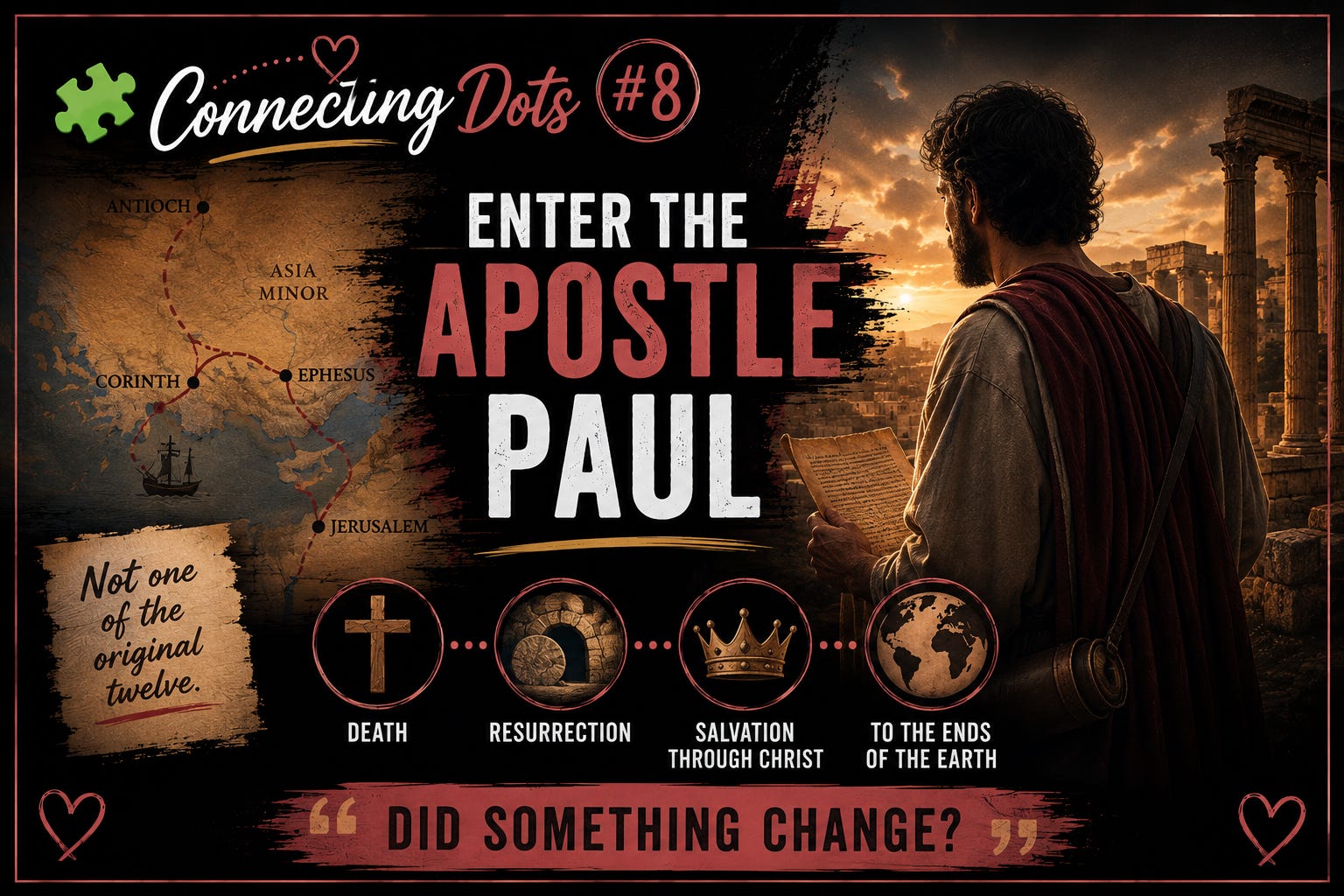
Paul wasn’t one of Jesus’ original twelve disciples.
As far as we know, he never followed Jesus during His earthly ministry.
Paul says his encounter with the risen Jesus came later.
And yet Paul’s writings became extraordinarily influential within Christianity.
Paul talks repeatedly about Jesus’ death.
Jesus’ resurrection.
Salvation through Christ.
Faith.
Grace.
The relationship between Christians and the Jewish Law.
And the inclusion of Gentiles in God’s covenant people.
So imagine looking at the story through an Islamic framework.
Jesus was a Jewish prophet calling people to worship the one true God.
Jesus leaves the scene.
Then Paul emerges, preaching throughout the Gentile world about the crucified and risen Christ.
From that perspective, you can see how someone might ask:
Did something change?
That’s essentially the challenge.
And I think Christians should understand the argument before we attempt to answer it.
Because simply responding, “That’s ridiculous. Paul was an apostle!” isn’t going to convince someone who doesn’t already accept the New Testament as authoritative.
We have to go further.
We have to ask the historical question.
Does the Timeline Make Sense?
This is where things started getting REALLY interesting for me.
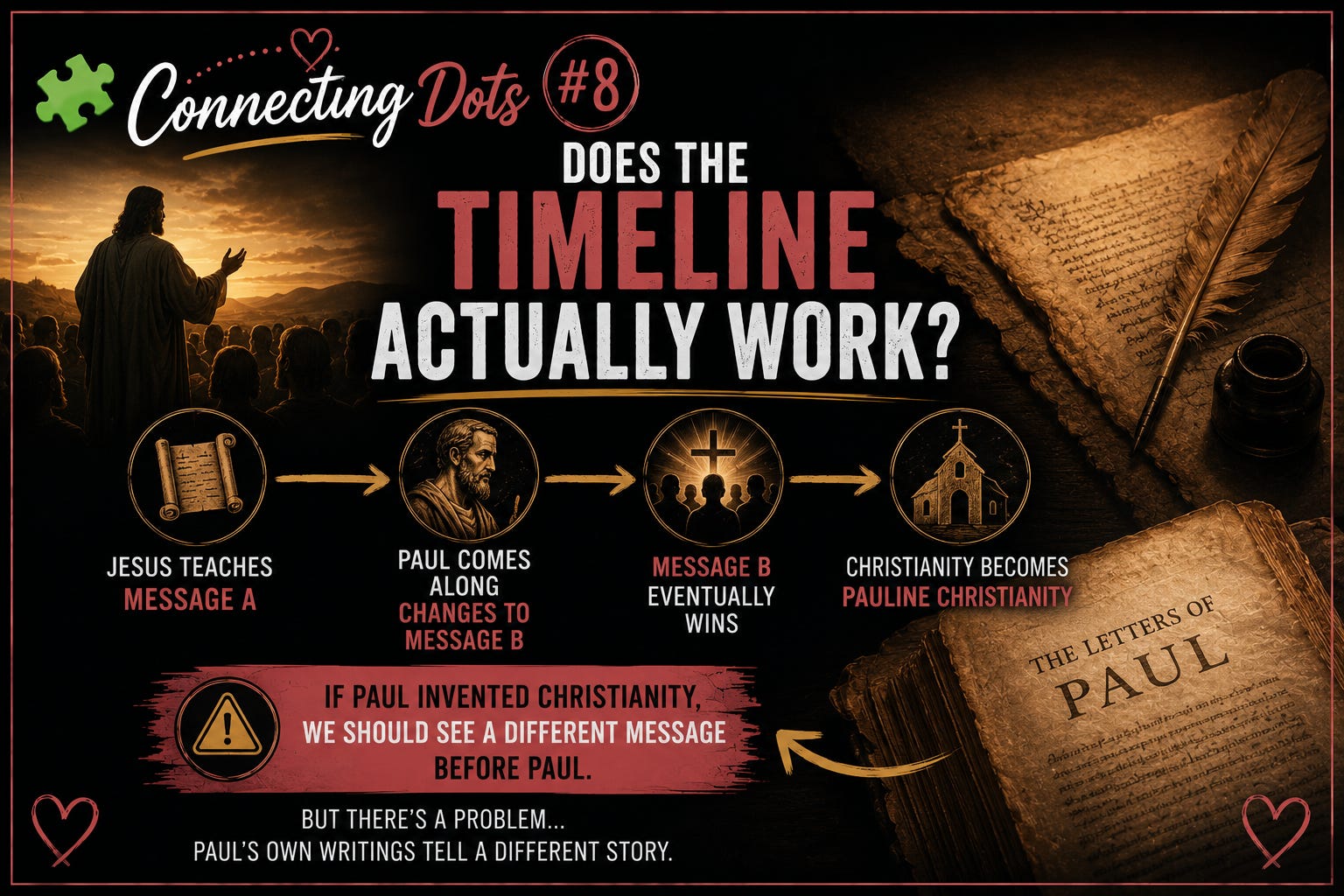
Because if Paul invented the Christianity we know today, there should theoretically have been a time before Paul when Jesus’ followers believed something significantly different.
In other words:
Jesus teaches Message A.
Paul comes along and changes it to Message B.
Message B eventually wins.
Christianity becomes Pauline Christianity.
Pretty straightforward theory.
Except there’s a problem.
Paul’s own writings contain evidence that the central Christian message existed before Paul.
And remember—Paul’s letters are among the earliest Christian writings we possess.
That makes what he says about the beliefs he inherited incredibly important.
Exhibit A: 1 Corinthians 15
This passage stopped me in my tracks.
Paul writes to the church in Corinth:
“For I delivered to you as of first importance what I also received...”
Then he summarizes the message:
Christ died for our sins.
He was buried.
He was raised on the third day.
And He appeared to His followers.
Don’t miss those two words:
“I received.”
Paul isn’t presenting this as something he just invented.
He’s telling us that this was a message given to him.
And that’s significant because many New Testament scholars believe Paul is preserving an early Christian tradition or creed here—something that existed before he wrote 1 Corinthians and quite possibly before Paul himself became a Christian.
Think about what that means.
We’re moving the belief in Jesus’ death and resurrection behind Paul.
Paul didn’t originate the basic proclamation that Jesus died, was buried, rose again and appeared to His followers.
He inherited it.
That doesn’t prove Christianity is true.
But it creates a serious problem for the claim that Paul invented Christianity’s central message.
Exhibit B: Paul Actually Met the Original Disciples
Then there’s something even more obvious that somehow I had never stopped to think about.
Paul knew the people who knew Jesus.
In Galatians, Paul tells us that after his conversion he traveled to Jerusalem and spent time with Peter.
Not some Christian living three generations later.
Peter.
One of Jesus’ closest disciples.
Paul also says he met James, the brother of Jesus.
Later he describes Peter, James and John as “pillars” of the Jerusalem church.
This matters enormously.
Because sometimes we talk about Paul as though he appeared decades later, completely disconnected from the people who actually walked with Jesus.
He wasn’t.
Paul was operating during their lifetimes.
He met them.
He talked with them.
He sometimes argued with them.
And THAT last part may actually be some of our most interesting evidence.
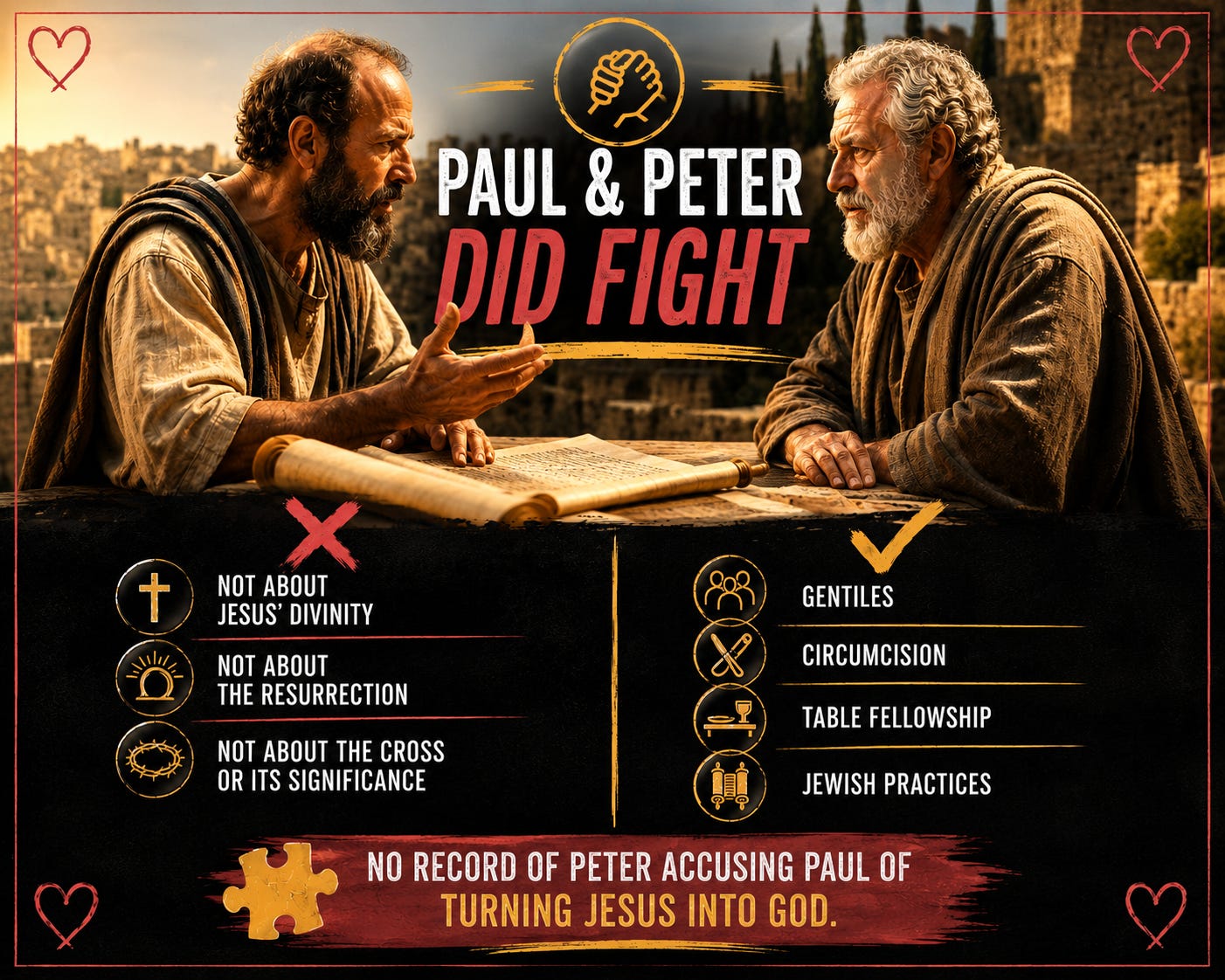
Paul and Peter DID Fight.
If the New Testament were trying to hide disagreements between the early Christian leaders, it didn’t do a particularly good job.
Paul tells us himself in Galatians that he confronted Peter publicly.
They had a serious disagreement.
So we know these men weren’t afraid to challenge each other.
But what were they arguing about?
Was Peter saying:
“Paul! Stop telling people Jesus is divine!”
No.
Was James accusing Paul of inventing the resurrection?
No.
Were the Jerusalem apostles trying to stop Paul from preaching that Jesus’ death had saving significance?
That’s not the dispute Paul records either.
Their arguments centered largely around Gentiles, circumcision, table fellowship and the continuing role of Jewish practices.
Those were significant disagreements.
We shouldn’t minimize them.
There really were tensions in the earliest Christian movement about what following Jesus meant for Jews and Gentiles.
But that’s precisely why the absence of a recorded fight over the central identity of Jesus is so interesting.
Paul could argue with Peter.
And apparently Peter could disagree with Paul.
Yet the surviving first-century evidence doesn’t give us a Peter saying:
“Paul has turned our human teacher into God.”
That’s not proof by itself.
But it’s a piece of evidence that has to be accounted for.
Exhibit C: An Even Earlier View of Jesus?
Then I came across Philippians 2.
And this one gets fascinating.
Paul writes about Jesus:
“Who, being in the form of God...”
and continues by describing Christ humbling Himself, taking human form, becoming obedient to death and then being exalted so that every knee should bow and every tongue confess that Jesus Christ is Lord.
This passage is sometimes called the Christ Hymn.
Scholars have debated its origin for a very long time.
Some believe Paul wrote it.
Others believe Paul was quoting or adapting an already-existing Christian hymn or confession.
That distinction matters.
Because if Paul was incorporating material Christians were already using in worship, then an extraordinarily “high” view of Jesus existed independently of—and potentially before—Paul’s letter.
And even scholars who think Paul composed the passage still have to explain how extraordinarily early this view of Jesus appears.
We aren’t talking about something Christians invented during the Middle Ages.
We aren’t even talking about something that first appeared at the Council of Nicaea three hundred years after Jesus.
We’re standing in the first generation of the Christian movement.
Whatever else we conclude, Christians were wrestling with the extraordinary identity of Jesus very, very early.
So... Did Paul Invent Christianity?
After digging into this, my answer is:
No.
Did Paul profoundly influence Christianity?
Absolutely.
It would be silly to argue otherwise.
Paul became one of the most important figures in Christian history, and scholars continue to debate exactly how his theology relates to Jesus, Judaism and other streams of the early Jesus movement.
There were also genuine disagreements among the earliest Christians.
The historical picture isn’t nearly as neat and tidy as we sometimes make it in Sunday School.
But that’s different from saying:
Paul took a purely human Jewish prophet named Jesus and invented a new religion that worshipped Him as God.
The timeline doesn’t fit that simple explanation very well, yet that’s what Muslims argue.
Belief in Jesus’ death and resurrection appears in traditions Paul says he received.
Paul personally interacted with Peter, James and John.
The Jerusalem apostles recognized Paul’s Gentile mission even while disagreeing with him about important issues.
And extraordinarily elevated claims about Jesus appear within the earliest layers of Christian history.
Why This Matters to Me

This may be my favorite part of this entire study.
I started studying Islam because I wanted to understand Muslims better.
I didn’t expect it to make me investigate Christianity more deeply.
But it has.
Over and over again.
And I think that’s a good thing.
I’ve said from the beginning that I don’t want to approach Muslims by yelling across a theological divide and telling them they’re wrong.
I want to understand what they believe.
I want to understand why they believe it.
And when they raise a legitimate question about Christianity, I don’t want my response to be:
“Well, the Bible says...”
because the person I’m talking with may not accept the Bible as authoritative in the first place.
I want to know what the historical evidence says.
I want to know what the earliest sources say.
I want to know whether the things I’ve believed for years can withstand scrutiny.
That’s what happened with this question.
I began with:
“Wait... Muslims think Paul corrupted Christianity?”
And I ended up digging into some of the earliest evidence we have for what Christians believed about Jesus.
For over 80 years, I have been a reader. I am totally into the Creator who made all life...and have read the King James version of the Bible, which was written between 1603-1611. It was worked on by 50 nobles and some members of the clergy. It was 1800 pages It was approximately 500 pages longer than the Gutenberg Bible, which was 1286 pages. and was the first book to come off the newly invented printing press in Gutenberg, Germany. It was authorized and approved by the Roman Catholic Church and printed in Latin. When William Tyndale translated it into English in about 525 AD: the Roman church had him murdered and his copies destroyed. Some were thought to have survived. All bibles are based on the original Gutenberg Bible. The Roman Catholic Church was started by the Roman Emperor Constantine in about 325 AD, after the meeting of the Council of Nicea held in the Byzantine area (Turkey today). The Emperor Constantine got together with the rulers of Greece and the Byzantine to promote Christianity. The Greeks went along with him, but the Byzantine rulers had their own gods. The Romans and Greeks were pagans; and were into many gods at the time. The Emperor Constantine was not an elevated human. He had his mother hacked to death; smothered his wife and murdered his son. He did not promote Christianity for spiritual reasons. He set it up to enrich his treasury. The end result over the centuries: The Vatican, the richest little municipality in the world. When Constantine came across scrolls in the the 300s, he had his scribes change all the Hebrew names into Roman names primarily. Then later on King James men changed the names. Matt 10: (gave names of the disciples.).There were two James (Scot), Peter (Roman-Pietro), John (Roman-Giovanni), Matthew (Roman-Mattias)), Andrew (Scot), Bartholomew (English), Thomas (English), Philip (Greek), Thaddaeus (Greek), Judas (Greek),,. Simon (Hebrew). In addition there was never a Hebrew woman called Mary.(translated from Maria-Roman) or a Hebrew man called Jesus. (some say Yeshua?). The word Jew did not exist 2000 years ago...They were called Hebrews. There was no letter J in the alphabet, until the 12th or 13th century AD. The first time the word Jew was used...in Shakespeare's Merchant of Venice written.in the 1500s. There has been so much altering in the Bible...I ask for guidance before reading it.