


Every July 4th, Americans celebrate the birth of our nation with fireworks, parades, and patriotic songs.
But what if I told you that almost everything we picture happening on July 4, 1776... didn’t actually happen that day?
The real story of America’s founding is far more fascinating—and perhaps even more inspiring—than the version most of us learned in school.
As America celebrates her 250th birthday, let's travel back through one remarkable week that forever changed the course of history.
July 2: The Day America Chose Independence
Most Americans would probably answer “July 4, 1776” if asked when America declared independence.
But that’s not actually true.
On July 2, 1776, the Continental Congress voted to sever all political ties with Great Britain.
That vote—not July 4—was the moment the colonies formally chose independence.
In fact, John Adams was so convinced July 2 would become America’s great national holiday that he wrote to his wife Abigail:
“The Second Day of July, 1776, will be the most memorable Epocha, in the History of America.”
History had other plans.
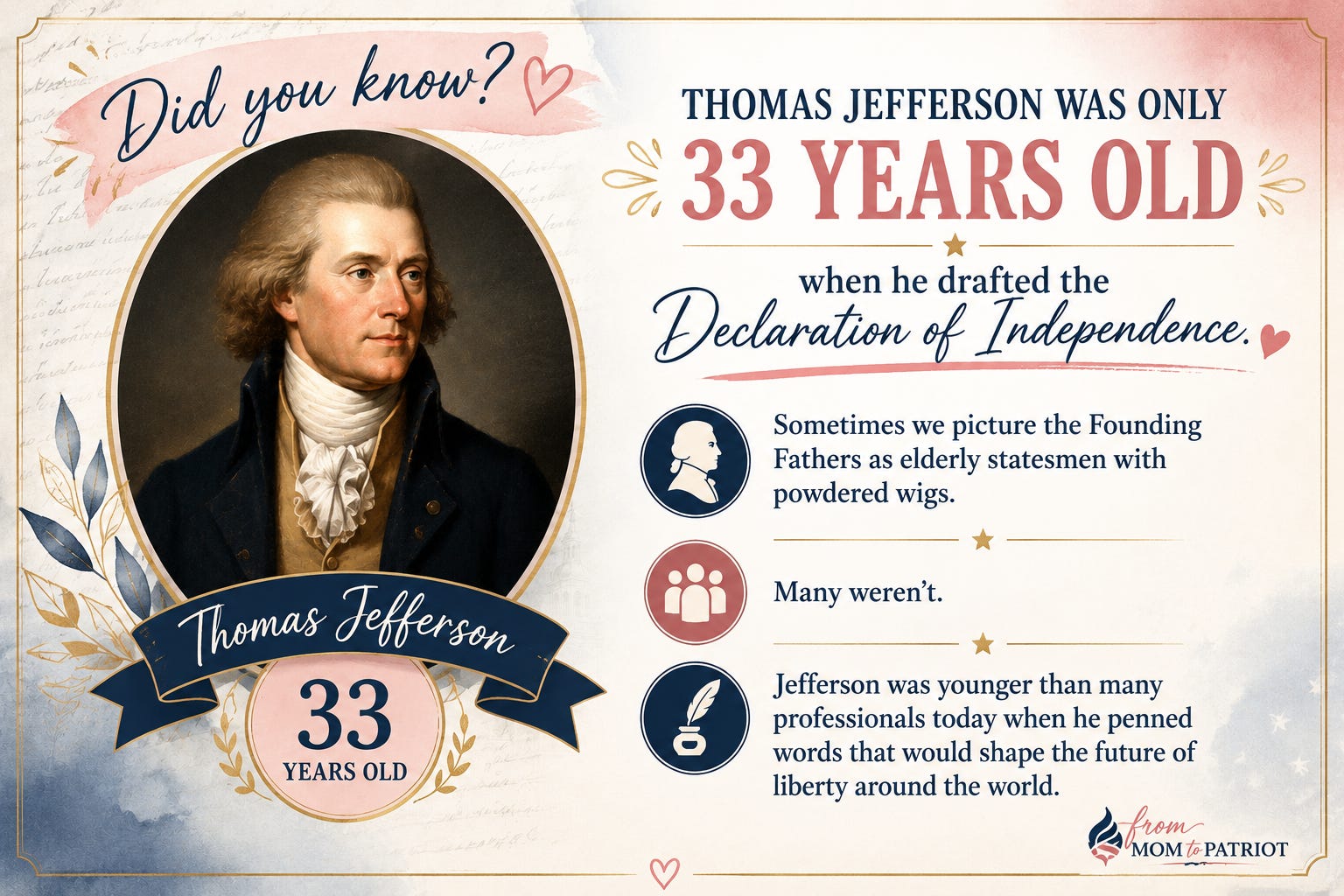
July 4: Not the Beginning...The Explanation
By July 4, the decision had already been made.
What Congress approved that day was the final wording of the Declaration of Independence after several days of edits and debate.
The Declaration wasn’t simply announcing America’s departure from Britain.
It was explaining why.
Think of it as America’s opening legal brief before the court of world opinion.
Before Jefferson ever wrote, “We hold these truths to be self-evident...” he carefully documented twenty-seven grievances against King George III.
The Founders believed freedom should never be declared casually.
It should be justified carefully.
The Paragraph That Never Made It
One of the most fascinating parts of the Declaration of Independence is something you’ll never find in the final document.
Jefferson’s original draft included a lengthy passage condemning the British Crown for perpetuating the transatlantic slave trade.
He accused King George III of violating “the most sacred rights of life and liberty” by forcing the institution of slavery upon the colonies and sustaining the trade in human beings.
That language never survived.
Delegates from South Carolina and Georgia objected strongly. Some northern delegates, whose economies also benefited from the slave trade, were unwilling to include it.
To preserve unity among all thirteen colonies, Congress removed the entire passage.
Jefferson was deeply disappointed.
He later complained that Congress had “mangled” portions of his draft.
The irony is impossible to ignore.
America declared that “all men are created equal” while simultaneously removing language condemning slavery.
History is rarely neat.
The Founders articulated one of history’s greatest statements on universal human equality while leaving unresolved one of America’s greatest moral contradictions.
That contradiction would eventually erupt into the Civil War nearly ninety years later.
Understanding that tension doesn’t diminish the Declaration.
If anything, it reminds us that the principles declared in 1776 would continue challenging future generations to live up to them.
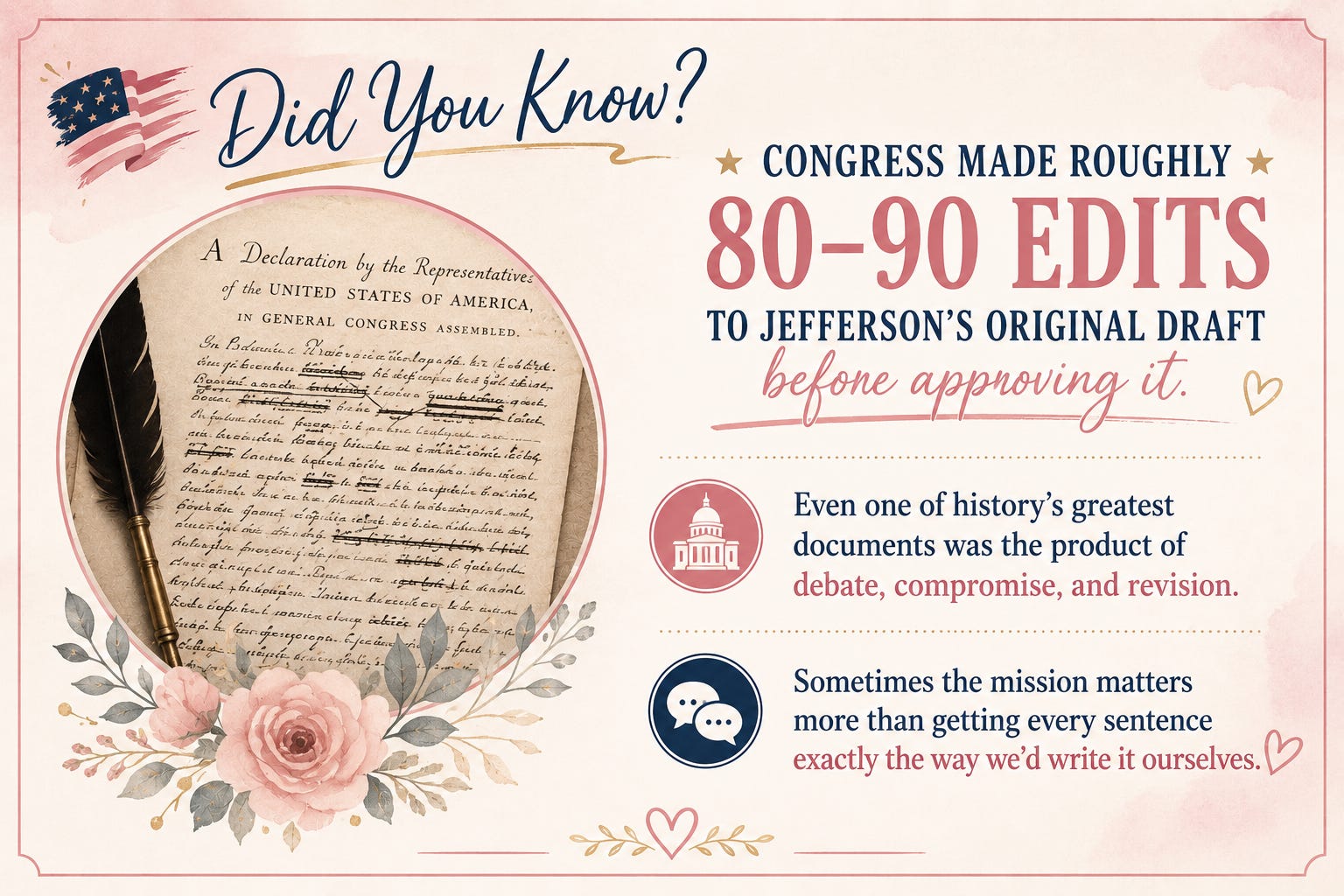
July 5: Printing History Overnight
The Declaration still hadn’t reached the American people.
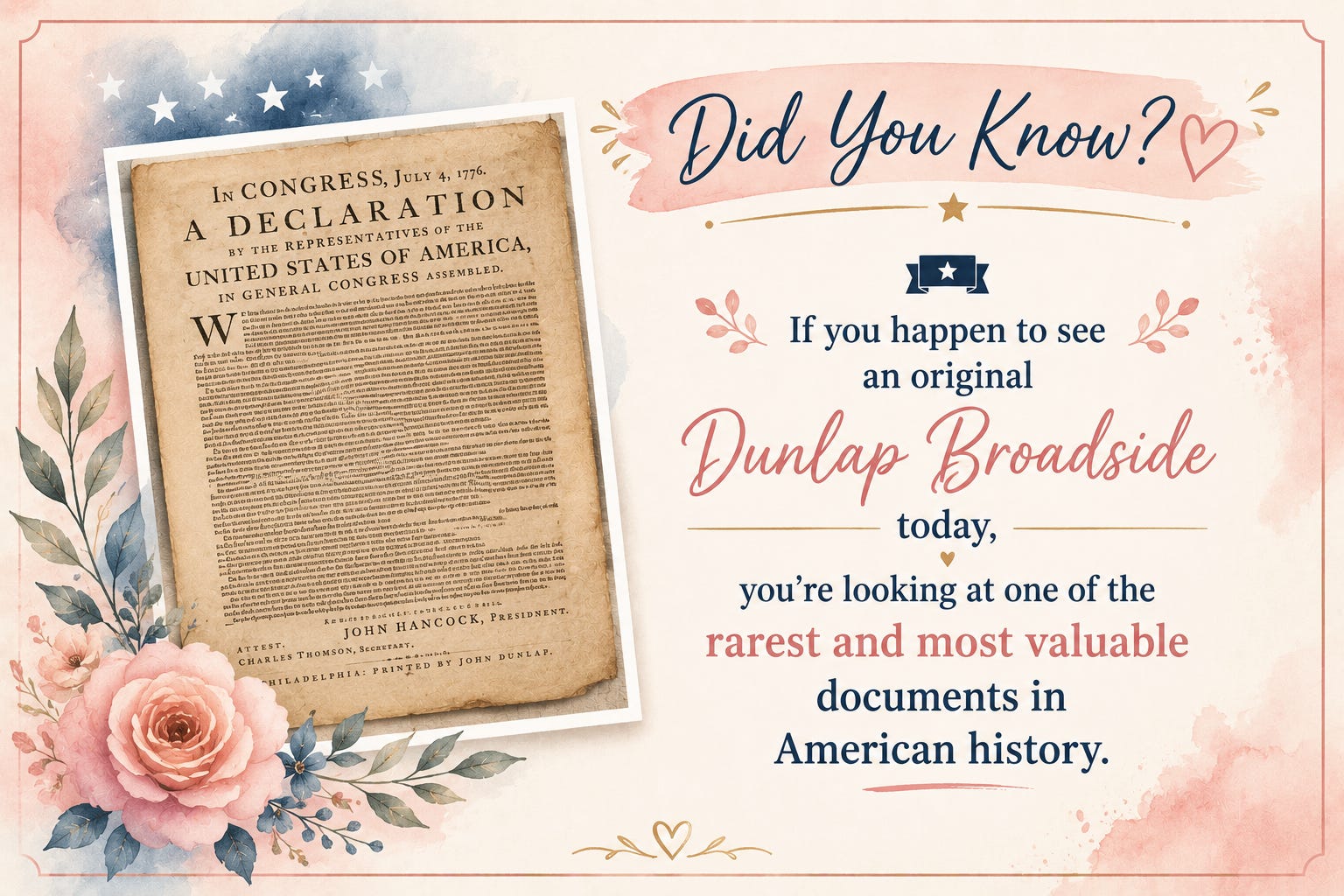
Immediately after Congress approved the final text, Philadelphia printer John Dunlap worked through the night printing the first official copies.
Known today as the Dunlap Broadsides, historians estimate roughly 200 copies were printed.
Only a few dozen are known to survive.
Those printed sheets carried America’s declaration across the colonies.
July 8: America Finally Hears the News
This may be my favorite part of the story.
By July 8, America had already voted for independence.
The Declaration had already been written.
But most Americans still had no idea.
On that day, Colonel John Nixon stood before a crowd in Philadelphia and publicly read the Declaration for the very first time.
Imagine hearing those words without knowing they would become some of the most famous ever written.
“We hold these truths to be self-evident...”
For those gathered that afternoon, these weren’t words from a history book.
They were breaking news.
And everyone listening understood the risk.
Declaring independence wasn’t symbolic.
It was treason against the British Crown.
If the Revolution failed, many of the men responsible would likely lose not only their property—but their lives.
August 2: The Signing Most of Us Picture
One of the biggest myths surrounding Independence Day comes from the paintings we’ve all seen.
The delegates did not all line up and sign the Declaration on July 4.
Most signed the beautifully engrossed parchment nearly a month later, on August 2, 1776.
A few signed even later as they returned to Philadelphia.
The iconic painting isn’t really depicting the signing.
It’s portraying the drafting committee presenting the Declaration to Congress.
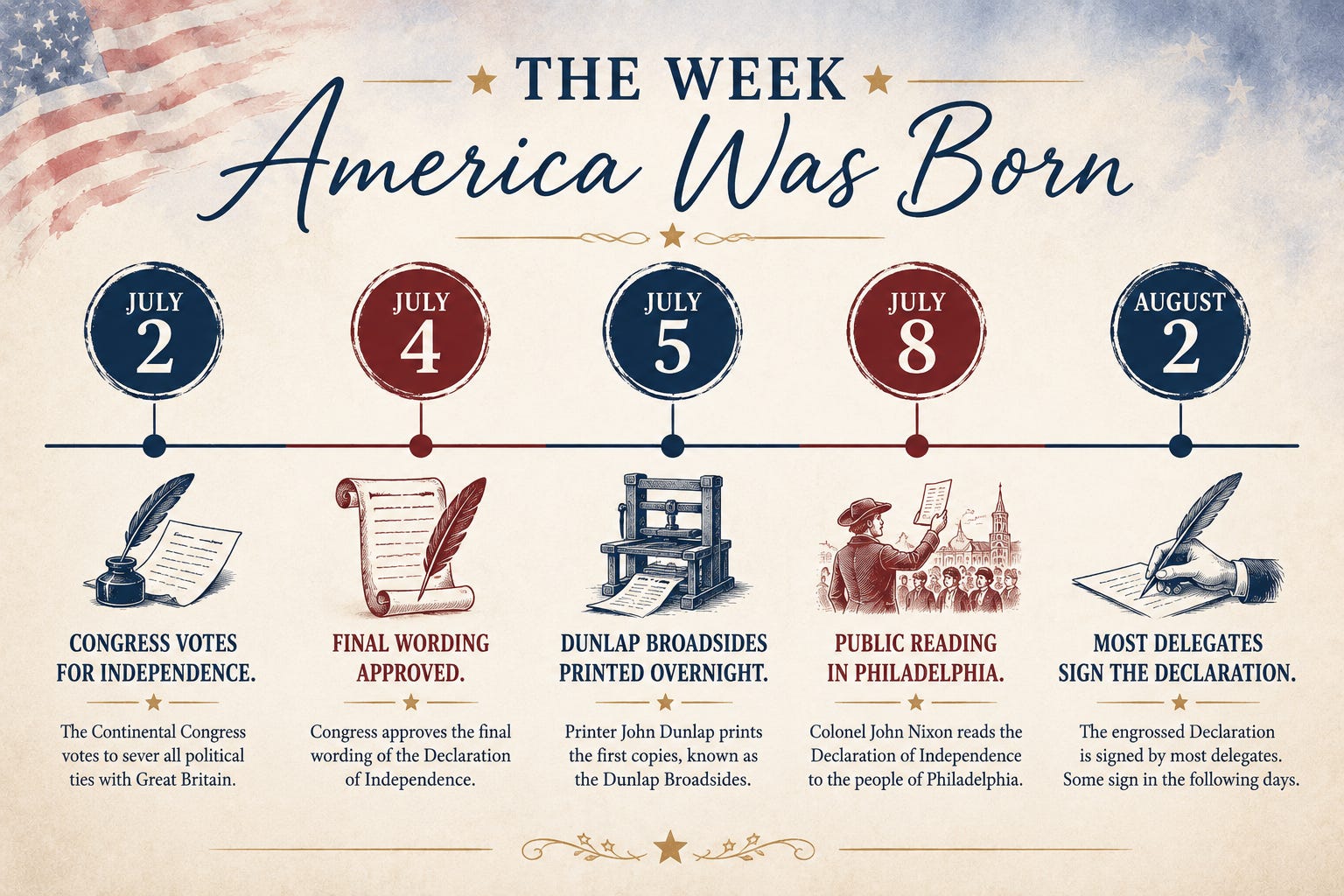
The Week America Was Born
Sometimes history gets compressed into a single date.
The truth is far richer.
July 2
✅ Congress votes for independence.
July 4
✅ Congress approves the final wording of the Declaration.
July 5
🖨️ John Dunlap prints the first copies overnight.
July 8
📣 The Declaration is publicly read to the people of Philadelphia.
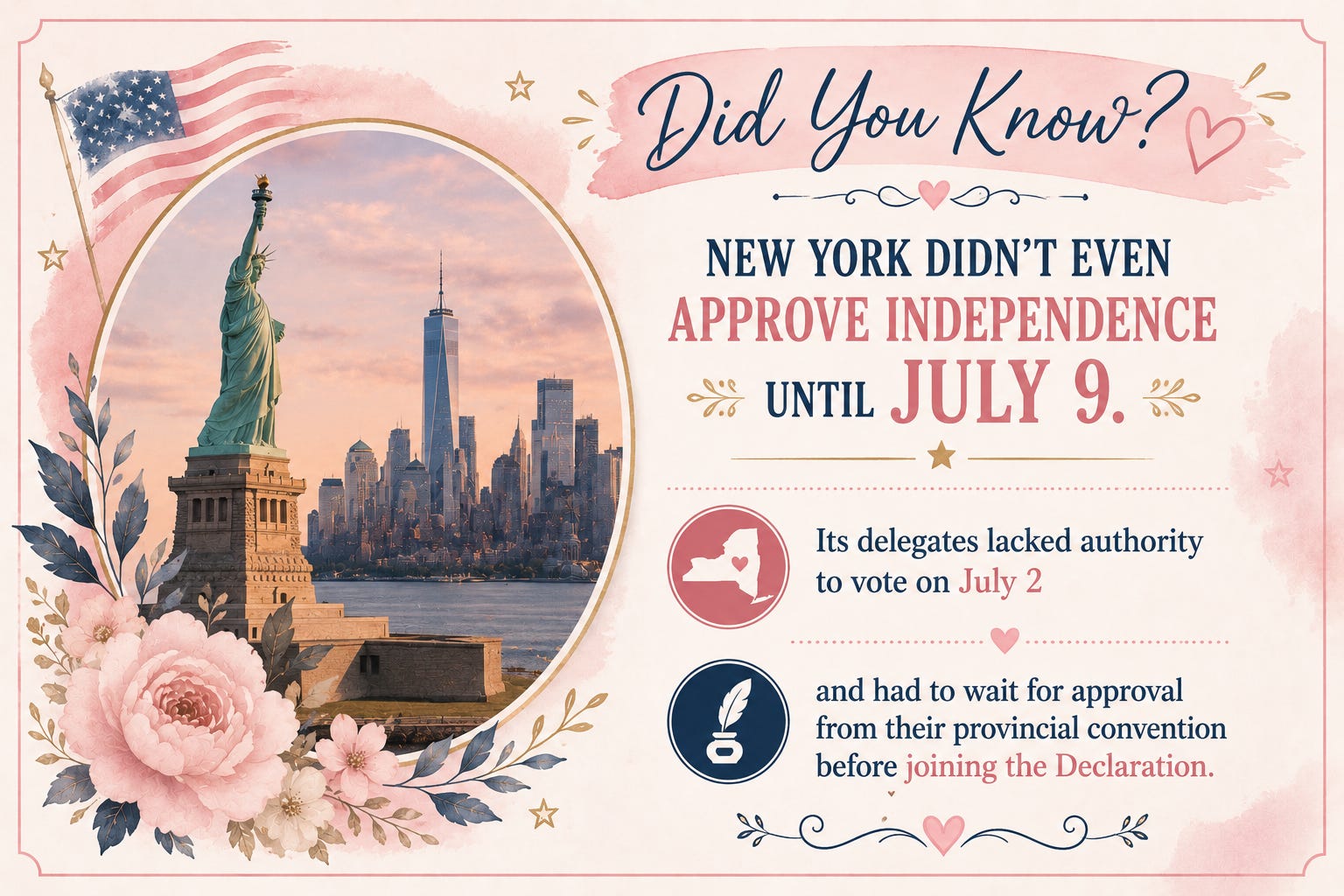
July 9
🗽 New York joins the cause for independence.
August 2
✍️ Most delegates sign the engrossed Declaration.
The Lesson of America’s 250th Birthday
One thing stands out to me after looking back at this remarkable week.
The Founders weren’t perfect.
They argued.
They revised one another’s work.
They compromised.
They wrestled with difficult moral questions.
Some disagreements would remain unresolved for generations.
Yet despite all of that, they united around a shared conviction that liberty was worth defending.
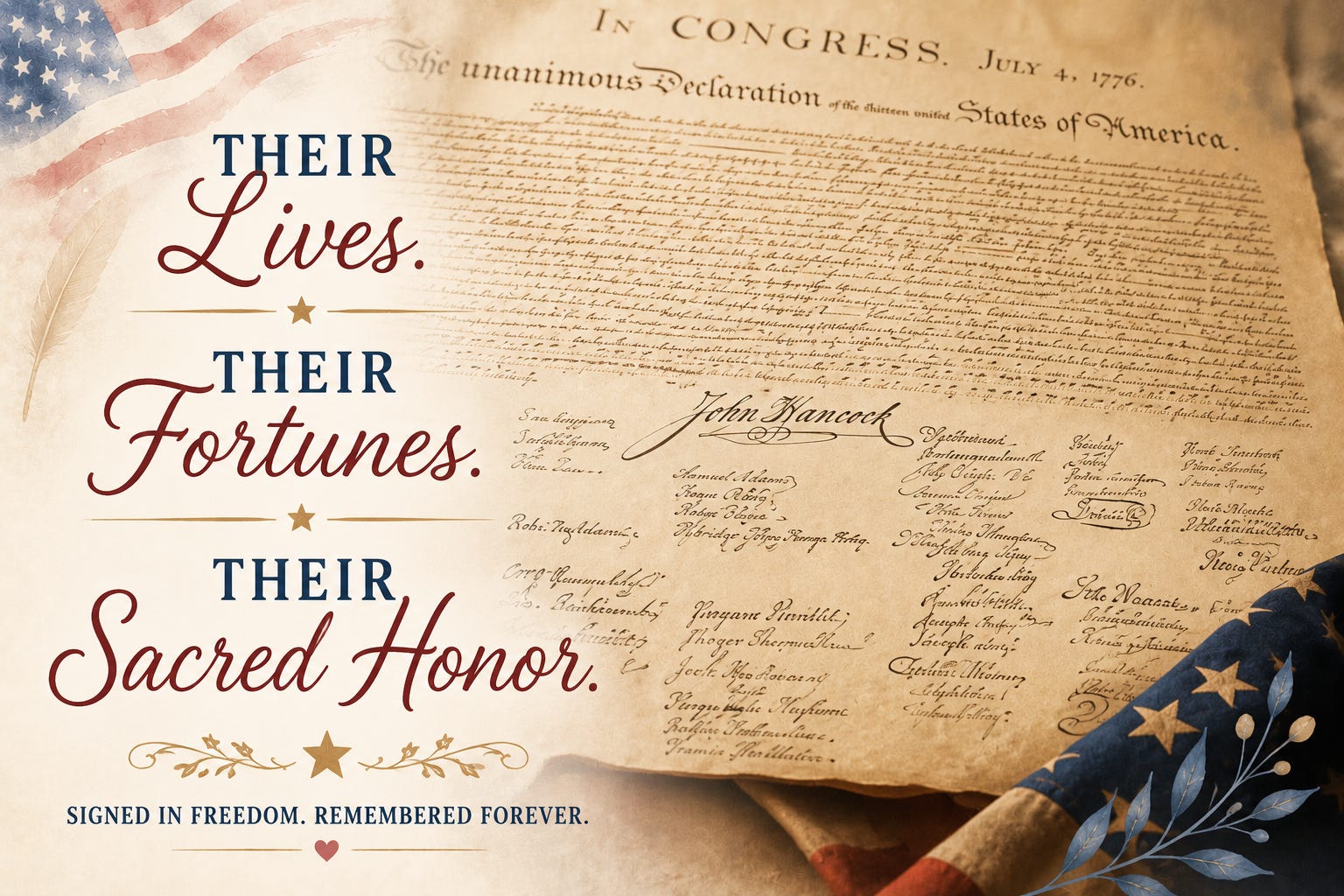
When the Declaration closed with the words that they pledged “our Lives, our Fortunes and our sacred Honor,” those weren’t poetic flourishes.
They were promises.
Promises backed by the very real possibility of imprisonment, execution, or financial ruin if the Revolution failed.
Two hundred and fifty years later, perhaps that’s the real lesson of Independence Day.
Not that America was founded by perfect people.
But that enduring principles can outlive imperfect people.
Each generation inherits those principles.
Each generation must decide whether they are worth preserving.
As we celebrate America’s 250th birthday, may we remember not only the date on the calendar, but the extraordinary week that gave birth to a nation.
Happy Independence Day!
One Last Thought...
As I was writing this article, I couldn’t help but think back to the fall of 2020.
A good friend of mine, Karen Taylor, and I decided to take a Patriot Academy Constitution class together. We had already been friends for nearly ten years, but neither of us had any idea how much that one decision would change the course of our lives.
That class sparked a passion for America’s founding that eventually led us to co-found Audit The Vote PA. We also began hosting Constitution classes together, encouraging others to discover the same incredible history that had inspired us.
Our paths have taken us in different directions over the years, but I’ll always be grateful that we took that first class together. In fact, Karen is now part of a slate of candidates working to bring new leadership to the Westmoreland County Republican Committee. If they’re successful, she’ll serve as the committee’s Secretary.
I genuinely don’t believe either of us would be where we are today had we not made the decision to study the Constitution together back in 2020.
If this article reminded you that there’s always more to learn about America’s remarkable story, I’d love to invite you to join me. You never know where one class—or one decision to keep learning—might lead.
Patriot Academy Community Night:
Join me Monday nights as we continue learning together through history, the Constitution, faith, current events, and conversations with special guests.

Wonderful article Toni. Since waking up in 2020 I have grown to love my country more and more ❤️🇺🇸